Close encounters of the human kind…How did we get so lucky?…Monday morning mongoose mania…

A mongoose is sitting on a step while waiting for eggs.

“Sighting of the Day in the Bush”

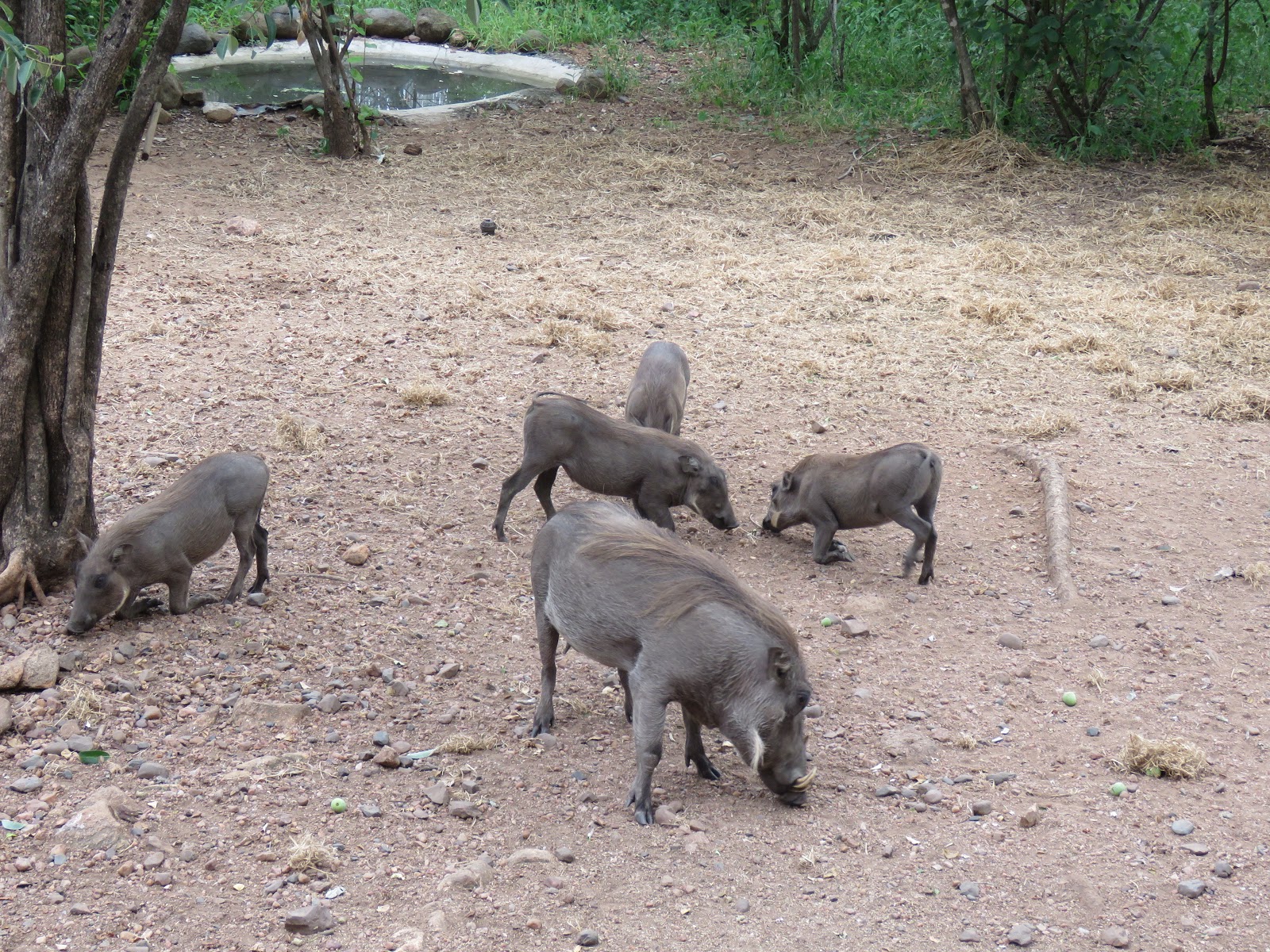
Mom and three babies…the fourth baby warthog has been missing for a week.  It’s sad to think about what has happened to her.
We returned from the hospital to Marloth Park on February 23rd, 16 days ago.  During that first week, I was a mess, and we didn’t see many friends while I was struggling so much, other than Louise and Danie and Kathy and Linda.


Over this past week, we’ve had a steady stream of friends stopping by to see how I’m doing. No words express how grateful we are to have made such wonderful friends here in Marloth Park.

Tomorrow night, Tuesday, we’re invited to dinner at Lynne and Mick’s home along with Kathy, Don, Linda, and Ken. This will be the first time out socializing since the surgery on February 12th.

This particular band of mongooses has been here many times.  They knew exactly where to wait for Tom to deliver the eggs.

We’ve been out before this when we had to return to Nelspruit for an appointment with the surgeon on March 1st. The long drive surprised me as tolerable when Tom drove like a champion keeping the little red car as steady as possible.  

Tomorrow, I am heading to Lynne and Mick’s home, although only two minutes “as the crow flies,” will require some driving on the outrageously bumpy dirt roads in Marloth Park. I’ll bring along a pillow to hold against my chest to soften the blows of the ruts and potholes in the road.  

Then, on Friday night, Kathy, Don, Linda, Ken, and the two of us are meeting at Jabula for dinner before Linda and Ken head back to their home in Johannesburg.  

The baby mongooses are not quite sure about the eggs in the bowl.

Most likely, we won’t see Linda and Ken again before we leave for Ireland. They have a tremendously busy travel schedule, visiting family in the US and Australia over the next few months. Kathy and Don will come and go between their homes in Pretoria and Marloth Park, so most likely, we’ll have several more opportunities to spend time with them.

Lynne and Mick stopped by on Saturday for a pleasant visit. It was great to see them.  Had we left for Kenya as planned, we wouldn’t have seen them here again due to their month-long self-drive and tour of Namibia on a major bird-watching adventure.

When Lynne read in a previous post that I only had two pairs of pants to wear now as I recover, both of which are very hot and uncomfortable, yesterday she returned with a stack of comfy, soft cotton pajama bottoms, pants, and a dress I can wear until I can start wearing jeans again. How thoughtful and generous is that?

They went as far as beginning to climb the veranda’s steps to get our attention.

And Kathy, good grief! She’s gone over the top during this entire ordeal of ensuring I had everything I could need or want while providing, along with Linda, an enormous dose of emotional support, friendship, and love.

Uschi and Evan stopped by between the angiogram and the surgery to say goodbye before embarking on their month-long holiday. But surely, we’ll see them again when they return.

Today, Lesley and Andrew surprised us with a thoughtful visit to offer their love, support, and offer to help in any way possible. It was beautiful to see them as well.

They came to the garden from all directions.

As busy as they are, Dawn and Leon from Jabula never faltered in their love and support during this challenging period.

Then, of course, there’s Louise and Danie who’s thoughtfulness extends well beyond their role as our property managers, who’ve become loving and dear friends. The flowers they had waiting for me when we returned from the hospital, the impeccable house, the grocery shopping, and literally every possible need covered in one way or another. Currently, they are on holiday in Cape Town, and we look forward to their return. 

Once the bowl of eggs is licked clean, they start looking at us for more. This time Tom complied, bringing out some whole eggs.

How did we get so lucky to have so many kind and caring people in our lives? Add the fabulous people who’ve stayed in touch, some daily like our dear girl Okey Dokey, who’s texted me daily to offer words of encouragement and who sent me the adorable stuffed “Jessica the Hippo,” which I’ve used over and over again to support my chest as I moved about, coughed or sneezed.

And then, there’s been the endless stream of messages from our dear readers/friends from all over the world who remained steadfast in their prayers and well wishes.

They scattered about, looking for more eggs.

Of course, my family has been there for me, along with many members of Tom’s large family offering prayers and good wishes for a speedy recovery. It goes on and on. I’m in awe of the kindness and generosity of spirit that so many have freely offered during this trying time.  

Merely saying “thank you” doesn’t express the depth of appreciation both Tom and I feel over the outpouring of prayers and warm wishes by so many special people. 

Although not a story in itself, today’s post provides me with an opportunity to let all these amazing people know how much they are appreciated and how much they all mean to us.

Photo from one year ago today, March 11, 2017:

Jonas, a youthful-looking 40-year old owns several businesses and has done well in his life considering many hardships. Many years ago, he was attacked by a lion in Marloth Park and lived to tell the story. For the complete account of this frightening event, please click here.


In the long run…

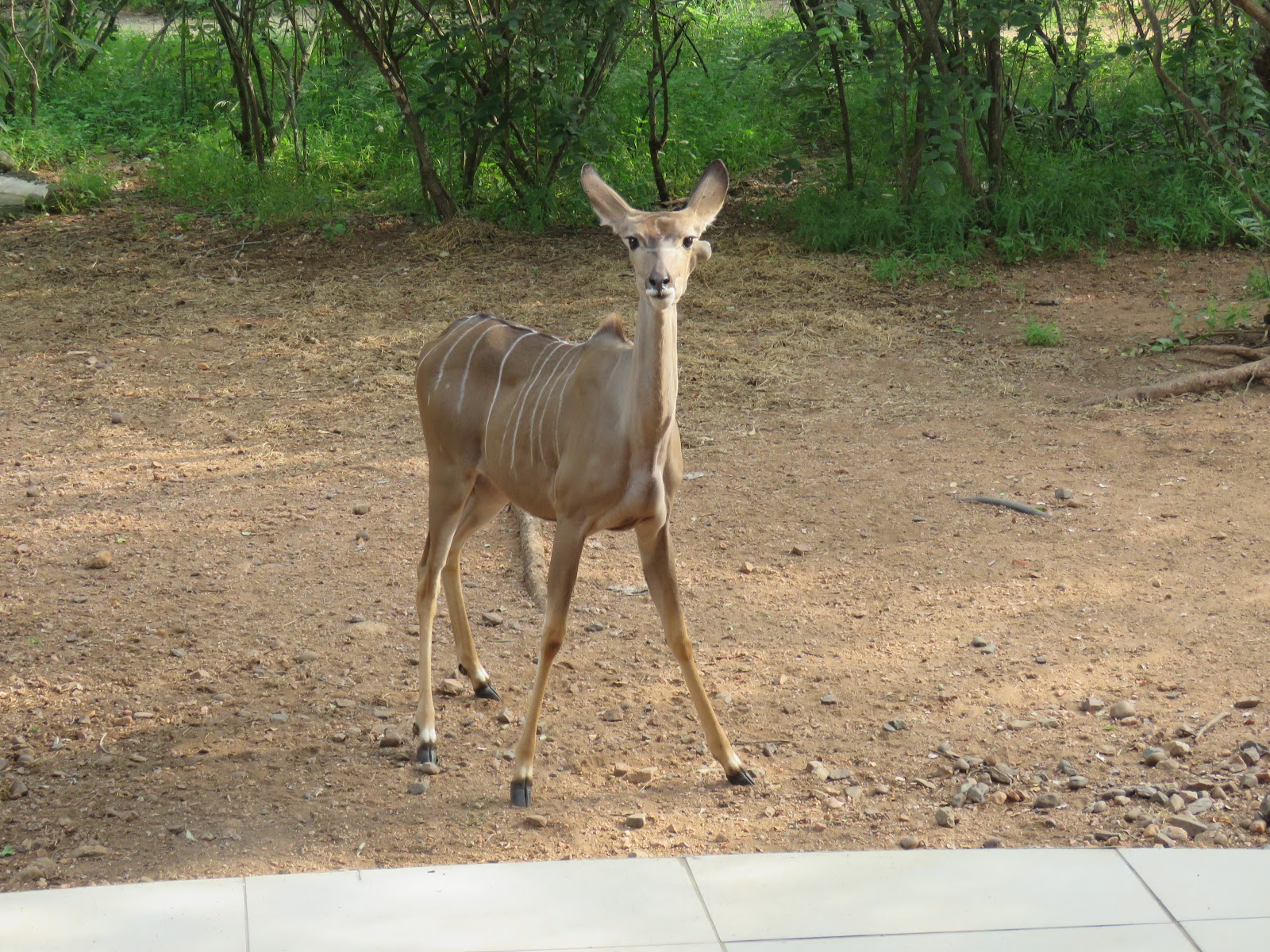
When we spotted this female kudu lying in the garden today, we wondered if she was in labor.

“Sighting of the Day in the Bush”

Adorable Ms. Bushbuck (one of many Ms. Bushbucks) standing by the cement pond.

Please, dear readers, don’t be concerned that our site will become a medium to moan about my medical woes.  I’m as anxious as all of you to get back to the matters at hand…world travel.

It’s exciting and highly motivating to know that in 62 days, we’ll be on our way to Ireland. Of course, it’s perfectly normal for me to have looked up possible cardiologists in the area of Connemara, Ireland. The closest I found was in Galway, about a one-hour drive.

Most likely, I’ll have to have a check-up by a cardiologist during the three months in Ireland as I would have done if we stayed in South Africa or any other country. 

Apparently, such an exam is crucial at the six-month mark, post-surgery, in August.  

We watched her, noticing her swollen udder, and wondered what was going on.  As we watched, we realized she wasn’t in labor but was relaxing in the shade on a hot, humid day.

We leave Ireland on August 9th, spend two days in Amsterdam, and then we’re off to a Baltic cruise for 12 nights. After the Baltic cruise, we have a 62-day gap we’ve yet to fill, hoping to stay somewhere near Cornwall in England.  

We realize we need to get on the ball and figure out this gap, but at this point, we’d feel better waiting a month to book something. If we have to move around a bit, we will, since booking in this popular area will be challenging last minute. But, we have no doubt we’ll figure it out, one way or another.

We won’t be heading to the US until November, during which we’ll visit family in Minnesota, Nevada, and Arizona. It will be wonderful to see everyone at that time.  Had this heart surgery not occurred, we’d have been in Minnesota on April 8th, less than a month from now.

Another photo of the nyala who visited us for the first time on Friday along with kudus and Ms. Buchbuck…three types of antelope in the garden simultaneously.

We couldn’t bear another financial loss of canceling the holiday home in Ireland, so we’ll pick back up there and continue with our itinerary. Based on our current scenario, we’ve decided not to book two years out in the future.  

As we age (or at any age for that matter), we can’t predict what may transpire preventing us from meeting our commitments for holiday homes, flights, hotels, cruises, and tours. This is a harsh reality of non-stop world travel without a home base.

Do we regret not having a home base when the necessity of this surgery rolled out?  No. South Africa and our proximity to Mediclinic Nelspruit proved to be one of the best places in the world. This could have occurred for a few reasons (see below photo):

The two young male bushbucks arrived together.

1.  We had an available holiday house that happened to be available where we’d been living over the past year. We didn’t have to move…a huge bonus.
2.  The cost of the surgery, although high at ZAR 700000, US $48,477, was nothing compared to the cost of this surgery in the US, which easily could have been seven or eight times higher.
3.  Our international insurance policy doesn’t cover us. At the same time, in the US, plus the minimal Medicare coverage we have in the US could easily have resulted in ZAR 1443981, US $100,000 in co-payments we’d have to pay.
4.  There was no better place on earth to recover than here in Marloth Park, surrounded by an endless stream of wildlife and many wonderful friends.

In essence, Tom considers that we were in South Africa, under the above conditions was “safari luck” in its truest form. I happen to agree, especially now as I continue to improve with our wildlife friends at our doorstep.

No, it’s not easy, nor will I imply that having this type of surgery anywhere in the world is easy. In some ways, it may be a little more complicated here with the high heat and humidity during Africa’s summer months and the power outages, which aren’t too bad right now.

A young male bushbuck with horns just beginning to appear.

Like most patients after a big procedure or surgery, they want to be “home,” not in some strange big city in a hotel as some family members and friends had suggested with the best of intentions. For now and the next 62 days and, for this past year, the “Orange…More than just a colour“… house has been our home.  

We’re very grateful for many reasons… 

                   
                            Photo from one year ago today, March 10, 2018:

We stopped at a covered brick structure overlooking the Crocodile River with bleacher-type tiered seating, perfect for viewing wildlife. Click here for more photos.

Update on recovery process…Baby steps or with gusto?…Nyala stops by again today…

He seems to be following a small forkl of kudus consisting of two boys and their mom. It appears he’s taking a liking to the mom.

“Sighting of the Day in the Bush”

The nyala seems very interested in this female kudu. Since there are no female nyalas in Marloth Park, one never knows what could transpire.

The number of readers who wrote to wish both Tom and me the very best as we worked together through my healing process after triple coronary bypass surgery less than four weeks ago was astounding. Thank you, dear readers/friends, throughout the world. Your words of encouragement definitely had a positive impact.

Generally, recovery from any type of surgery, illness, or injury is a highly individual process. Each patient is recovering at their own pace with the aid of physical therapy, a good diet, and plenty of rest with a gradual return to everyday activities.

A vital aspect of recovery is having the love and support of those family members and friends who can offer emotional support and aid in performing day-to-day activities.

Anxious to get back to myself again, I’m steadfast in following doctor’s orders, however vague they may be, and doing as much for myself as possible. At this point, I can get in and out of any chair, the bed, off the low sofa, and in and out of the car on my own.

Do I still have pain 25 days post-surgery? Yes, I do. As a matter of fact, each time I move, all four areas of my body with incisions (three in my legs, one in my chest) scream out as a reminder of how careful I must be.  

On top of that, other areas continue to be painful. My arms, closely related to the chest muscles, struggle to perform small tasks such as cutting food on my plate, chopping, dicing, and reaching for items above chest level.  

Preparing a meal is still cumbersome especially opening and reaching into the refrigerator, opening the vegetable drawer, and pulling items out of the freezer. After tearing a muscle in my chest wall three weeks ago today in the middle of the night, in the dark when the power had gone out, I’m cautious knowing how much of a setback this can be. This injury set me back for several weeks.

But, I try to think in terms of what I can do. I can shower, dress, fix my face and hair, brush my teeth, and put on my clothes. Now, I can do some light food prep in the kitchen, fold laundry and carry my own plate of food to the table, impossible only two weeks ago. These small tasks are encouraging.

Such a handsome creature.

Today, I started week three of the walking program which consists of 20 minutes twice a day. This morning I used the breathing machine and then proceeded to do the first 20-minutes of walking around the house, non-stop, at a comfortable pace.

Oddly, the 20-minute walk seemed no harder than the 15-minute walks as of yesterday. Boredom is a huge factor for me, so I’ve been listening to podcasts on my laptop while I walk. The clothes I’ve been wearing have no pockets or place or place for my cellphone to use for the podcasts.

No, I’m not ready to walk on the roads here in Marloth Park, and I can’t imagine when this could be practical on the bumpy dirt roads in our remaining two months in the park. It would be so easy to fall and that I want to avoid at all costs.

How am I holding up emotionally? It’s hard to tame an “overly bubbly” type such as me. Although I’m not gushing with enthusiasm, as usual, I am in good spirits, not whining, not irritable, and definitely not self-pitying.

However, I do ask the question several times a day to Tom and often to myself, “How in the world did this happen to me, of all people?” I spent my entire life attempting to be healthy and fit. I went as far as asking the two cardiac physicians how this could happen to me?

In both cases, they responded,  “Your lifetime efforts were not lost. Heredity brought this on, and had you not strived for good health all these years, you wouldn’t be here asking this question. You survived despite it.”

That provides me with a little comfort, but now I am madly searching for answers on how I can prevent this from happening again in the future should I be blessed to live many more years. There don’t seem to be any obvious lifestyle changes I can incorporate into my future wellness program.

If necessary, I won’t ever drink a glass of low alcohol red wine again, but the doctors insist a few glasses are fine, if not good. At this point, the thought of drinking anything with alcohol makes me queasy. Even Tom has avoided having a drink since this mess began in early February.

At this point, I don’t believe we’ll be back to our old selves while we’re still here in Marloth Park. The upcoming three months in Ireland by the sea will most likely further escalate the healing process with level roads and sandy beaches on which to walk, cool air day and night, and most likely, few, if any power outages.

It’s not that I’m anxious to leave Marloth Park, even with its frequent power outages, high heat, humidity, and biting insects.  It’s simply a fact that a little easier day to day might be highly beneficial.   

I’m still wearing those hot compression stockings, and when the heat is at 40C, 104F, and the humidity is at 85%, it’s a bit uncomfortable. The only clothes I can wear right now are tee shirts and leggings since shorts and jeans aren’t comfortable near the incisions. I only have one pair of loose black pajama bottoms and one navy blue tight leggings, both of which are scorching. 

But, I am making good progress, am down to only a few low dose pain pills per day, and overall eating normally, albeit smaller portions than usual due to lack of appetite, which is normal after this type of operation. The result is baby steps…not my usual “go for it” mentality. I want to do this right to continue on our worldwide journey with renewed health and renewed hope for the future in two months.

Be well.

Photo from one year ago, March 9, 2018:

A waterbuck resting on a sandbar in the Crocodile River. For more photos from one year ago, please click here.

Safari luck!…A sighting we’ve awaited for 13 months…What a way to start a new day!…

When friends Lois and Tom visited for three weeks in October, we spotted the nyala crossing the road from a distance but never were able to get a decent photo. From there, we searched daily, hoping to spot it again.

“Sighting of the Day in the Bush”

Once the kudus began to walk away, the nyala followed behind. Perhaps, he’s spending a lot of time with them.

A short time after we arrived in Marloth Park last year, on February 11, 2018, we’d heard a lot about the lone nyala in the park from our friends. Some had lived here 10 years or more and had never seen it, and others had seen it more than once.

With our usual safari luck, we expected to see it and take a decent photo to share here. But, as time went on, we decided it would be unlikely we’d see one animal among so many based on the massive size of Marloth Park at 3000 hectares, 7413 acres.

When friends Lois and Tom stayed with us for three weeks in October, we’d hoped to spot it while they were here. We almost accomplished this when we saw him at a distance, crossing a dirt road near the Crocodile River. 

Tom opened the big doors to the house this morning to find this stunning surprise, the elusive Marloth Park male Nyala hanging out with two male kudus, one female kudu, and one female bushbuck.  What a fabulous surprise! 

We all jumped out of the car, hoping to take a photo as he made his way deep into the bush, but alas, he disappeared in seconds. Friend Tom scrambled directly into the bush to attempt a photo but no such luck.

We resigned ourselves to the fact that it would be unlikely we’d see it again during our remaining time in the bush. Had my recent bypass surgery not transpired, we’d never have had today’s sighting. We would have been long gone.

But now, as I recover a little more each day, this morning’s sighting in our garden, we were overcome with joy and gratefulness. Plus, for some odd reason, this felt like a good omen for health and healing, for which we’ve become more optimistic each day.  

We’ve spent endless hours driving through Marloth Park in search of this stunning member of the antelope family. 

Finally, two weeks after returning from the hospital, I’m beginning to notice improvements each day.  Yesterday, on our 24th wedding anniversary, I made Tom an apple crumble, one of his favorite desserts, warmed and served with an ample dollop of vanilla ice cream.  

Based on its sugar content, I didn’t have any of the crumble but continued to savor one of the last few pieces of low-carb cheesecake. Tom peeled the apples (we saved the peels for the kudus they love) while I put together the remaining ingredients. It made me smile to see him practically moaning over each bite.

Since my surgery, Tom had lost five kgs (11 pounds) and deserved a sweet treat.  Ironically, he lost more weight than my measly two kgs (4.2 pounds). Surely, the stress and loss of appetite have impacted both of us.  

There are some similarities in appearance between the nyala and the kudu. But, the coloration of the hair, the long beard, and the pattern on the legs are unique. Females do not have horns and are much smaller.

We would avoid losing more weight by making the low-carb pie for me and the apple crisp for Tom. Finally, I stopped losing, and now, with this dessert, Tom will do the same. It feels so good to have a dessert in the evening, comforting especially after all of our attention has been focused on me getting well.

Anyway, back to the nyala…when opening the two massive wooden doors this morning while I was up, showered, and dressed, Tom whispered, “Hurry, get the camera. It’s the nyala.”

And indeed it was. I positioned myself at a chair by the table to steady myself since my arms are still too weak the hold the camera up in the air, positioning my elbows for steadiness and accuracy. In my usual overly enthusiastic manner, I struggled to keep from shaking while I took the photos. I did the best I could and wasn’t unhappy with the results.

From left to right, two kudus, one bushbuck (by the cement pond), and the elusive nyala to the far right.

The scene before our eyes of the lone nyala, three kudus (two males, one female), and the single pretty bushbuck was a scene we’ll never forget…pure heaven, here on Earth.

Here are some nyala facts from this Kruger National Park site:

“Name

Nyala [Nyala angasii or Tragelaphus angasii]

Appearance

The handsome slate-brown shaggy coat is marked with white vertical stripes and spots on the flanks. Rams appear more charcoal-grey in color. The rams have long inward curved horns (650 mm) and a white chevroned face. They have a ridge of long hairs along the underparts, from behind the chin to between the hind legs. They also have a mane of thick, black hair from the head along the spine to the rump. Rams weigh 115 Kg and measure 1.05 m at shoulders. Ewes are much smaller, do not have horns, and weigh 59 Kg and stand 900mm at shoulders. Ewes are chestnut-coated with even more prominent white stripes on the flanks.

He looked healthy and well-fed. Surely, when he occasionally visits the garden of a bush home with residents aware of his arrival, he is fed plenty of pellets along with the lush greenery, since the rains, in Marloth Park.

Diet
This antelope feeds by grazing and browsing and readily feeds on leaves, fruit, and flowers. This variety in their diet is one of the factors ensuring their successful survival.

Breeding

They breed throughout the year but mating peaks in autumn and spring. Single calves are born after a gestation period of 220 days. Twins are not uncommon. Ewes first conceive between 14 to 18 months. The average interval between births is 297 days. Mating opportunities for rams are decided through dominant behavior.

Behavior

An interesting fact is that juvenile males look like females. It is thought that this camouflages the young males and protects them from the jealous eyes of the dominant bulls. The young males are therefore allowed to grow up peacefully under the protection of the herd.

They appeared to get along quite well with the kudus as they shared pellets we’d tossed.

Habitat
This rather large antelope inhabits dense woodlands and thickets along permanent water. It is very secretive and more easily seen at night. Nyala is non-territorial, but both sexes have overlapping home ranges. The home ranges of ewes are twice the size of that of rams.

Where they are found

As a result of translocation, nyalas are found in several game reserves and private farms throughout South Africa. They are most numerous in the Kruger National Park.

Vital Statistics

Latin Name
Tragelaphus Angasii
Weight (Female)
55 – 68 kg weight (Male)
92 – 126 gestation Period
8 months of Young
1 calf
Birth Weight
5 kg order
Artiodactyla
Family
Bovidae
Horns
64 cm (record – 84 cm)
Breeding
A single young is born anytime during the year (peaks in August – December), gestation period ± 7 months.

Spoor Description

The fore-feet of the males are relatively broader than those of the females. Adult males are also larger than and shared females.”

Ms. Bushbuck kept a close eye on the pellets, wondering if she could squeeze in for a few.  We made sure she had plenty as well.

What a great start to our day! What’s on the agenda for today?  More rest, more walking, more good food, and more of the loving care that has been so instrumental in my continuing recovery. 

Thanks to our readers for your ongoing love and support, anniversary wishes, and wise experience from those who’ve been where I am now and have healed and gone on to live a full and fulfilling life.

He ate a few pellets but didn’t seem that interested in them.  Most likely, he’s getting plenty of nourishment from the lush bush.

Happy day!

Photo from one year ago, March 8, 2018:

In the yard, there’s a fenced-in garden intended to protect some vegetation. Ha! the monkeys have no trouble crawling inside and making a mess.  These vervet monkeys are fun to watch with their playful antics but annoying and destructive.  For more photos, please click here.

Expectations have the ability to disappoint…Cautiously holding back…

Tom tossed some seeds to Frank and The Misses.

“Sighting of the Day in the Bush”

Lately, Frank has been holding up one of his little legs he must have injured.

Traveling to and from anywhere in the world is filled with expectations. Part of the excitement of traveling is wrapped around the anticipation of wonderful experiences yet to come as we visualize ourselves at various points of interest along the way.

We were thrown for a loop when this sudden unplanned heart surgery necessity cropped up about three weeks ago.  We were only days away from leaving Marloth Park to head to Kenya for the photographic tour we’d anticipated for so long.

Frank and The Misses. and Ms. Bushbuck.

Many times over these past six-plus years since we began our journey, people would ask, “What will you do if some urgent medical situation occurs and you have no home base, no insurance in the US, and you’re living in some remote town?”

The answer was always the same, “We’ll figure it out.” And when it happened years earlier than “expected” we did exactly that. In my medication-induced stupor and Tom’s state of utter exhaustion, we figured it out. Piece by piece, we canceled venues, flights, cruises, and hotel stays, losing a lot of money but finding a way and a place to recover so that in time, once again, we’ll be on the move.

There are several Ms. Bushbucks that come to call.

The doctors suggested we don’t go anywhere until 90 days post surgery which transpired on February 12th. We plan to leave Africa on May 11th to head to Connemara, Ireland, for a peaceful three-month stay. This is precisely 88 days after the surgery. Close enough.

Sure, right now, there are days where I can’t imagine being ready for the long flight and drive to our holiday rental. But it is soon yet, only 19 days post-surgery. I have a long way to go, but I’m hoping and expecting I’ll be much more ambulatory and in considerably less pain than I’m feeling now.

If, for some reason, here again “expectations,” I’m not quite ready to go, we’d figure that out too. These changes always cost money but do provide options if one is willing to pay the price. And what’s is more important than good health?

Bushbucks and francolins get along quite well.

Yes, we cautiously holding back a degree of enthusiasm in going directly to Ireland from here. In doing so, we’ve had to change many plans in between. As mentioned in this post from February 27th, that explains it all. 

Sadly, we’ll miss visiting family for three weeks in the USA in April as previously planned. However, we’ll see them all in November, a mere seven months later. We’d played it out in our minds to be with family, which would have been a little over a month from now. 

But staying here in South Africa made the most sense to be close to the doctors who have treated me through this process. Also, I can’t say I’d feel safe flying such a long distance after such a short period since the big surgery. The risk of blood clots is quite high in the three months after bypass surgery.

A little kudu antics over the pellets.

Yes, our expectations for this period in time were very different than where we are now. But, we took this risk on October 31, 2012, when we left Minnesota to begin our years-long journey. 

Still, we have no regrets. Still, I can say this past year, from February 11, 2018, the day we arrived in Marloth Park until February 11, 2019, has been one of the happiest and most fulfilling years of my life, and I “expect” Tom would agree.

In reality, we were probably in the right place at the right time for this “unexpected” health crisis to occur; top quality medical care at reasonable costs, a house we could continue to rent without the necessity of a cumbersome move and of course, friends all around us as an unbelievable support system.

Two boy kudus and one girl.  Although there’s plenty of vegetation for them to eat since the huge rains, they still enjoy the pellets.

Then again…there’s them…our beautiful wildlife friends who visit every day that brings so much joy, I can feel the positive hormones pumping through my body. There can’t be a much better source of aiding in healing than the wildlife that comes to call day after day, night after night. 

My “expectation” is that they will continue to visit, and Mother Nature rarely disappoints. 

We’ll be thinking of all of you who continue to write, sending the kindest and most thoughtful expressions and well wishes for good health and recovery! Have a fantastic Sunday! 

Photo from one year ago today, March 3, 2018:

A youngster stopped to nurse.  For more photos, please click here.

Exercise and other causes…Why me?…

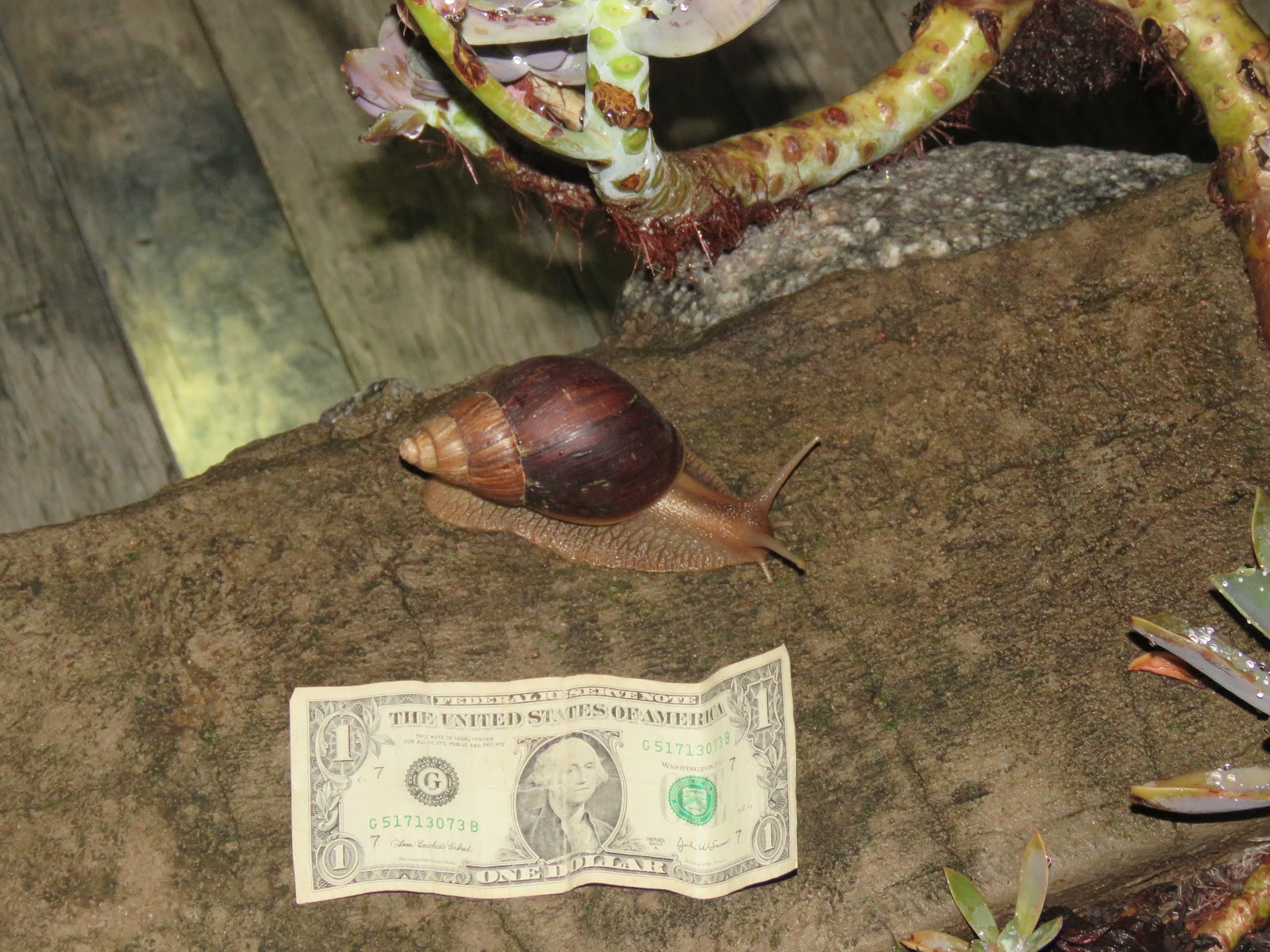
Tom spotted this giant snail outside his hotel room in Nelspruit while I was in the hospital.

“Sighting of the Day in the Bush”

This adorable female kudu  is suffering from TB, as indicated by the tumor on the left side of her face,

As I’ve spent several hours each day resting, walking, and napping, I’ve had plenty of time for serious thought as to why I became a candidate for open-heart surgery.

Was it from the recent lack of exercise since we arrived in Marloth Park over a year ago? Was it the low carb, high fat, moderate protein diet I’ve been on since August 2011 or the high carb, the low-fat, moderate-protein diet I diligently followed for most of my adult life?  Science is confused by these questions.

Over the past several years, we’ve been told by the government what we should be eating and avoiding to maintain a level of health and fitness. These dictates didn’t improve the overall health of citizens throughout the world when many countries followed the American way of eating; too much sugar, salt, starch, and carbs, and still numbers were rising on the scales of poor health.

In today’s medical science, it is still unclear what contributing factors play the highest role in the causality of developing clogged arteries, such as my 100% blocked three of four coronary arteries. Many blame dietary fat while others say dietary fat is not the issue…it’s the cholesterol made by our bodies. What did I possibly do wrong?

It’s sad to see that her days are numbered.

The three cardiac physicians working with me during the eight days I spent in the ICU had no suggestions on what I could do going forward to prevent this from happening to me again in 10 years. That wasn’t very comforting. 

I repeatedly asked, “What can I do differently” and the answer was always the same…nothing. They agreed my way of eating, happy, low-stress lifestyle, and level of activity are commensurate with our life of world travel. They decided upon the deceit perpetrated by my good blood test …nothing appeared to be wrong.

So I’m left with one route to go – to follow the exercise program recommended by the three physicians and worldwide heart health professionals. And, it has begun since we returned to Marloth Path, actually in the ICU unit and the hospital during my many days in residence. Walking. 

Plain and simple, walking. No hand weights, no particular pace other than one that increases the heart rate to a level that allows talking during the process. That’s it. This act continued from my 11 days in hospital.

The walking began within 24 hours of the removal of the intubation tube. Simply walking was laborious to a point beyond my expectations, limited by a lack of mobility with all the tubes, drains, and IV’s still attached.  

Mom and Babies were searching for pellets.

By the time we returned to Marloth Park last Saturday, I was able to walk for 10 minutes. Today, as directed by the take-home instructions, I upped the ante to 15 minutes twice a day. This is not much in the realm of things, but it takes everything I have to get through the 10 minutes, let alone the added ten minutes as of today.

Where do I walk?  I use a timer on my phone in the house, ensuring I don’t quit 30 seconds earlier than required. Eventually, I’ll be able to walk on a road. At this point, I don’t trust my wobbly state of being to venture out on the pot-holed, uneven dirt roads near the house. In due time…falling would be a disaster.  

The goal is to walk for 60 minutes per day in two 30-minute sessions. Knowing myself, once I reach such a goal, I will add my old exercise program to further my strength and fitness.  

There’s no health club in Marloth Park, but hopefully, there will be a facility in Ireland near the house we rented in Connemara. The options look good from our online research.

Today we experienced load shedding for only about one hour. Another is expected at 1500 hours, 3:00 pm, and again tonight at 2330 hours, 11:30 pm to last 2.5 hours. We’ll see how it goes.

Have a fantastic weekend!

Photo from one year ago today, March 2, 2018:
A herd of impalas at the river.  For more photos, please click here.

Patient expertise…What does it require?…

Ms. Bushbuck and growing baby come to call.

“Sighting of the Day in the Bush”

They often stop by for pellets, apples, and carrots.

Note: Load shedding is back on.  We expect a 2 .5 hour outage within the hour.
We apologize for the lack of photos.  This morning’s rain and the trip to Nelspruit made photo-taking difficult.


With rain throughout the area, we decided to leave earlier than planned to make our way to Nelspruit for my first “after-care” visit with the thoracic surgeon who performed the triple coronary bypass a mere 17 days ago.

I’d made a list on my phone of my areas of concern which included the following:

  • Burning feet at night – What I’d assumed…peripheral neuropathy, at times diagnosed after this type of surgery, usually resolving in a few months.
  • Pain in right chest wall – A torn muscle from moving my arm too quickly on the night the power was out.
  • Bleeding incision – As Dr. Phillip stated on Wednesday, it’s a hematoma underneath the which bleeds when irritated during s shower but not bleeding from deep inside my thigh.
  • Side sleeping (which I prefer) – May be done as long as it doesn’t cause pain.
And so it went. My pain and discomfort are entirely normal at this point. I felt a sense of relief knowing my symptoms were within the range of “normal” based on this point in time. 
 
We spoke with the woman who’d had the same surgery on the same day I’d had who went into “theatre” several hours before me. She’s nine years younger than me and was doing much better than I have. But the doc explained that each person is different, and recovery will follow accordingly.  
 
This knowledge provided is with more peace of mind, and now I’ll sit back, doing my exercises and feeling more confident that I will fully recover from this challenging surgery in due time. We don’t return to see the doctor until four weeks from today.  
 
I will be patient and not push it too hard, gradually adding to my activity level, eating healthy meals, rest as needed, and maintaining a positive state of mind.
 
Speaking of being patient, today I’m posting my perception over this past week as to what it takes to be an excellent patient to my exceptional caregiver, Tom, making his tasks a little easier over this long haul which could prove to be as long as three months.
 
  1. The tone of voice -Sure, it hurts. Sure, it’s tough to get out of a chair, off the sofa, or into and out of bed when using arms and elbows are prohibited over these first few weeks. We don’t realize how much we depend on our arms and hands to assist us in moving from one position to another, from one room to another, etc. The tone of voice in asking for assistance is everything.  Instead of saying, “I need help,” how about, “Honey, can you help me stand up?” This pleasant tone may make all the difference in the world in the enthusiasm of the caregiver in assisting in all areas.
  2. No whining, whinging, complaining – The caregiver can’t change the terrible circumstances, nor can they make the pain disappear. Complaining provides no benefit other than when a groan or moan is precipitated by certain actions. After all, we are humans and tend to make it known to all surrounding parties that a certain task is difficult, exhausting, or downright impossible.
  3. Expressing thankfulness – It’s a huge responsibility to be a caregiver and seldom includes remuneration among couples or close parties. A heartfelt “thank you” goes a long way, especially when accompanying the completion of any task together. One can never say “thank you” too many times in a day, here again using a pleasant and sincere tone of voice.
  4. Don’t criticize how household tasks are performed, which generally the patient may have done. Each individual has their way of doing things, and attempting to “re-educate” the caregiver is unkind and selfish.
  5. Don’t complain about meals – Perhaps the patient was the sole preparer of food and meal planning.  Suddenly this task is taken over by the caregiver who a). May not know how to cook or b). Doesn’t enjoy cooking. Firstly, eat the food prepared as long as it fits within the parameters of any special meals as prescribed by the doctor. Secondly, make positive statements to the caregiver about flavor, presentation, or ease used in preparing the meals. Thirdly, if the caregiver asks what you’d like to eat, choose simple and easy to prepare items, not fancy recipes that require time and attention.  If there is something special you’re craving, ask the caregiver to find such prepared items on their next trip to the market. Try to suggest meals you know you’ll both enjoy rather than the caregiver deeming it necessary to cook two separate meals.
  6. Bathing, dressing, showering – Most likely, based on your condition, performing these daily rituals on your own makes the caregiver’s job much more manageable. Only ask for assistance in those areas you find dangerous to do on your own or complex during this period. Do not attempt to perform tasks on your own that only exacerbate your medical issues. You’re not doing either of you a favor.
  7. Each day set aside time when your needs are minimal to allow the caregiver a break – This may be while you nap, read or play a game on a device. Most likely, the caregiver is experiencing some stress, and a designated rest period for them may be all it takes to keep them upbeat.
  8. During periods of ill health or during recovery, there’s never a time that expressing love, affection, and gratitude doesn’t serve you both well. A gentle hug, a tender kiss, or a kind word or compliment will never be lost during this period and, of course, well into the future.
Memories of this recovery period can be a pleasant extension of an already great relationship. Negative comments, behavior, and attitude will ultimately tarnish the relationship.
 
And so, dear readers, we end today’s post with these thoughts in mind and hope, should you ever be the caregiver or patient, you can do so with grace, dignity, and a bit of humor thrown in on the side.
 
Happy day to all.

Photo from one year ago today, March 1, 2018:

This is most likely a lone male elephant as explained here: “Male or bull elephants have very different social needs than the females. In the wild, males leave or are driven out of the family group as they approach sexual maturity. Males spend as much as 95% of their lives alone or in loose association with other bulls.” For more, please click here.

Caregiver expertise…What does it require?…

Mom and Babies were hanging out by the recently cleaned cement pond.

“Sighting of the Day in the Bush”

Her attention and love of her offspring have been unrelenting since we first saw them in August.
There’s never been a time in my life that I required a full-time caregiver. Although I had surgery a few times, I recovered quickly and only needed help lifting heavy objects or grocery shopping for a week or so. In all likelihood, this is the case for most of us.
 
But now, I strive to recover from this dreadful and complex surgery with my sternum cracked, chest cut wide open, and numerous incisions are running the length of my legs, all of which are painful, making moving about the complex.
 
In addition, I’ve had two painful chest tubes since removed that have stitches to be removed tomorrow when we return to Nelspruit for an appointment with the surgeon.
 
No doubt, with only 16 days since the surgery, there is still a lot of pain and discomfort. It takes six to eight weeks for the cracked sternum to heal, as would be the case for any broken bone.  
 
In the case of most broken bones, the patient is wearing a cast during this healing process. It’s impossible to stabilize this type of break with a cast, and thus, I must move gingerly to avoid further injury.
 
Thus as described above, this is the time I need a full-time caregiver, namely my husband Tom, who’s had no significant experience in this area throughout his life.
 
I can do several things for myself; bathe, bathroom, getting in and out of bed (where I spend little time during the day as recommended by the doctors). I cannot use my arms for tasks such as folding towels, chopping and dicing vegetables, or performing many household tasks.  
 
Thank goodness we have Zef and Vusi (included in our rent) who come each day to make the bed, wash floors and clean the house. With all the animals kicking up their heels in the dirt garden, there’s more dust in this house than one can imagine. Here again, one more bit of serendipity that proves that this was the best place in the world for this to happen to me.
 
As a result, as the caregiver, Tom doesn’t have to spend time cleaning the house; other than doing dishes and picking up after us after they leave, his attention is not divided in my full-time care. This is another huge benefit for which we are both very grateful.
 
One of his biggest jobs in getting those darned compression stockings on my legs each morning. As tight as they are, it’s an athletic event. It’s not easy putting on these tight knee-high stockings when I have awful incisions in both of my legs, and he’s trying desperately not to cause further pain. But each day, it goes a little more smoothly than the previous day.
 
Over these past five days, since he took over as my caregiver, after my release from the hospital, there are a few things I’ve observed that truly define the quality of a caregiver beyond the basic tending to bandages, stockings, and mobility.
 
Let me add here; I requested an early release from the hospital. Once I moved (after eight days) from the ICU unit to the regular hospital, it didn’t take more than a few hours to realize the quality of care went from a 10+ down to a zero. At that point, I knew Tom could and would take better care of me. As a result, I only spent two days in the hospital ward, in a room to myself. 
During this period of high temperatures, some warthogs avoid cooling off in the cement pond when the water has become warm.
Most patients spend from three days to a week in the hospital ward after being released from the ICU unit. In my case, I spent eight days in the ICU and, as mentioned above, only two days in the hospital ward.
 
Back to the points that I’ve found have been most helpful in addition to basic caregiving tasks have been the following, in order of preference:
  1. Caregiver’s attitude: Nothing could be more distressing than having a caregiver who wasn’t encouraging, upbeat, and optimistic. A negative resentful attitude could, without a doubt, have an impact on the rate of recovery. Regardless of how difficult this may be, never attempt to make the patient feel guilty for putting them in this position.
  2. Willingness to prepare special meals: Many patients have a diminished appetite and desire to eat after bypass surgery. Healthful, familiar meals are a real boon to the patient’s recovery.  
  3. Replenishment of cold fresh beverages can be instrumental in recovery: The medications may cause extreme thirst and a dry mouth. Drinking plenty of fluids is required for recovery. Having stale water or beverages hardly inspires the patient to drink to replenish their needs during the healing process.
  4. Participation in the rehabilitation process: This type of surgery (and most others) require a committed and diligent walking program. By encouraging and gently reminding the patient as to this process is crucial in making a complete recovery. If the caregiver walks with the patient, especially if they’re fearful of falling, the patient grows more confident.
  5. Medication distribution and monitoring: Many times, patients find themselves taking eight to 10 new prescriptions, some of which are taken at varying times of the day and night. A conscientious caregiver will oversee this process to ensure correct dosages to avoid over or under-medicating. Some pain medications cause drowsiness and result in the patient becoming forgetful.
  6. Encouraging rest periods: Instructions after surgery may include certain activities based on the patient’s level of progress. Type A personalities may quickly become overjealous in performing such tasks. As much as the patient believes “more is better,” a good caregiver will monitor such activities encouraging rest periods and following doctor’s orders.
  7. Creating a comfortable sleeping and napping arrangement: If the patient is uncomfortable sharing a bed with their caregiver/spouse and if the space is too small for comfort, an extra bed in the same room might be suitable. Air conditioning in hot weather is a must, as is appropriate heat in cold environments. Avoid extreme temperatures to aid in healing. Ensuring bedding and pillows are placed for the utmost comfort is a must, even when the patient is out of bed and seated at a table or in a chair.
  8. Escape time. When going through a difficult recovery, everyone needs a period each day to escape from worrying thoughts and pain. Watching fun TV shows and movies, games to play, or other such activities reduces the time the patient feels stressed, here again aiding in recovery.
  9. Encourage feelings of self-esteem: Let’s face it, having one’s body mutilated from surgery is a difficult thing to meet for some patients. Only the caregiver will know if this is an issue and provide realistic encouragement during the recovery process and in times to come.
These points became apparent to me over these past several days, and I only have Tom to thank for making this trying time tolerable. Besides, a little laughter throughout the process can easily lighten the load for both patient and caregiver. There’s no shortage of that in this household.
 
Tomorrow, we’ll cover the patient’s responsibilities to aid in their recovery process and the willingness of the caregiver to carry on with love, support, and excellent care.
Be well, dear friends, and thank you all for “coming back.”

Photo from one year ago today, February 28, 2018:
Nearby at another tree, we spotted a rhino mom and her baby, born this season and still closely attached to the mother. For more photos, please click here.

Part 3…Outstanding day in Kruger National Park…Elephants are amazing!…People are too!…A fabulous night at Jabula…

Video #1 – A surprise participant in the background.
 Video #2 – Playful elephants.
 Video #3 – More elephant antics.

“Sighting of the Day in the Bush”

A very young impala.

It’s Wednesday morning, a typical day in the bush. Vusi and Zef are cleaning the house. The Mom and Babies (four piglets) are busily munching on pellets at the edge of the veranda. Ms. Kudu left a few minutes ago after she’d had her fill.  

The sky is partly cloudy, and we’re in for another cool day. There are thousands of dead insects on the veranda floor overnight (a daily occurrence). Soon, when the interior of the house is clean, Vusi and Zef will come outside to clean the veranda while we’ll go inside to get out of their way.
The matriarch was watching the youngsters play in the Sabie River.

Once they’re done, we’ll come back outside to spend the balance of the day outdoors, as we always do, busy working on the post and plans for the future. Tom spends some time on Facebook and Ancestry while I work on projects around the house.

Once I’ve uploaded today’s post, I’ll finish doing laundry, preparing tonight’s dinner, and perhaps work on some items to be packed for our departure in 15 days. Today’s project is neatly folding all of our “bugs-away” and safari clothing I’d washed yesterday and have since dried. Safari in Kenya isn’t too far away. 

It was irresistible…she joined them.

Last night we had a fantastic time at Jabula Lodge & Restaurant, celebrating Dawn’s (friend and owner) birthday. It was delightful to see how many loyal fans came to extend our best wishes and gratitude for the beautiful job (along with partner Leon) in making this a memorable establishment with great food, ambiance, and service.

Many brought gifts, hugs, kisses, and warm wishes for Dawn. A table filled with scrumptious-looking appetizers and drinks hosted by Leon added to the festivities. 

They wanted to play with her.

If there ever was a “Cheers” type bar, Jabula fills the bill. The new and the familiar faces, the lively conversation, loud laughter, and the ease with which everyone in attendance feels welcomed and included are unreproachable. 

We met a new couple originally from Germany, living in Marloth Park part-time and soon moving their business to live in Florida, USA. We saw old friends with health challenges possessing upbeat attitudes off to work on the next phase of hopeful recovery.  

Finally, it was time to get out of the river and continue their day.

We chatted with new friends we’ve made this time around, along with old friends from five years ago. Tom and I arrived early to sit at our favorite spots at the bar and eventually ordered delicious dinners, never giving up our barstools.  

It wasn’t the first time we dined at the bar when we were having too much fun to go to a table on the veranda. I can’t recall ever enjoying dining at the bar until Jabula.

The littlest one followed close to the adults as they were on their way.

Leon played the role of DJ, and the music had most of us either dancing in our seats or on our feet to kick up our heels. Women danced with women and men, well, they danced with all of us. It was grand. It was memorable, as were so many nights we’ve spent in this unique establishment over this past year.

When Tom and I danced to a slow song, holding close in each other’s arms, I felt an immense sense of happiness wash over me, coupled with a bit of melancholy. But, the melancholy quickly wafted away when I reminded myself that those arms will still be around me long after we depart Marloth Park, and the memories will always remain in my heart.

Thank you for sharing this special time with us…

Photo from one year ago today, January 30, 2018:

This elephant seal was so relaxed, a bit of drool dripped from her mouth. A bath would be nice. For more stunning scenes from Antarctica, please click here.

Part 2…Outstanding day in Kruger National Park…A heartbreaking sighting…Part of life in the wild?…

 A short video of this gaunt-looking lioness.

“Sighting of the Day in the Bush”

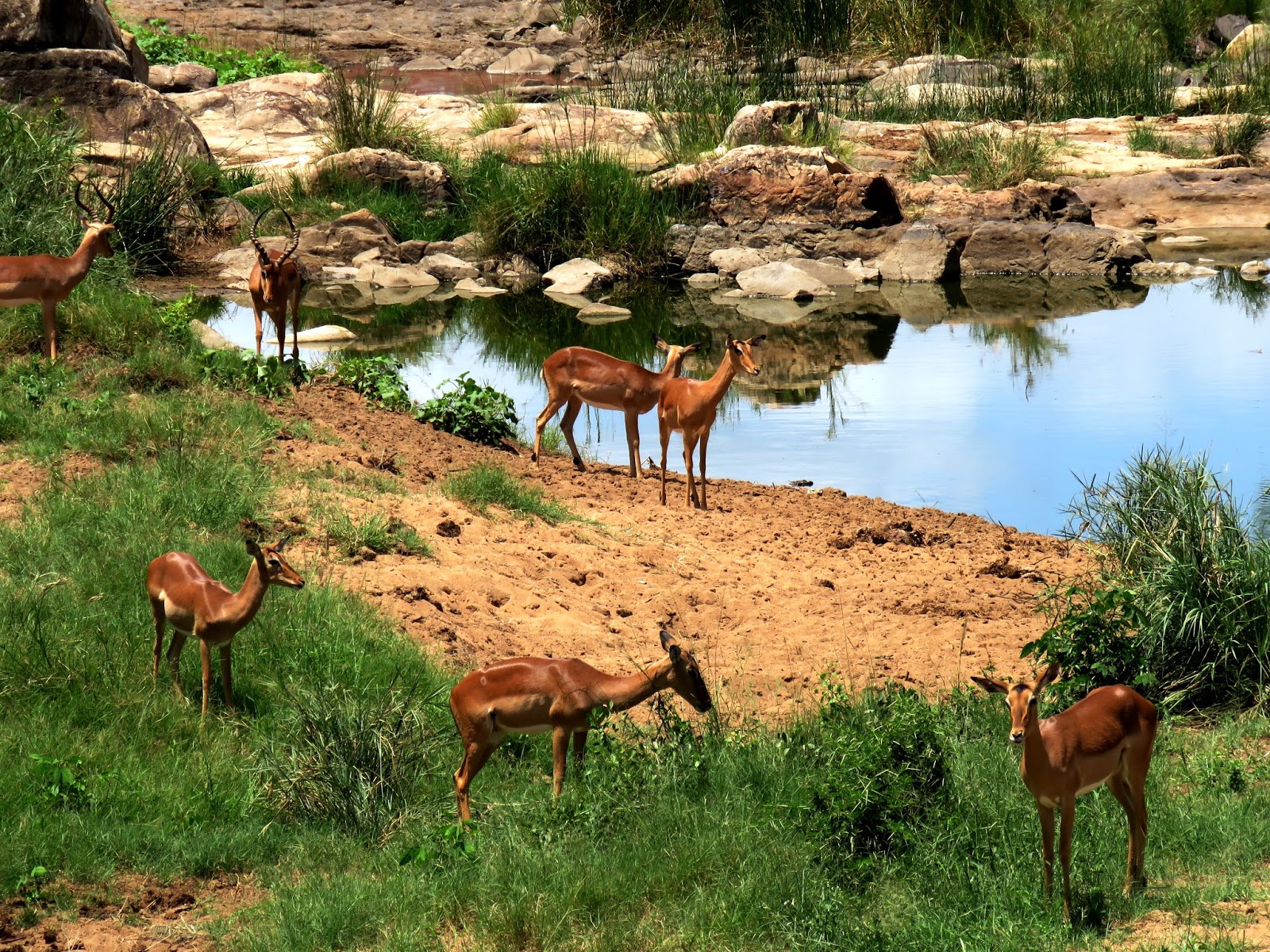
A herd of impalas at the side of a dirt road we traveled in Kruger.

We often hear others say, “This is life in the wild.” Hearing this doesn’t lessen the emotions we feel when we see an animal suffering. It’s sad to see a human or an animal in pain, ill, or emotionally distraught for any reason. But, the realities of life don’t diminish the emotions we feel when we observe such a scenario when often there is nothing we can do to help.

A few evenings ago, a little male duiker, a timid member of the antelope family, was trapped inside the chicken wire-fenced garden area within our garden. Somehow he’d managed to find his way inside this lush area of greenery and became trapped when he couldn’t navigate an exit.

It was sad to see the lioness suffering.

We were seated at the big table on the veranda and noticed him ramming his head into the chicken wire, trying to escape. Helping an animal, however small, in a panicked situation such as this could be dangerous.

We’d seen a photo where a bushbuck died trying to extricate its head from being stuck in a fence in Marloth Park. But we weren’t going to let him die before our eyes. If residents feel they need fences they definitely should be a type that prevents wildlife from potential injury or even death.  

One can only guess why this particular lioness hadn’t been hunting and eating.

We often wonder why there are hazardous fences in the park. Don’t people come here to be “one” with nature, not hiding behind fences? None of the Big Five permanently reside in Marloth Park and rarely does a lion, leopard, or cheetah rarely find its way into the park. Surely, a fence of any type wouldn’t necessarily protect a human from such a dangerous encounter.

Tom grabbed the long, extendable pole he used to chase off baboons and monkeys and attempted to raise the bottom of the fence to allow the duiker an exit. The poor little creature bellowed in total fear while Tom tried to help.

There is a gate to this area, and we immediately opened it hoping the duiker would see the open exit. While Tom tried to help him, I stood at a distance from the door, hoping to see him escape.

We assumed she was ill or injured.

Finally, after several minutes of him running into the impenetrable wire fence in different enclosure locations, he spotted the open gate and escaped. We both sighed in relief. 

He’s a duiker we’ve often fed and wondered what he was after in that area. Perhaps it was a type of vegetation he particularly liked. Once he ran off, leaping through the air, we wondered if we’d ever see him again.  

A few hours later, Alas returned, and we tossed him some pellets, tiny bits of carrots, and apples. (We always cut the veggies into small bite-sized pieces for the duikers and bushbucks. Kudus and warthogs can handle big chunks but not the tiny antelope or babies of most species).

Every step she took appeared to be an effort.

We were relieved to see he was uninjured and back to his shy little self, often appearing with a female he seemed attached to.  But, the lion we spotted in Kruger didn’t have the potential of a good outcome after we’d seen her looking so unwell.

Sure, we can say, “This is life in the wild,” but that harsh reality doesn’t insulate us from feeling sad for a suffering animal in the wild. Nor, in essence, do we ever want to feel less compassionate. It’s that compassion and love for wildlife that brought us to Africa in the first place. We don’t want to become “tougher” and more accepting of the often gruesome realities.

In today’s world, horrifying videos portray atrocities lodged upon wildlife, many too horrific to mention. Is it possible to see these repeatedly can cause us to become immune to appalling scenes that diminish our ability to feel compassion?

She appeared to have made her way under the bridge where we’d no longer be able to see her.

Seeing the lion in such sorrowful condition left us feeling in tune and touch with nature, that even after many such sightings in this past year of living in the bush, we still care, we still feel, and we still treasure the beauty of life in the wild.  We remain untarnished by the harsh realities.

In 16 days, we’ll leave Marloth Park. We’re grateful for this life-enhancing year in the bush while looking forward to what lies ahead of us.

Be well.

Photo from one year ago today, January 29, 2018:

At lunch that day in Antarctica, one of the chefs prepared a beef and vegetable stir-fry outdoors. We all partook of the delicious offering but decided to dine indoors. It was a little too cold to eat outside for our liking. For more photos, please click here.