Day #206 in lockdown in Mumbai, India hotel…Auto email issues resolved!…Romantic Lion Couple…Rated “R”…

It was a perfect morning. The Romantic Lion Couple in the Maasai Mara in 2013 appeared casual and at ease under the shade of this tree. But, the air was filled with emotional tension.

Note: Many of our readers were not receiving the automatic daily email posts and have notified me accordingly. Our web developers have been working on this issue, and a few minutes ago, I received an email that the problem had been resolved. Thank you so much for being so patient. If you’d like to receive an auto-email daily with the newest post, please click the link at the top right of our homepage at SIGN UP TO NEWSLETTER, where you can enter your email below that. You will receive a confirmation email to reply to. You can unsubscribe easily at any time.

The female lion occasionally opened an eye, checking out his next move.

Today’s photos are from the post on this date in 2013 while on safari, staying at Camp Olonana in the Maasai Mara, Kenya. For more on this date, please click here.

We’ll never forget the day we aptly named the Romantic Lion Couple while on safari in the Maasai Mara of the mating lion couple. When our guide, Anderson, spotted this female and male lion lounging under a tree at a distance through his high-powered binoculars, he knew exactly what was going on and drove like a “bat out of hell” to get there in time for us to watch the rarely seen event.

“She likes me. She likes me!” He looked at us as if seeking approval to move along.

We all waited patiently for an hour to get today’s repeated photos. It was amazing to see the cycle of life with these two majestic animals getting along so well, when often they are at odds with each other, often over food. Generally, in the wild, female lions hunt, and nearby male lions steal their food.

Was this a precursor to women notoriously being the cooks and men eating the food we shopped for and cooked? Of course, in today’s world, that has changed dramatically, for the better with men often cooking, and from what we understand becomes more and more prevalent in these times of more equality.

Although he appeared relaxed, he was well aware of the task at hand, politely awaiting the perfect opportunity.

Right, now on day #206 in lockdown, while longing to do our cooking, I’d be thrilled to cook a meal while Tom sat by and watched. He can steal my food anytime! But, for us, when preparing meals, he helps with the prep and does all the dishes. I love this arrangement and can’t wait for it to begin once again.

In the interim, I’m still working on the revisions on our almost 3000 past posts, one by one. Most days, I can complete one page of 20 posts out of a total of 150 pages. I am only on page 34 with 116 more pages left to do.

“I think it’s time to get this show on the road!”

Now that all five of the extended 2000 word posts are done, I can focus on the corrections to complete one page of 20 per day. At this rate, it will take approximately four more months for me to complete the task. A part of it has been enjoyable, rereading every post we’ve done while I search for errors to correct.
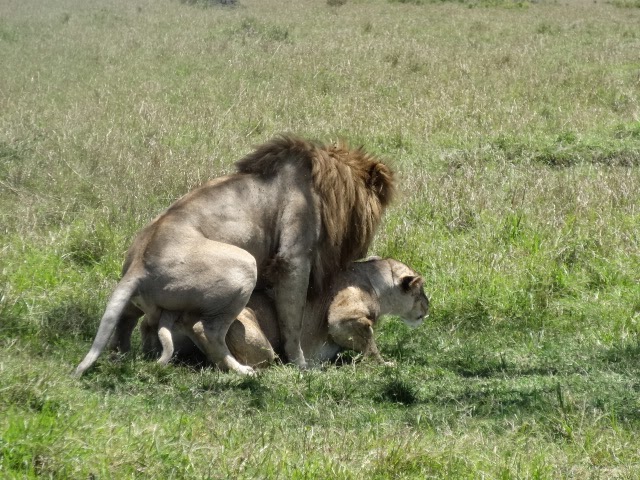
 We are actively engaged in mating before our eyes.

By no means is this an assurance that I didn’t miss some of the errors? But, it’s certainly a lot better than it was in the old Blogger format I was using instead of WordPress, which allows for proper line spacing and font construction. Also, I am correcting all the double spacing after a period for each sentence.
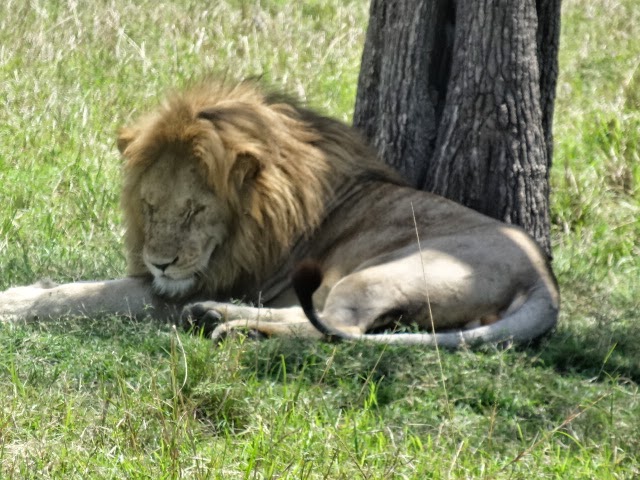
Afterward, he moved back to the tree in his usual spot, perhaps contemplating his next move.

During these past eight years, the use of double-spacing after a period has long been defined as unnecessary. Initially, this double spacing was established as necessary when typing on a typewriter. Old-timer that I am, I learned that old habit and didn’t start changing it until recently. I have no doubt. I am missing some of the corrections in this regard when editing each of the 3000 posts.

It takes about eight minutes of editing time per post resulting in almost three hours each day, beyond the time it takes to do the daily post plus stopping every ½ hour from walking in the corridors. These tasks keep me busy most of the day. What else do I have to do while in this hotel room? When I am done, I’ll be relieved and grateful I took the time for this daunting task.


May you have a pleasant day!

Photo from one year ago today, October 15, 2019:

We encountered the view of the Wye River in Wales on a drive in the area. For more photos, please click here.

Day #199 in lockdown in Mumbai, India hotel…Has it really been 199 days?…

Tom nudged me to turn around when I had the camera pointed in the opposite direction. I gasped when I saw this, a gift from the heavens. Thank you, Kenya.

Today’s photos are from the post on this date in 2013 while on our first safari experiences in the Maasai Mara, Kenya. For more on this date, please click here.

As I wrote the heading for today’s post, “Day #199 in lockdown in Mumbai, India hotel,” I flinched. Has it really been 199 days that we’ve lived in this one room? Has it really been 199 days since we’ve gone for a walk in the fresh air, free to wander at our discretion, window shopping, stopping for a beverage at an outdoor cafe, or even wandering into a restaurant for a meal?

Has it really been 199 days since we prepared a meal, opened a refrigerator for a snack, or even sat at a table to comfortably consume a delicious homemade meal? Has it really been 199 days since we had a steak, a hamburger, or a pork chop? Or, yet a glass of wine or cocktail?

This female lion, like all animals in the wild, is constantly on the lookout for the next meal to feed her cubs, who were also lying under this tree as shown in the photo below.

In actuality, it’s been more than 199 days since we did any of the above. We left the US for India on January 29, 2020, a full 253 days ago. But, for our purposes here today, we’ll discount the first period of time up until lockdown in India on March 24, 2020, when those prior days were spent sightseeing in India as a part of our previously glorious world travels.

Has it really been 199 days since we began handwashing all of our clothing in order to save US $400, INR 29319, a month in laundry fees if the hotel washed and dried all of our clothing?

And now, that liquor is served in the rooms as of a few days ago, we’ve decided to further abstain since neither of us enjoys drinking in a hotel room. But more so, the cost of the average glass of wine or cocktail with 38% in taxes will cost around US $15, INR 1099. If we each had one drink per night, one month later, we’ll have spent an additional US $900, INR 65968. It’s just not worth it to us, not even for the cost of an occasional drink. We’ve waited this long…

The female lion is at leisure with her cubs under the shade of a tree.

And then, I ask myself, are the same meals we’re eating day after day made with healthy ingredients? Are the eggs free- range? Is the chicken we’re consuming every single day free-range or laden with antibiotics and chemicals? Are the ample portions of vegetables I consume night after night, pesticide-free? We have no idea and, asking such questions, with the language barrier, makes answers impossible. Long ago, I gave up asking questions about quality and food sources.

Most travelers stay in a hotel for a few nights, a week at most. None of these issues are a concern for one night or one week. However, 199 days later, these concerns are unavoidable, even in a nice hotel, like this. Of course, they are always considering cutting costs. It’s the nature of business especially for a huge conglomerate like Marriott.

The three guys in our safari vehicle laughed when us girls said that hippos are cute. They are actually responsible for the most deaths of humans than any other animal in the wild.

Yes, we are safe in cool comfort with great WiFi, a comfortable bed and bedding, and two quality chairs we sit on day after day. Yes, we can stream popular TV shows and movies from a variety of streaming services. In total desperation, we start watching in the late afternoon until bedtime, when there is literally nothing else to do. (I walk the hallways, starting first thing in the morning, every hour, and then between shows in the afternoon. I’m finished by dinnertime having accomplished my goal of 10,000 steps per day, roughly 5 miles, 8 km). Tom walks and does the stairs in the morning.

Has it really been 199 days that somehow, we’ve both maintained our sanity, continued to be able to laugh, get along with one another with nary a blip, and stay motivated to continue to write here each and every day? Yes, it has really been 199 days.

The acacia tree, usually flat on the top is a common tree in Kenya.

The question we ask ourselves is, “Can we take another 199 days?” That remains to be seen.

Be well.

_________________________________________

Photo from one year ago today, October 8, 2019:

High Street in Torquay, Cornwall, England, many towns and villages have banners flying indicating the main shopping area. For more photos, please click here.

Coffee, tea or me…

A kudu dancing in Chobe National Park in Botswana.
Note: To all of our readers visiting our site via a smartphone, please click the “View web version” tab under the word, “Home” at the bottom of the page to access the web version enabling you to access all of our archives on the right side of the page. We’ll be updating our site in a few months, making these extra steps unnecessary. Thank you.
Today’s photos are from May 25, 2015, from Negara, Bali.  Please click here for more details.
One of the highlights of our day, along with our two meals, is preparing and drinking coffee which we both enjoy along with the two or three mugs of green tea I may consume each day.

Buffalos, escorted by pre-teens, wandering along the beach on their way to a nearby river.
We’ve found the complimentary instant coffee provided in our hotel room is acceptable in flavor. Tom enjoys “regular” while I drink “decaf.” In normal times, decaf wouldn’t be my first choice. 
As we drove past this decorative wall, I asked Gede, our houseman, to stop for a close-up photo as shown below.
But, when I stopped caffeinated coffee after heart surgery 15 months ago, I’ve never returned to “regular,” figuring I’d get jittery now that so much time has passed. Green tea or other teas may have caffeine but they don’t seem to elicit the typical caffeine response when consumed in moderation.
So beautiful.

Here are the variances of the two products:

“Coffee has between 95 and 200 milligrams of caffeine. black tea has between 14 and 70 milligrams of caffeine. green tea has between 24 and 45 milligrams of caffeine. white tea has between 6 and 60 milligrams of caffeine.”
 
These figures may vary substantially based on any particular product, how long the tea steeps, or how the coffee is prepared. Throughout the world, we’ve experienced a wide array of coffees. Over these past years of world travel, we’ve made an effort to try the local coffee as well as varying methods of preparation.
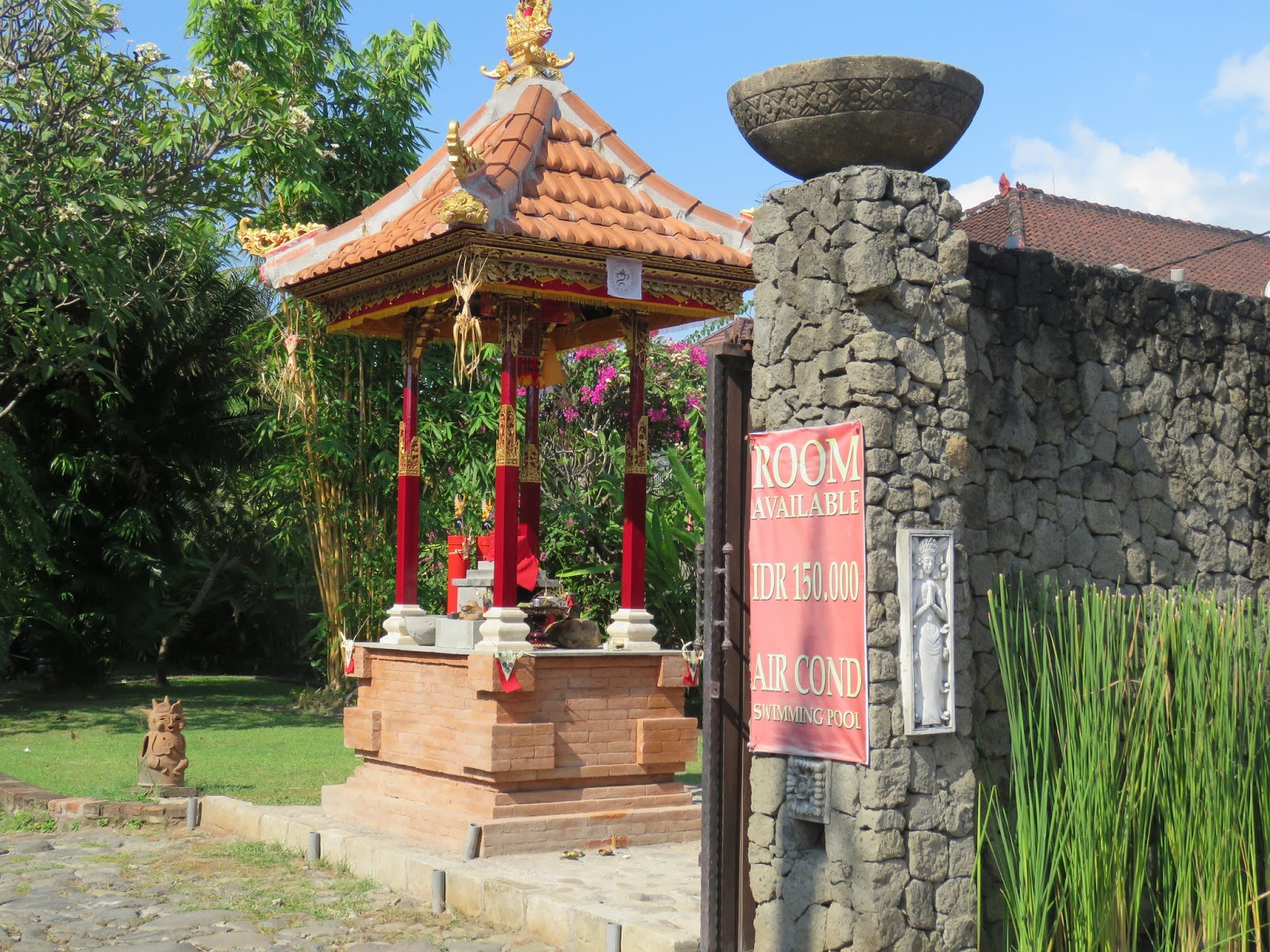
A room was offered for rent at this property for INR 834, US $10.97!
When we visited Australia off and on in 2015/2017, we were surprised to find that traditional coffee-making products were very different from what we’ve been used to drinking in other parts of the world which included on-the-stove coffee pots, drip coffee makers, pod coffee makers, and our favorite French press coffee maker (Tom is masterful with the French press).
We’d never seen a flower-only farmer’s market. Flowers are commonly used as offerings to the Hindu temples and at many of the resorts and villas.

Instead, in Australia, Tasmania, New Zealand the islands in the South Pacific, instant or dried coffee was most commonly consumed. Here in India, in all the hotels, we observed large coffee makers in the restaurants and instant coffee in the rooms.

Simply lovely. I could smell them from across the street where I stood taking these few photos.
In this hotel, the Courtyard by Marriott Mumbai International Airport, the coffee that was served in the restaurant, before it closed weeks ago, was the barista-type coffee machines capable of frothing milk, making espresso, and cappuccino.
We stopped at the curb on the outskirts of the village so I could take a photo of the flower market. Instantly, we were approached by a “traffic cop” asking for money for parking and two others asking for money, unrelated to the traffic.
Although we could order the specialty coffees at breakfast, we’ve opted to make coffee/tea in the room. If we were to request specialty coffees, it would delay the time in receiving our breakfast, which we call and request each morning, based on when we’re up, showered, and dressed for the day. (We request dinner at the same time each evening, placing the same orders each evening by 6:00 pm for a 6:30 delivery).
We crossed this bridge on our way to Lovina where it took five days to renew our 30-day via.
Two or three times during the day, we each make coffee. With no snacks available, the ritual of preparing and drinking the coffee is a pleasant break from our otherwise relatively dull days.
While shopping at the Carrefour market, I couldn’t resist stopping to admire these colorful Dragon Fruit.
I read today that alcohol purchases for home consumption will be allowed in South Africa beginning on June 1st. This is great for all of our friends there. Oh, that I wish we could be there with our friends, even with social distancing, sipping a cup of coffee, or perhaps even a glass of wine.
 
Stay safe, dear readers!

Photo from one year ago today, May 25, 2019:

The entrance to the Connemara Heritage and History Centre located near Clifden. For more photos, please click here.

Trying to sleep when our minds won’t shut off…Fitbit stats from last night…

Watch this astounding situation we encountered in Kruger National Park, with horns of two buffaloes entangled, another video the park asked to post on their site.

Note: To all of our readers visiting our site via a smartphone, please click the “View web version” tab under the word, “Home” at the bottom of the page to access the web version enabling you to access all of our archives on the right side of the page. We’ll be updating our site in a few months, making these extra steps unnecessary. Thank you.

Today’s photos are from May 24, 2018, from Kruger National Park in South Africa.  Please click here for more details.

As we all know, sleep can be elusive for many in the best of times. Add the concerns over our own, our country’s and the world’s current situation falling into the mix of worries, and concerns making sleep elusive, short, and disruptive.
Wearing my Fitbit has given me a better perspective of how much I am able to sleep. Below are the stats from last night’s sleep, indicating overall that I had a reasonably good night’s sleep of 8 hours 45 minutes, but the red portion indicates how often I awoke.


It’s no wonder I may feel sleepy during the day today when I awoke so often during the night. I remember the middle of the night awakenings but hadn’t realized how much difficulty I had in falling asleep. 

As shown above, the four stages of sleep are “awake, REM, light, and deep.” It’s during the REM sleep that we dream and as indicated above 20% of my night’s sleep included REM during which time we dream. Last night, I dreamed about the lions; a male and a females with cubs that are currently in Marloth Park.

These two cape buffaloes, close to the dirt road, with their horns stuck together made it easy for us to get these photos.

During usual, not Covid-19 times, I may have slept a total of 7 hours but awakened very few times. Also, in normal times, I’m often excited to get up and begin to enjoy the day. Here and now, the later I sleep the quicker the day flies by.

Most certainly, I’m not trying to “wish my life away” but instead shorten the periods of boredom often encountered during daylight hours. Thank goodness for my hourly walks. Paying attention to the time and when I have to walk again, helps the day pass more quickly.
 
However, what happens to most of us when we awaken during the night when we may be particularly stressed or worried? We put our brains into action and the added activity can make it more difficult to fall back to sleep.
The anguished look on the faces was disheartening.

As shown in the above chart I managed to go back to sleep after all those middle-of-the-night awakenings. I know it sounds silly, but I do count backward from 100 after ensuring I am in the most possible comfortable position. Then, breathing deeply and steadily, somehow I manage to fall back to sleep.

The trick for me is clearing my mind. Some people listen to music or sleep apps. But, I am trying to avoid using my phone for anything during the night unless I haven’t been able to go back to sleep after being awake for 30 minutes or more.

In that case, I may play a boring game of solitaire but avoid playing scrabble which, in its competitive nature in playing with other players online, can get my brain engaged to a point, I’ll never go back to sleep.

They tried desperately to become un-entangled to no avail.

One trick I’ve also found that helps, especially during this lockdown period, is not to “worry” about not sleeping. So what if I only sleep three hours? I can always nap the next day if necessary (which I rarely do). Worrying about it only exacerbates the problem. Worrying about anything exacerbates the problem.

It’s not easy to free our minds during these difficult times. But, restful sleep is as important for one’s health as is exercise, a good diet and a low level of stress. 

It has been during this time of Covid-19, locked away in a hotel in Mumbai, India that I have preoccupied myself with my health through healthy, although repetitive diet, losing a few pounds I’d gained from all the heart medications; hourly exercise; good sleep and above all attempting to keep my mind as free as possible from negative thoughts.

Another buffalo approached wondering what was going on. Check the above video as to what the other buffalo did to help. See the above video to see how the buffalo in the background saved the day.

It’s a big challenge which essentially has been made easier by our odd circumstances. There’s no access to snacks, alcoholic beverages and the meals served are consistent with the same macro-nutrients each day. Sure at times, I’m hungry and don’t feel like walking but I know all these efforts may serve me well in times to come.

Good sleep falls right in line with these other choices during this potentially stressful and often trying times.

May all of you get plenty of quality rest and maintain good health during this outrageous period in all of our lives.

Photo from one year ago today, May 24, 2019:

Chaiseal describes a “stone fort” in the Irish language, in Connemara, Ireland. Please click here for details.

We don’t know…Unsettling times..

Tom shepherded sheep while I took this video in Devon, England.

Note: To all of our readers visiting our site via a smartphone, please click the “View web version” tab under the word “Home” at the bottom of the page to access the web version enabling you to access all of our archives on the right side of the page. We’ll be updating our site in a few months, making these extra steps unnecessary. Thank you.

Today’s photos are from May 23, 2014, from Connemara, Ireland.  Please click here for more details.

With our combined innate ability and concomitant enthusiasm during over seven years of world travel, there were few, if any, occasions for which we could say, “We don’t know” about our plans.

We were surprised by the excellent roads in Madeira.

As is the case for embarking on any holiday/vacation, part of the joy of traveling the world is the anticipation of what is yet to come. For the first time since October 2012, when we began our journey, we can only say, “We don’t know” what the future holds.

At the beginning of our travels, we’d often book locations, holiday homes, and cruises, as much as two years in advance. We discovered that these distant bookings provided us with a sense of comfort by not having a home, knowing where we’d be short.

More one-way double lane tunnels in our area.

Now, during times of Covid-19, we don’t know anything beyond the next 24-hours. Within a matter of a week, international airports could open both in India and another possible location. Within hours, we could be packed and out the door on our way to the airport.

No doubt, this is unsettling. But, our situation is not so unusual when workers worldwide don’t know when and if they’ll return to work or when they’ll be able to pay their bills and put food on the table. However, speculation by their country’s leaders may provide a modicum of information leading to speculation as to when this will transpire.

What story would this abandoned house tell?

Does the world need to get moving again? The loss of life and well-being may far exceed the number of potential deaths from this virus. People here in India are out of work, starving while watching their modest way of life dissipating before their eyes.

But, as much as opinionated people like to espouse that the lockdown should end, the delay in doing so lies within this same premise, “We don’t know” what will happen if it ends. If “they” knew, more consistent and positive action would be taken.

Many of the tunnels on the island are one way to reduce the risks of accidents.

Blaming our leaders is pointless. “They” don’t know. Scientists don’t know, although many claim to have the answers, which vary from “open everything up” to “keep the lockdown in force for the next year or more.”

In many ways, lockdown is easy for us. We don’t have to purchase food and supplies and expose ourselves to the potential carriers who aren’t wearing a mask or exhibiting symptoms.

Driving around Madeira was challenging, although the roads are newer and well maintained.

Our only exposure is to the staff here, which has been changing recently to take over for staff members who’ve been living here for months, like us. Their temperature is taken daily, but most carriers don’t have a temperature and silently expose those in their surroundings each time they talk, let alone cough or sneeze.

Have you ever been in a conversation in a sunlight-filled space to observe the droplets spewed from a person’s mouth while talking with passion? It’s no different than the dust we see under those same conditions.

The nutrient-rich hills of Madeira were being prepared for summer produce.

So, now as the days turn into nights, weeks into months, we still don’t know, nor can we realistically speculate on what the future holds for us, for you, for the world.

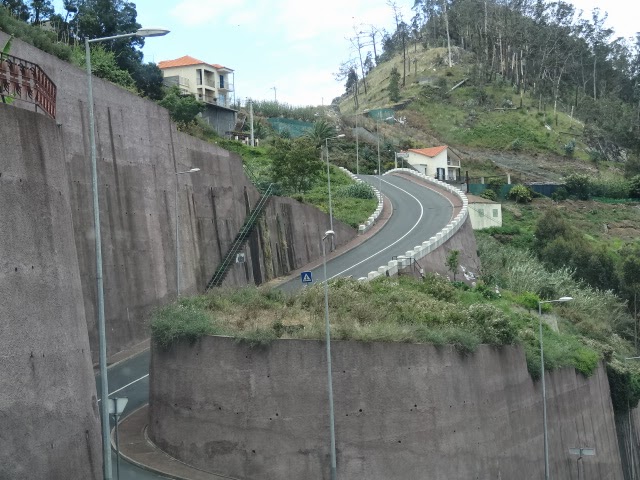
This hill is considerably steeper than it appears. When sitting at the top, one can’t see the upcoming road due to the steep drop-off. 

As for us world travelers, still unwilling to give up the definition of who we are, we have no idea if and when we’ll be able to continue. This virus has a life of its own, and no one, at this point, on this planet, can definitively say anything more than, “I don’t know.”

The old stone tunnel in the area was used until the newer longer tunnel was built in recent years.

This uncertainty monopolizes many of our thoughts and feeds into our fears. We all pray for the time when we can say, “I do know,” and we can continue with our lives, albeit in a newly defined state of existence with whatever those guidelines may be.

For now, may we all find some peace taking bite-sized pieces out of each day as we all strive to make it through this trying time.

Photo from one year ago today, May 23, 2019:

A gate to a private drive or boat launch in Connemara, Ireland. Please click here for more.

Self-diagnosing in times of Covid-19…People not seeking care due to fears….

Mongoose is trying to crack an egg. Hilarious!

Note: To all of our readers visiting our site via a smartphone, please click the “View web version” tab under the word “Home” at the bottom of the page to access the web version enabling you to access all of our archives on the right side of the page. We’ll be updating our site in a few months, making these extra steps unnecessary. Thank you.
Today’s photos are from May 22, 2019, from Connemara, Ireland.  Please click here for more details.

At every turn, the scenery is breathtaking.

A few weeks ago, I mentioned I was suffering from chronic pain in my face, particularly the right cheek. Knowing there was no way I could see a doctor with a high risk of Covid-19, doctors’ offices closed, and emergency rooms and hospitals packed with virus-sick patients, my only alternative was to self-diagnose.

No doubt doing so carries several risks, but my options were non-existent. After hours of research at reliable websites, I determined I had either a sinus infection or an abscessed tooth. 

Neither condition was glaringly obvious other than the dull ache in my cheekbone and the side of my face. At that point, I began a Z-pack, a five-day course of Azithromycin diligently following dosing instructions.

An abandoned boat in part covered in vegetation creates this classic scene.

Much to my delight, after about three days, I began to experience some results. By day 5, the pain was gone and stayed gone until another five days passed, and then the pain started again. I was devastated. What now?

I used ice packs, heat packs and took Paracetamol (Tylenol) to no avail. There was no improvement whatsoever. As the days passed, it became worse than it was initially. I was at a loss as to what to do. Not wanting to worry Tom, I kept it to myself, only mentioning once the discomfort had returned.

Yesterday, feeling frustrated, only exasperated by our lockdown-in-Mumbai situation, a breakthrough happened… I had a toothache in a tooth in an upper molar, one I had wanted to have repaired before we left South Africa last May by our all-time favorite dentist in Komatipoort, Dr. Luzaan Du Preez.

Ireland consists of many boggy areas that are prevalent here in Connemara, Ireland.

However, only three months after open-heart surgery, she suggested I wait a year to fix the tooth since I wasn’t experiencing any pain. Well, yesterday, one week and one year after we left, the tooth started hurting. I realized I had an abscessed tooth which was causing the facial pain.

In a sense, after a month of dealing with this, tI was relieved o finally know what it is. But, the concern was…how do I deal with it? After several hours online, I couldn’t find a dentist that was opened in Mumbai. Nor did I relish the idea of sitting in a dentist’s chair during times of Covid-19 with a dentist’s hand in my mouth.
 

Instead, we both easily recalled Tom having this same problem while living in Savusavu, Fiji, and visiting a local dentist when Tom was experiencing the same pain I am feeling now. We recalled taking photos of the two antibiotics he took, which we posted on our site on November 10, 2015. See photo below:

Tom’s free prescriptions for an abscessed tooth;  two antibiotics and one packet of non-prescription ibuprofen. See the post here.

With a bit of effort, by enlarging the photo, we read the names and doses of the medications. I realized taking this medication wasn’t a permanent solution, but it might hold me long enough until we can get to a dentist, hopefully in South Africa. 

Online again, I verified the medications and dosages for this purpose and set about to order them from a Mumbai online pharmacy. The pharmacy requires a local cell number, the outstanding staff member, Samira, allowed me to use her number at the hotel’s reception desk. After a few hours of attempting to place the order when my phone number isn’t local to India.

Getting the medication online without a local doctor’s consultation requires a phone appointment with one of the pharmacy’s doctors. Samira let me use her cell to make all of this work. At 5:30 sharp, the call came in on Samira’s phone by a doctor who reviewed my symptoms and confirmed the meds I had ordered were appropriate. 

Rocks are seen everywhere in Ireland.  From this site:  “The geological map of Ireland displays a wide variety of rock types which have originated at different periods of geological time. The oldest rocks are metamorphic gneisses which are to be found on Inishtrahull, several miles off Malin Head in Co. Donegal, and elsewhere in the north-west. They originally formed as igneous rocks 1750-1780 million years ago.”

Unfortunately, once I ordered the medications, I discovered they wouldn’t be delivered until May 25th. That date was too far away. My situation was worsening by the hour. Although I proceeded with the order, a three-day wait was unthinkable, not knowing there was any other option.

Samira suggested she’d call local pharmacies to search for the drugs to be delivered right away. Around 7:30 pm, Samira called to inform me the medication had arrived at the reception desk. The cost for both antibiotics was INR 360, US $4.75, which included delivery. Oh, good grief. What a deal! I wonder how much these would have been in the USA.

Immediately, I started the medications, which I’ll continue to take every eight hours and will continue to do so for one week. I’ll still accept the other order in the interim since while we’re in lockdown, the problem could return as it did for Tom a few months later. 

The plural word for a group of sheep is flock, dove, or herd.  An extensive group of sheep is a band or mob.

Regardless of the risks of taking antibiotics, the chances of letting this infection continue to rage, especially with a heart condition such as mine, makes no sense at all.

The first round of antibiotics I took, the Z-Pack, may work for a mild tooth abscess, but not nearly as well as this combination of two types of antibiotics. That’s why I experienced some relief for a few days.

My situation during times of Covid-19 is not unusual. Doctors and dentist’s offices are closed worldwide, and the risk of going to an urgent care facility or emergency room is too risky at this time. 

Wildflowers are often found blooming on the side of the road, especially this time of year as summer nears.

Sadly, many patients needing emergency treatment, cancer care, and heart attacks and strokes fail to seek medical care due to a lack of availability and justifiable fear. 

Covid-19 impacts people’s lives, health, and well-being throughout the world and those who have other medical conditions that may require immediate care. The fall-out is alarming.

May we all be healthy and feeling well during these times of Covid-19, as many of us struggle to find solutions for self-care in the interim. Call your family doctor immediately if situations arise. Don’t choose self-care over professional care when it’s available. In my case, I had no other options.

Photo from one year ago today, May 22, 2019:

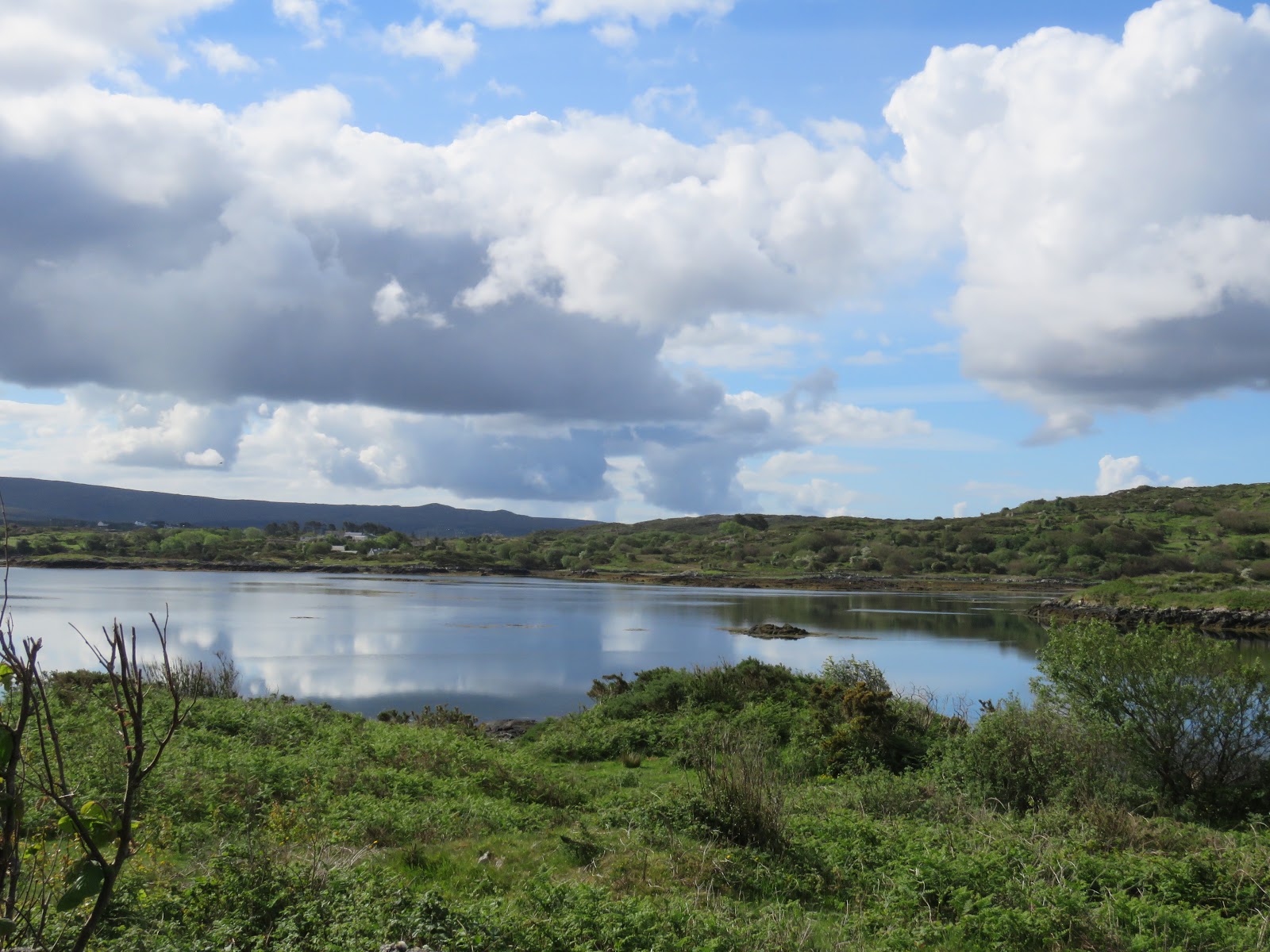
Clouds are reflecting on a lake while on a drive while in Connemara, Ireland. Click here for details.

A step in the right direction…Domestic flights in India beginning on May 25…

Playful elephants on the Sabie River in Kruger National Park.


Note: To all of our readers visiting our site via a smartphone, please click the “View web version” tab under the word “Home” at the bottom of the page to access the web version enabling you to access all of our archives on the right side of the page. We’ll be updating our site in a few months, making these extra steps unnecessary. Thank you.

Today’s photos are from May 21, 2019, from Connemara, Ireland. Please click here for more details.

This morning’s news announced the reopening of some airports in India for domestic flights. This is a step in the direction for the same for international flights sometime down the road.

We love the reflection of clouds in the water as we drive through the countryside.

However, it’s impossible to predict when this may occur based on the original transmission of Covid-19 traced to passengers entering the country from other countries.

The US has allowed some domestic flights from the onset of the lockdown, but here again, it could be many months before international flights will begin. As for South Africa, our preferred next destination, there is no indication of its borders opening anytime soon.

As for Madagascar, it appears they may reopen their borders in the next 60 days. Tanzania will be opening its borders for international travelers within a week. This leaves us with a good option for staying in one of these countries, enjoying its vast array of wildlife while we await the reopening of borders in South Africa.

Yellow irises were growing wild in the countryside.  Please click here for information on the wild yellow irises in Ireland that often grow along the road. 

Madagascar and Tanzania allow a 90-day visa on arrival. Suppose South Africa’s borders aren’t open after 90-days or 180-days in these two countries (and others). In that case, we can visit other islands near Africa’s eastern border or other countries within Africa such as Namibia, Botswana, and Uganda, depending upon the degree of outbreaks in those countries.

In the interim, liquor shops have reopened in some areas in India for “home delivery” only. No pubs will be open, nor will bars available in hotels. Since we’ve gone so long without a drink, at this point, we won’t bother. 

Besides, having beer and wine delivered to the hotel in lockdown with a guard at a distant gate would be cumbersome. We’ve decided we’ll wait until we get to our following location, which could be many months from now. 

A little sheep family was resting near the road.

It’s interesting to read the comments our readers have sent. As we’ve mentioned in past posts, the most common word we receive is, “Why don’t you seek repatriation to the US and get out of this odd situation?”
We appreciate your comments and suggestions.

Another question we received yesterday was, “Can you fly to another city in India” while you wait?”

There would be no point in us considering either of these scenarios. No city in India would offer a safer, more comfortable environment than where we are staying now in this quality hotel. It would make no sense to fly any more than necessary to leave India when it’s allowed ultimately.

We anticipate the flight out of here with a certain sense of dread, as grateful as we’ll be to be on the move. The required five or six-hour early arrival at the airport, wearing a mask and gloves for such an extended period, the medical checks, the luggage fees, and of course, the long and laborious flight.

As we approached the town of Clifden, we noticed several apartments and townhouses on the inlet.  Clifden, our area to shop, only has a population of 1,597. “Clifden is a coastal town in County Galway, Ireland, in the region of Connemara, located on the Owenglin River where it flows into Clifden Bay. As the largest town in the region, it is often referred to as “the Capital of Connemara.” Frequented by tourists, Clifden is linked to Galway city by the N59.”

But, there doesn’t appear there will be any other options. We’ve got into the possibility of an upcoming cruise on a small ship sailing out of Mumbai at some point, but only if it brings us closer to a destination we prefer. This is highly unlikely.

It’s not as if we are overly picky about where we choose to go from here. The country has to have open borders, adequate incoming international flights, and not be a hotbed of Covid-19 at the time. 

We accept the reality that we may be required to be quarantined for 14-days (or more) once we arrive in any country significantly since India’s number of cases is rising rapidly and…we are US citizens, the biggest hotbed in the world.

Ah, by no means is this situation manageable, nor will it be when we have some serious decisions to make. But, the one thing we know for sure, it would have made no sense for us to return to the US when flights were offered for stranded citizens.

This precious photo was my favorite of the day.

Where would we have gone? We have no home. Many holiday homeowners are refusing to rent their properties during the times of Covid-19. Hotels and meals are twice as expensive as we’re paying here or will pay in other parts of the world.

I’m high risk. We have no insurance in the US except Part A Medicare, which isn’t nearly enough to cover costs if either of us were to become infected. Our international insurance covers everything with only a $250 deductible.

The reasons are apparent. But, we thank everyone who has taken the time to write and offer suggestions and will continue to respond to your requests.

Yesterday, we crossed this single-lane bridge on the way to Clifden. We can take a few different routes from here to Clifden and will change it up each week.

The weeks seem to fly by quickly, especially from weekend to weekend. Often, when we comment on what day of the week it is, we’re both surprised it’s Friday or Saturday once again.

Regardless of all of this, we continue to have hope for the world, India, our own country, fur readers/family/friends, and for ourselves that eventually this too shall pass and a new world will begin to emerge.

Stay safe. Stay hopeful.

Photo from one year ago today, May 21, 2019:

Donkeys are highly regarded in Ireland to the point there are special programs available to adopt and a specialized Donkey Sanctuary in Cork, Ireland. For more photos, please click here.

Cases rising in Mumbai as the country’s hot spot…How much is it costing us to live in this hotel?…

This was our favorite videos we’d made in Africa. Kruger National Park requested to 
use this on their site, to which we agreed at no cost to them.


Note: To all of our readers visiting our site via a smartphone, please click the “View web version” tab under the word “Home” at the bottom of the page to access the web version enabling you to access all of our archives on the right side of the page. We’ll be updating our site in a few months, making these extra steps unnecessary. Thank you.

Today’s photos are from May 20, 2018, from Chobe National Park in Botswana. Please click here for more details.

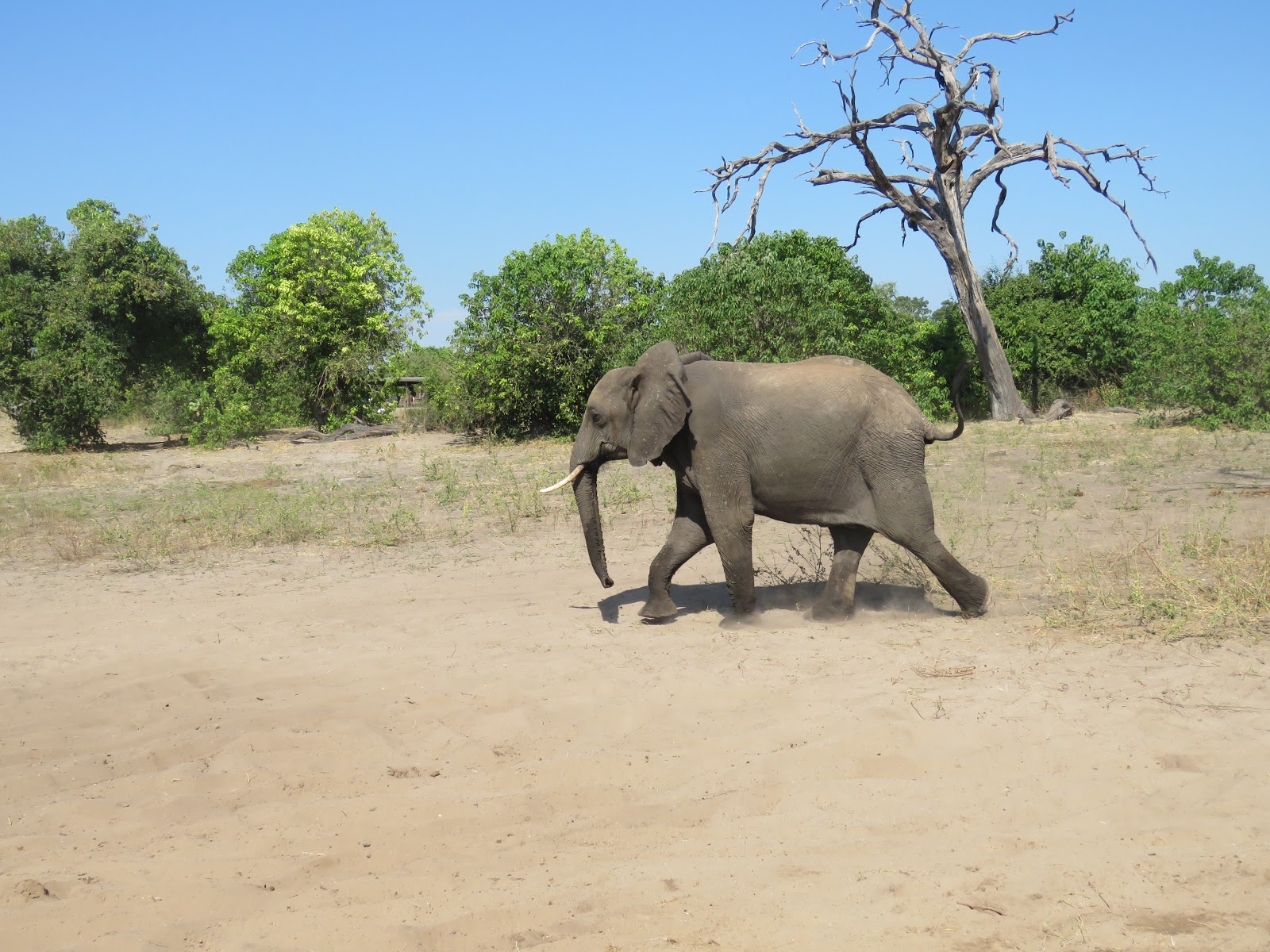
Albert, our guide in Chobe National Park and on the Chobe River, had pulled the safari vehicle close to the river to take photos of the elephants easily.

It’s all over the news. Cases and deaths from Covid-19 are increasing rapidly, particularly in Maharashtra, where we are located, mainly due to circumstances increasing in Mumbai.

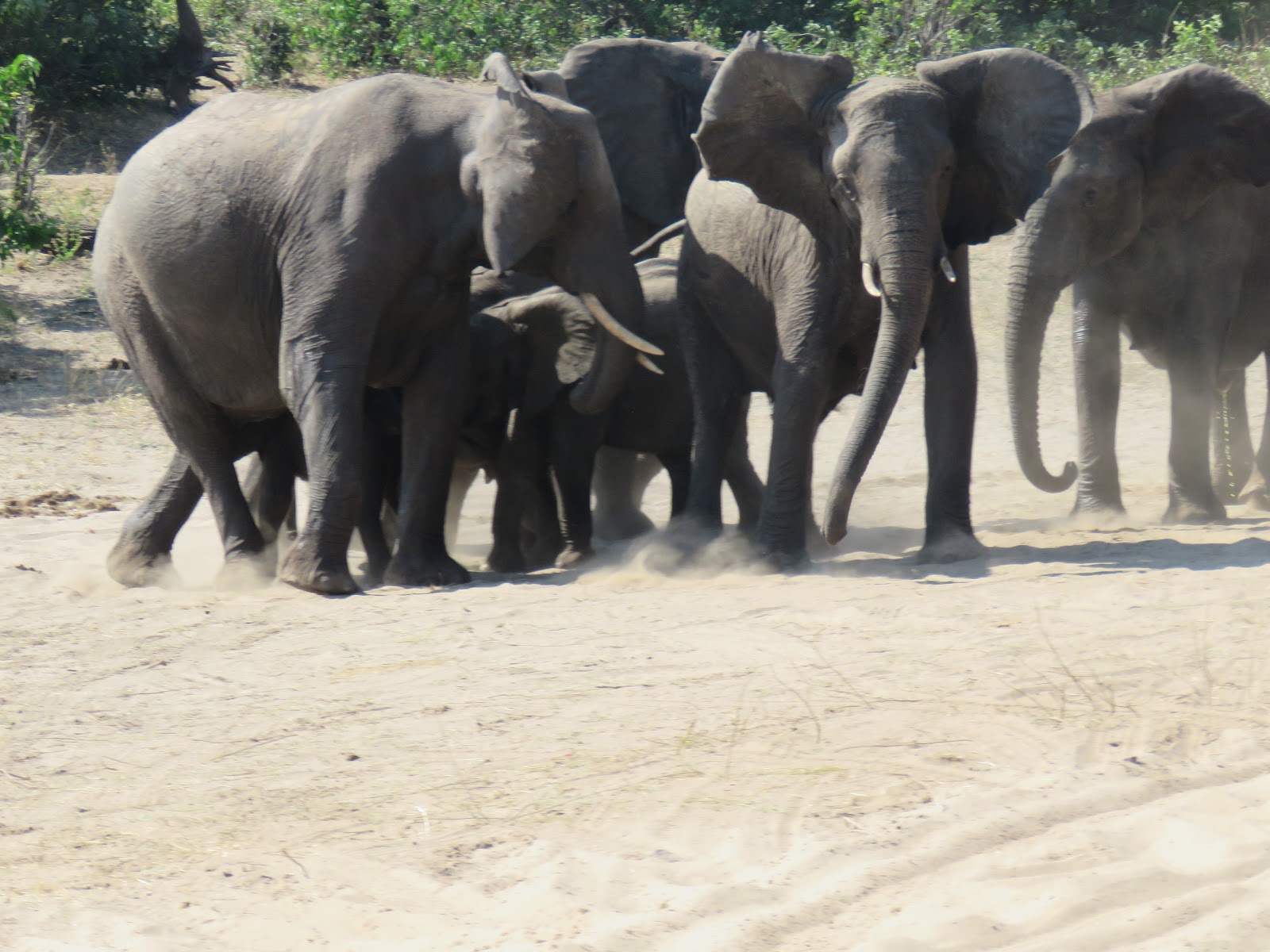
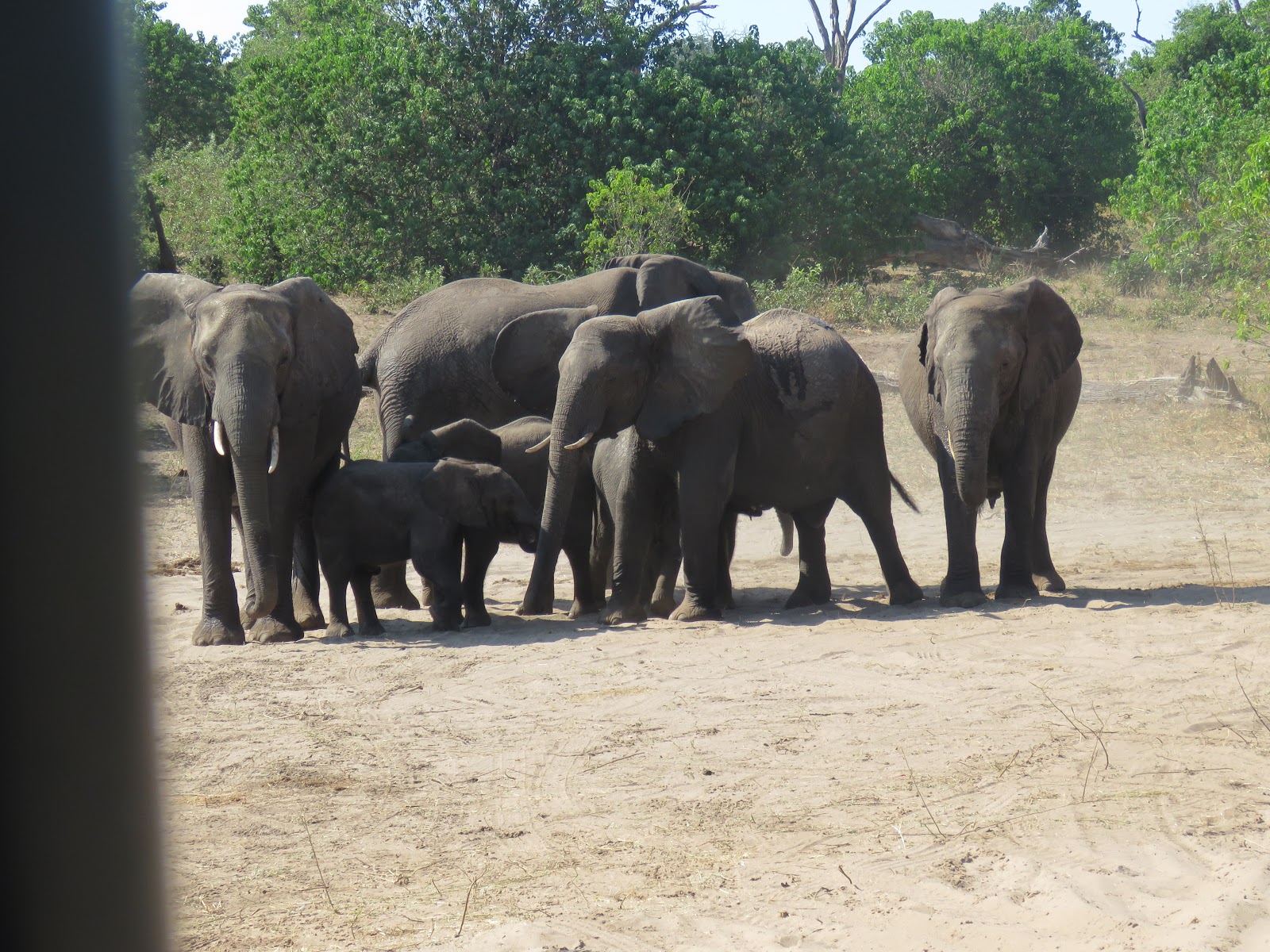
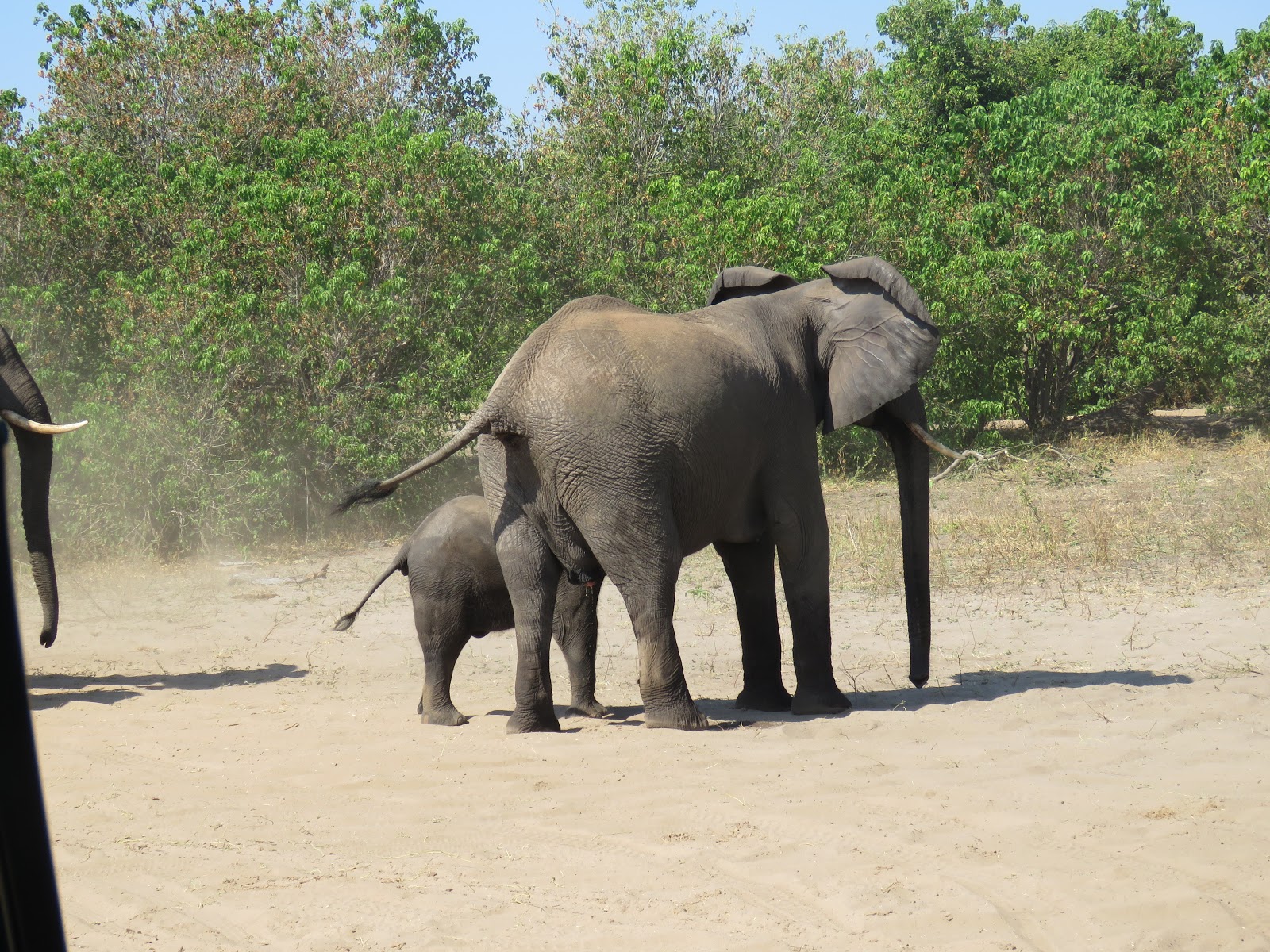
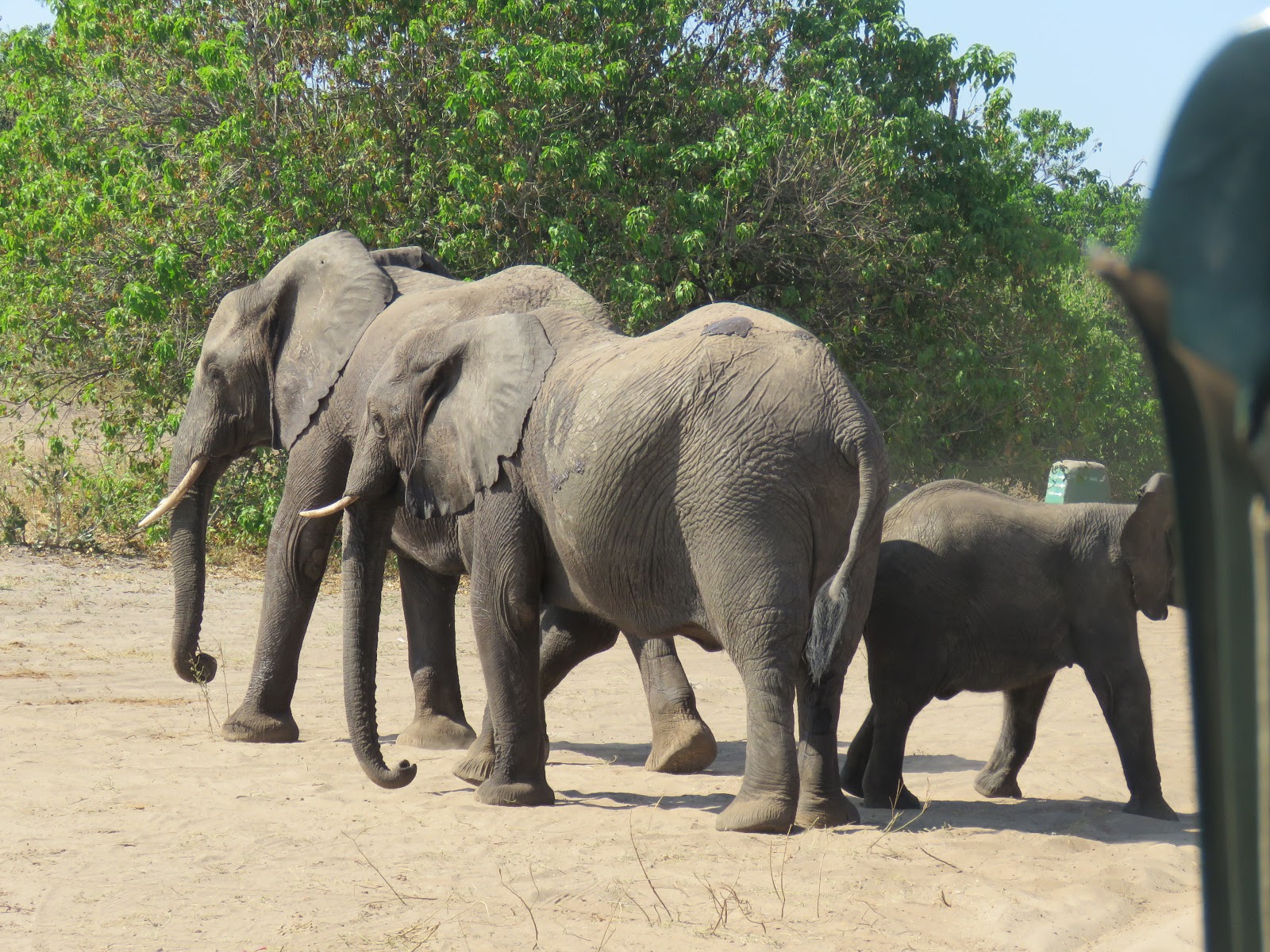
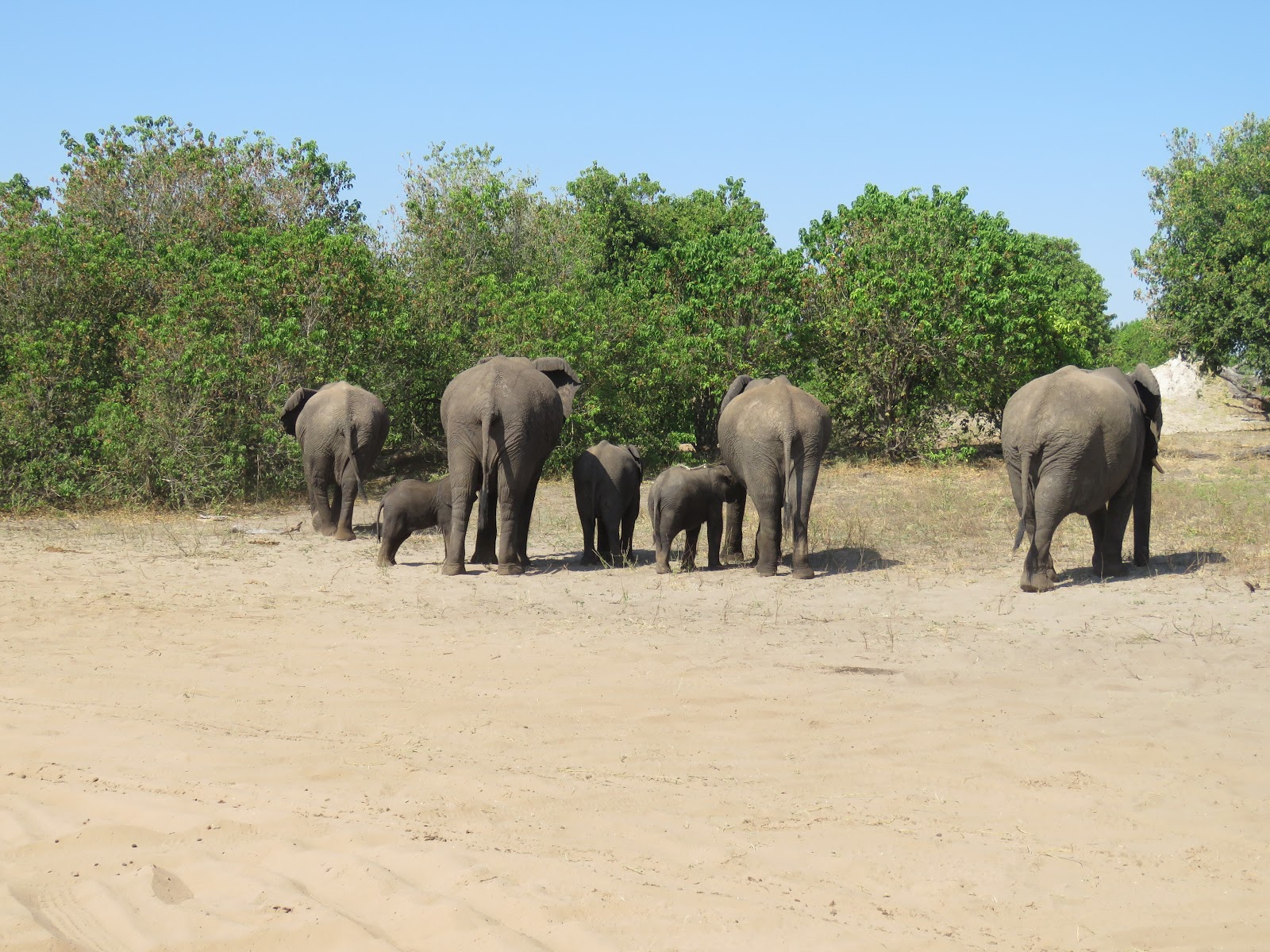
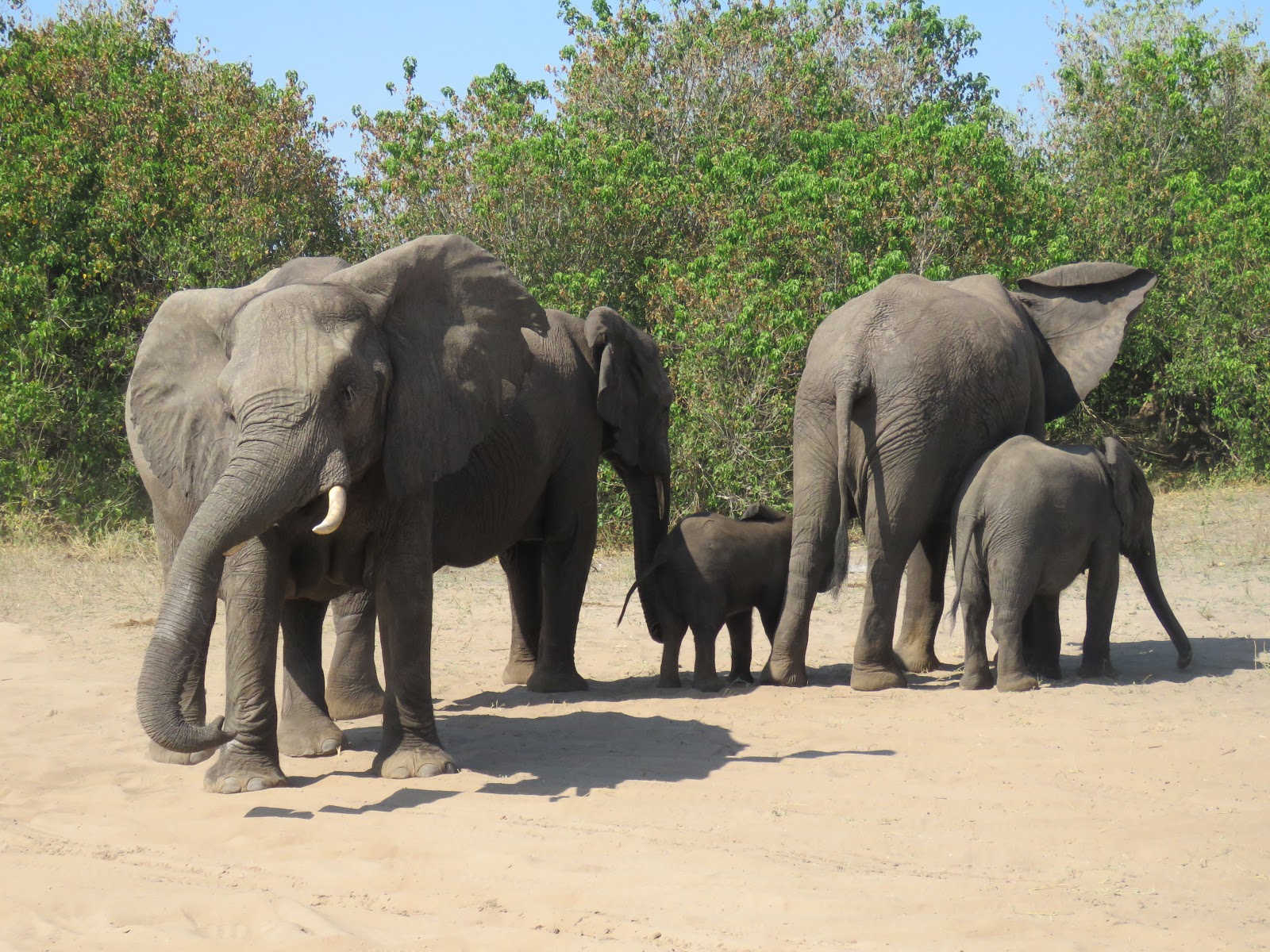
Three baby elephants were off at a distance, and the moms were angry they’d wandered off.  They started calling for them, and they came running. This happened so quickly we had no time to react and take a video. When the babies returned, it appeared the moms were scolding them as they kicked up sand while bellowing.

Local news as of May 18th from this site:
Coronavirus Lockdown Extension 4.0 Guidelines News (State Wise): With nearly 90,000 cases, the number of COVID-19 patients in India grows rapidly. India has already overtaken China in terms of the number of people affected by the Coronavirus. The number of positive cases in the country is now at 90,927, including 53,946 active cases, 34,109 cured/discharged/migrated cases, the Ministry of Health and Family Welfare said today. The death toll stands at 2,872. India has been under lockdown since March 25. The Modi government has extended the lockdown further till May 31 and released Lockdown 4.0 Guidelines today. The delineation of red, green, and orange zones will be decided by the respective State/Union Territory governments, after taking into consideration the parameters shared by the Ministry of Health and Family Welfare, the Home Ministry said.”

Approximately one-third of the nation’s cases have been in Maharashtra, particularly in Mumbai. 

They were so close to us we didn’t need to use any zoom on the camera. See below for stats from this site:

“COVID-19 cases in Maharashtra, India 2020 by type

A few stragglers who’d been grazing followed suit.
These stats don’t bode well for our hopes of the airport opening for international travel anytime soon. And, once it does open, the activity and crowds at the airport could be in excessive numbers. In any case, it will be a watch and see the scenario for us. 
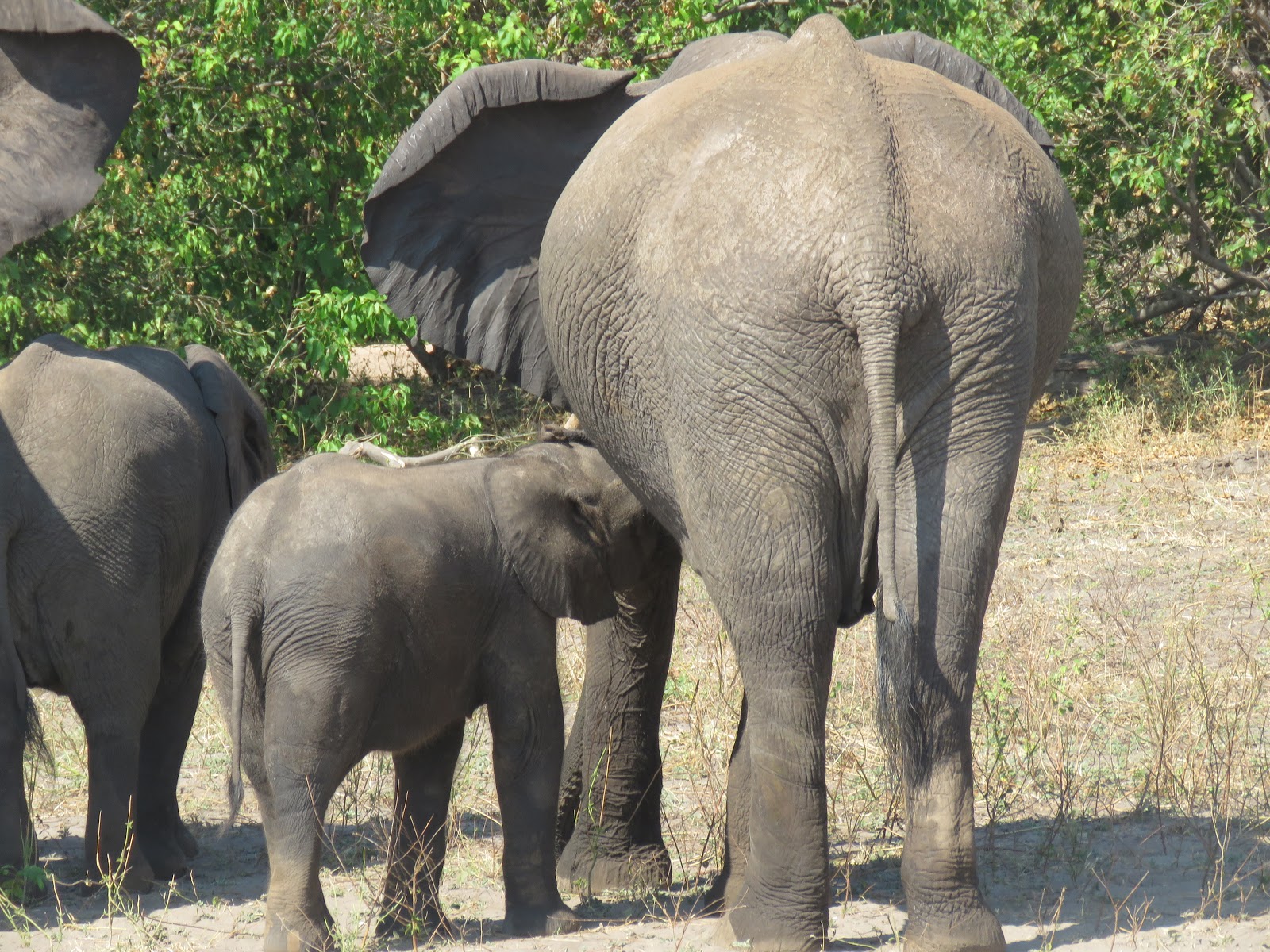
 One baby insisted on suckling after all of the action.
Most likely, we won’t leave until: a). Flights are available for our next destination and, b). Crowds at the airport have diminished.
 
This may result in staying in this hotel for an extra week or more after the airport reopens for international travel. 
Things started to settle down.
On another note, with great difficulty, we were finally able to book extra nights at this hotel from today until July 1, 2020. Hotels.com was having some booking issues, and we couldn’t book more than eight nights in a row. 
 
This prevented us from taking full advantage of the double rewards points when only one booking per person would allow the double points. At this point, we’ve prepaid and booked nights in both of our names until July 1, 2020. 
Finally, they decided to wander off.
Who knows? Maybe by then, we’ll be able to leave. If we go earlier than July 1st, the hotel won’t charge us for the nights we haven’t used and will credit us accordingly. This gives us peace of mind.
 
Today, when the cleaners arrived, we headed downstairs for the first time in many days to pay our bill for the past 28 nights plus the dinners, which we hadn’t prepaid and was due today. Our bill for 28 nights plus meals was INR 260713, $3445.40, which averages at INR 9307, US $123 per night including dinner and taxes.
The worry exhibited by the moms was heartwarming to witness.  We were grateful to have seen such an event.
We’re appreciative and fortunate for this reasonable cost per day. It could have been twice as much in another hotel. It would have been tough to pay a more significant sum when this isn’t about “having a good experience” as we’ve had when staying in hotels in the past while traveling. This is hardly a “fun” time.
 
This is all so weird. We never imagined we’d be living in a hotel for three months or more, unable to go outdoors or enjoy any of the facilities, have a drink or a glass of wine, dine in a restaurant while handwashing all of our clothes in the shower.
 One baby insisted on suckling after all of the action.
Nor did we ever anticipate we’d be wearing face masks each time we left our room while it was being cleaned, to walk the corridors or stop by the reception desk. 
 
Many times, in our 2840 posts (as of today), we mentioned the peculiarity of our lives of long-term world travel without a place to call home, no storage, and only a few possessions in our bags. But, never once did we consider this added layer of peculiarity.
Another calf suckling.
These are indeed strange and frightening times, none of us ever anticipated would transpire during our lifetimes. In years to come, if and when this is ever over, we’ll look back and shake our heads in astonishment as to how we managed to come out on the other side.
 
Keep the faith, dear readers. It’s all we have to hang onto during these times.

Photo from one year ago today, May 20, 2019:

Appealing view of clouds reflecting into the body of water in Connemara, Ireland. For more photos, please click here.

Questions on yet another quiet day…Facing our reality…

Elephants were playing in the Sabie River in Kruger National Park.

Note: To all of our readers visiting our site via a smartphone, please click the “View web version” tab under the word “Home” at the bottom of the page to access the web version enabling you to access all of our archives on the right side of the page. We’ll be updating our site in a few months, making these extra steps unnecessary. Thank you.
Today’s photos are from May 19, 2015. Please click here for more details.

A few times each day, I allow my mind to “go there,” to the place where I try to grasp the magnitude of the circumstances in the world during this unprecedented pandemic.

Huge boulders were placed on the beach as a breakwater, or were they there all along?

Then, I allow myself to contemplate our situation; locked in a hotel room in Mumbai, India, for two months so far and possibly more months to come, only allowed to walk the corridor, which I do ten times a day.

Of course, it’s during the walks that my mind wanders to the harsh realities. Sure, we’re safe, we have air-con, two meals a day, all the coffee/tea we can drink, a strong WiFi signal, daily cleaning service, a comfortable bed and seating, and an HDMI cord we can use to stream media on a flat-screen TV to keep us entertained.

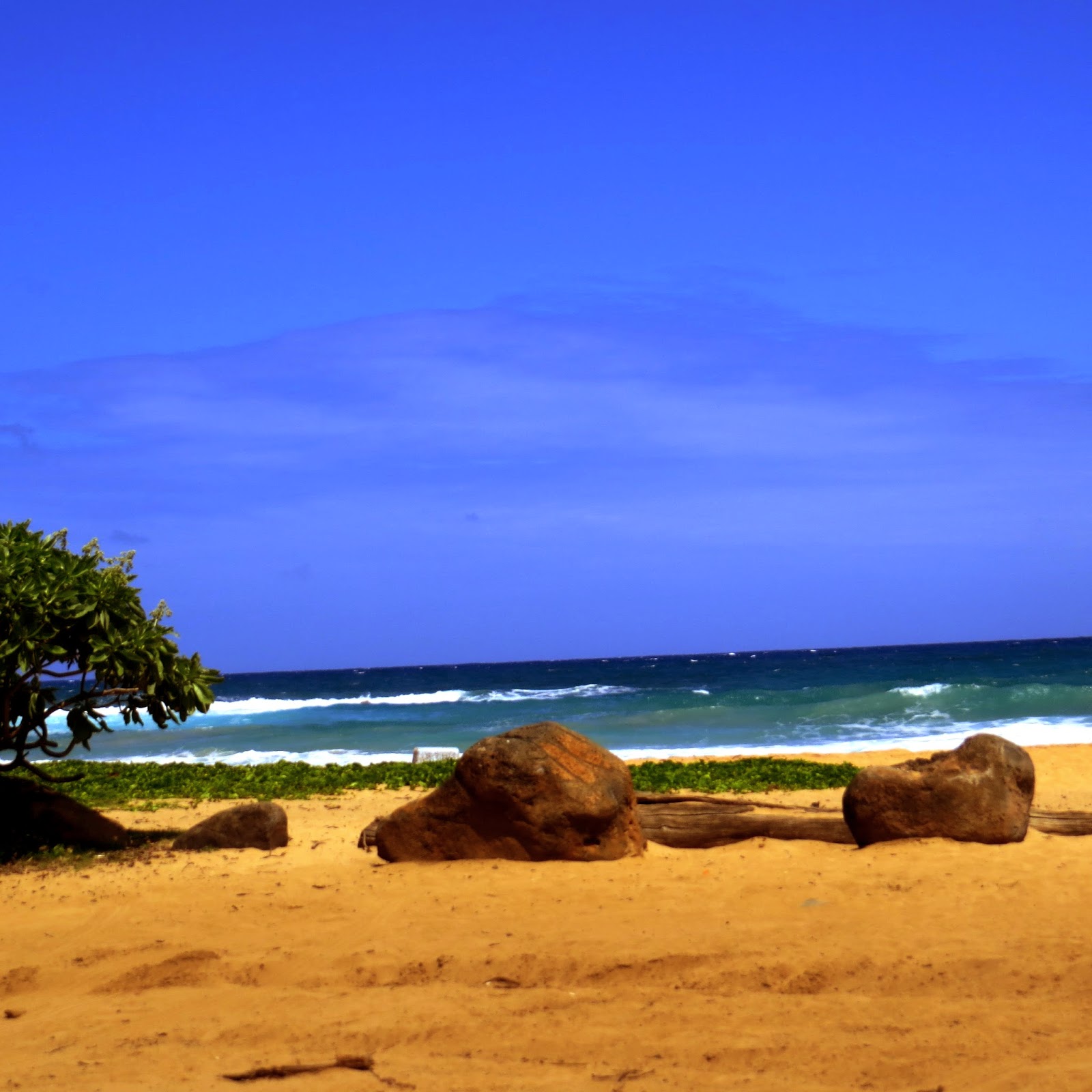
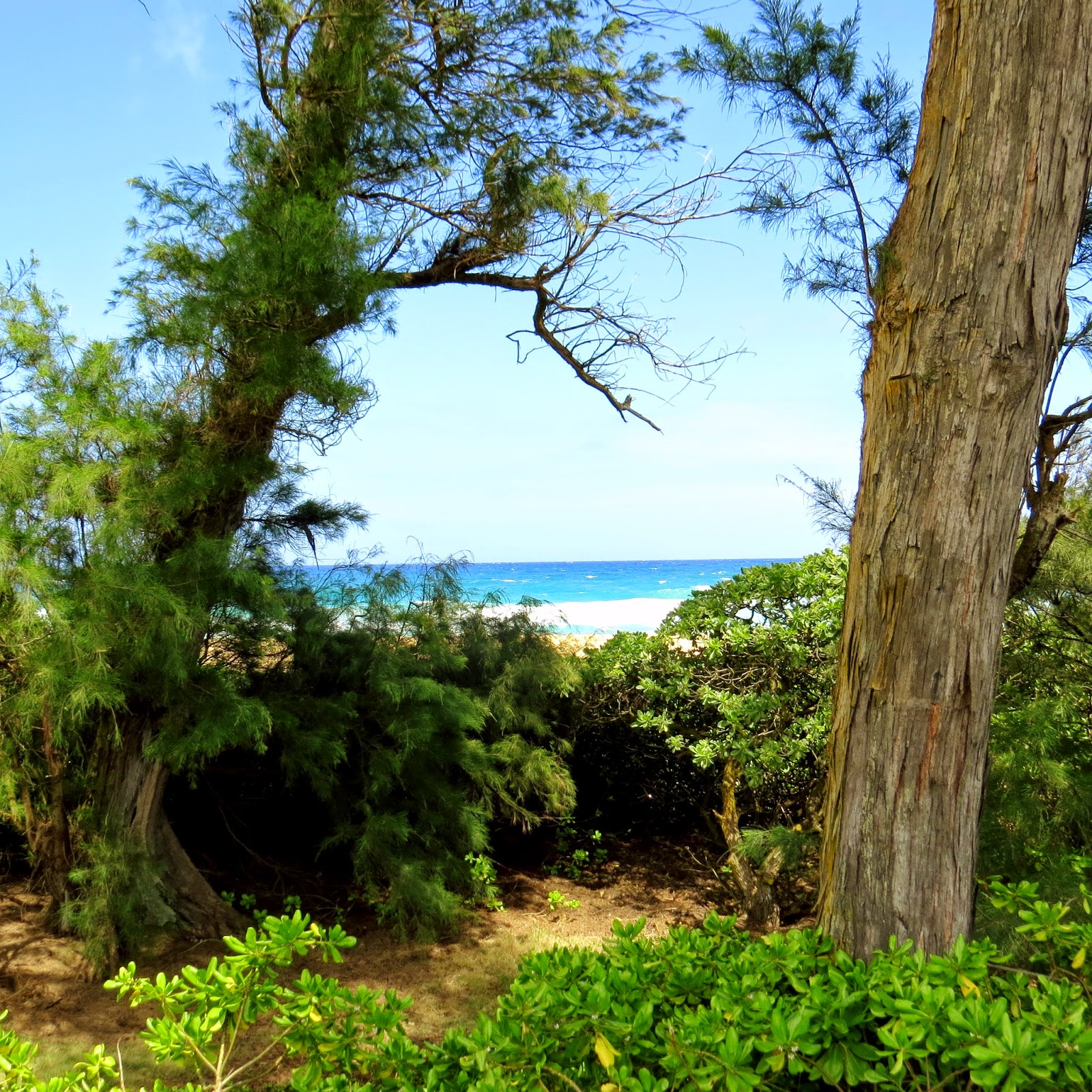
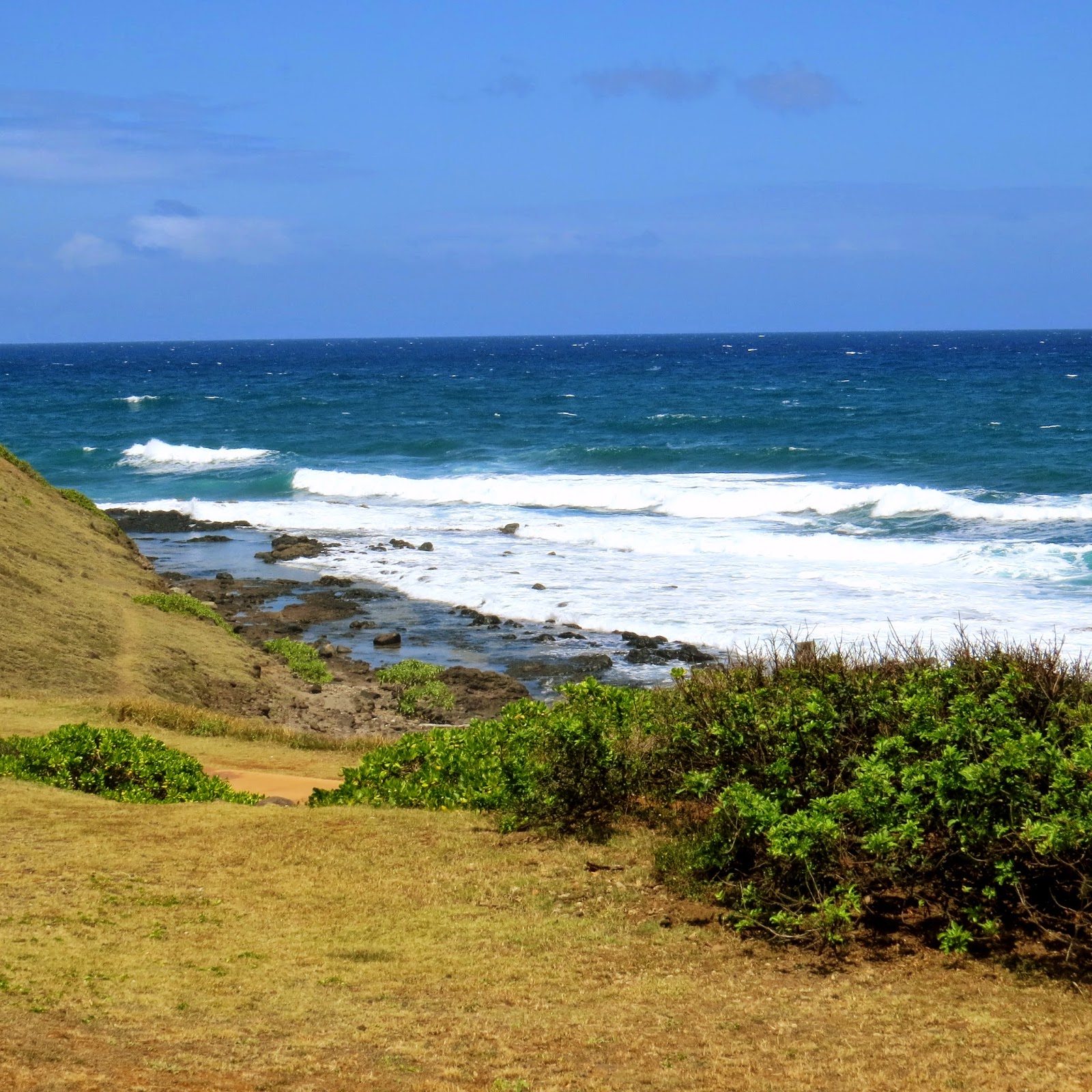
A lone tree near the shore on the Kauai Path.

The hotel’s power has gone off several times in the past few days, if only for a minute or less. But are we headed toward a power grid shut down due to economic conditions and lack of workers in Mumbai? This is a frightening thought, but a situation that is entirely possible during these times of Covid-19. 

I always listen to podcasts or videos while walking, but it takes only a little flash in my brain to send it in to a whirlwind of thoughts often centered around this:

What’s next?

A bushy path to the beach on the Kauai Path.

Will we continue traveling, and if so, how can we protect ourselves from Covid-19 when we continue? Yesterday, our dear friend Louise sent us a news report that Tanzania may be opening its borders soon. As a developing country, they cannot afford to continue to block international tourists from entering. 

Tanzania is rife with wildlife and home to a part of the vast Serengeti well-known worldwide for the Great Migration, which often occurs from June to October each year. 

While in Kenya in 2013, we had the opportunity to witness the tail-end of the migration, but having the entire experience would be exciting. If we were living in Tanzania, it would be accessible to time it correctly for the best advantage of this unbelievable experience.

The beach in downtown Kapaa.

During this annual event, over five million animals, many of which are wildebeests and zebras, cross the Mara River over and over again as it weaves through Kenya and Tanzania. This may be an excellent opportunity for us down the road once we can leave India.

But, any hopes and dreams for the future continue to be on hold at this point. Another question that looms in my mind is how we will protect ourselves from the virus once we do continue? 

A house during construction above the Kauai Path has a magnificent distant view of the sea.

Will a vaccine be available at some point? Will it be safe? Will it work? Will it mean we can be more relaxed in wearing masks, gloves, goggles while social distancing? Will we always need to social distance?

What will the world look like in six months, a year, two years for travelers? Will lengthy delays at airports, baggage restrictions, and increased fares impact our way of life?

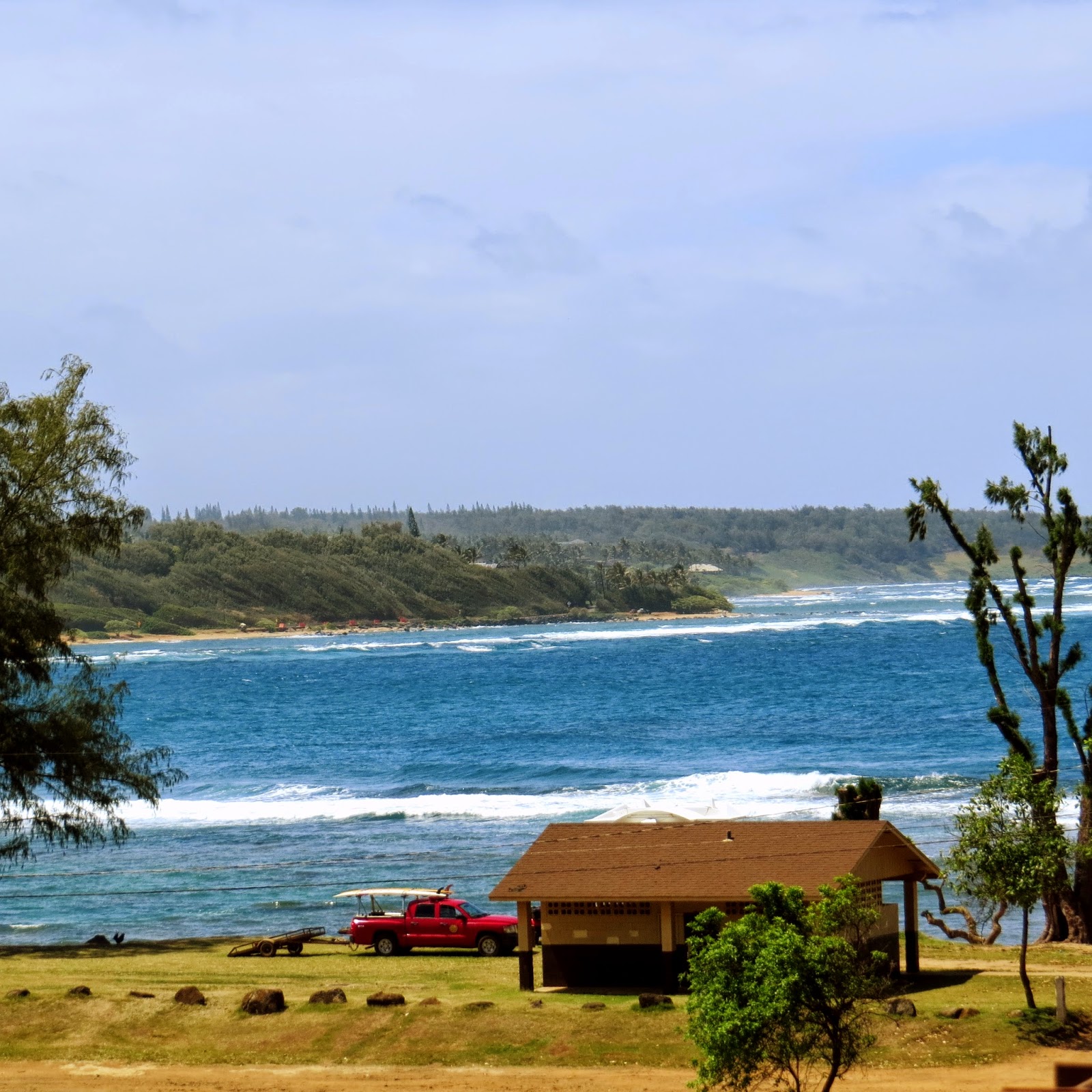
The Kauai Path is well maintained and has several restroom buildings and lifeguard vehicles with surfboards for aiding in water rescues.

We don’t know the answers to any of these questions now and may not know for some time to come. At this point, we aren’t considering stopping our world journey, but will circumstances dictate we cannot carry on?

From there, more big questions loom; Where would be live? Where is there such a place that would be affordable for us? And could it be in a place where we’d find the joy and fulfillment we’ve had while traveling? And, above all, would it be safe?

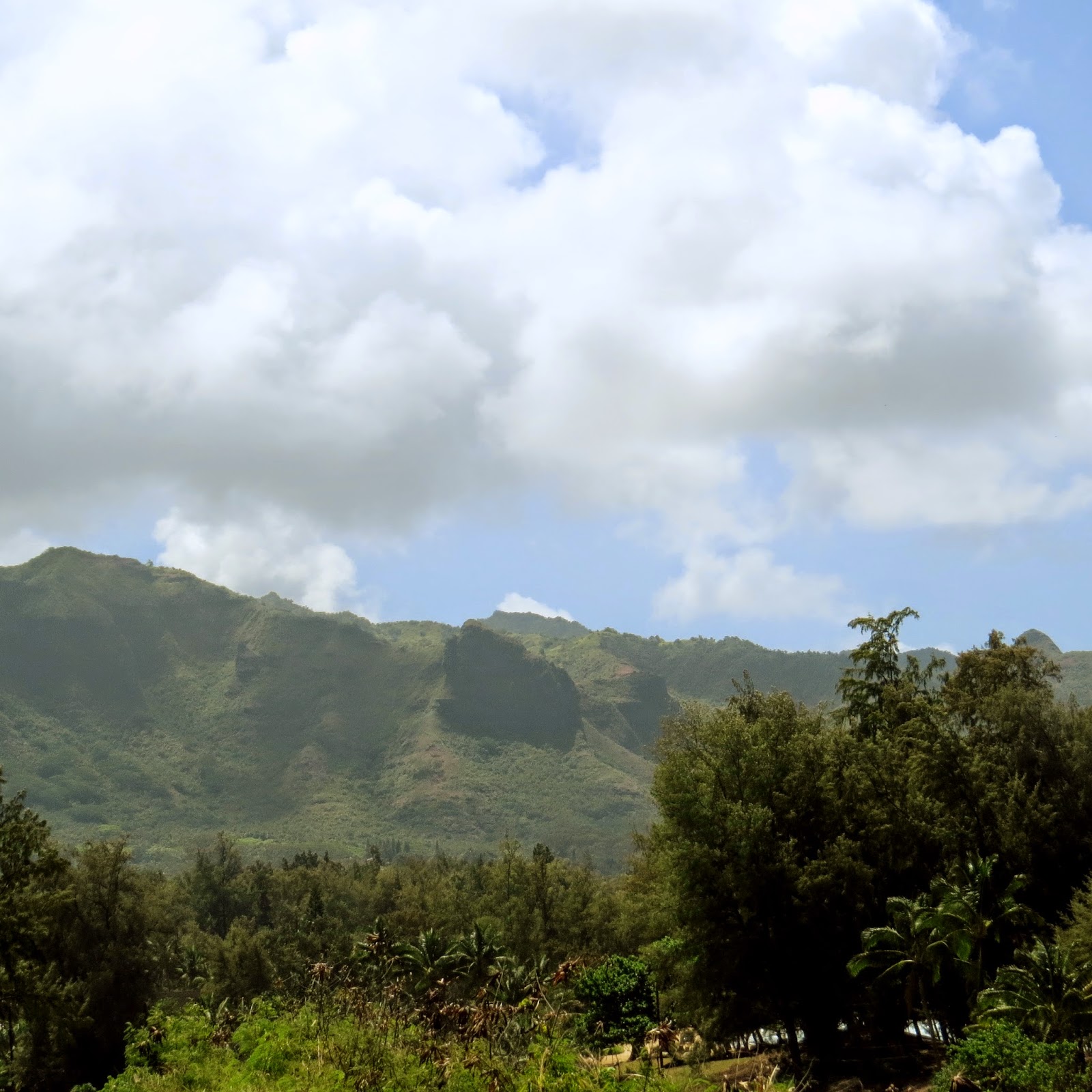
In every direction, a mountain view enhances the exquisite scenery in Kauai. On most days, clouds hover over the mountains. The sky is seldom apparent for more than an hour.

Are we headed to a dystopian society, one I’ve watched in countless sci-fi movies over the years? Dystopian is described at this link. I no longer watch such movies.

No, I don’t mean to be negative. However, we both tend to try to be realistic and face our fears.

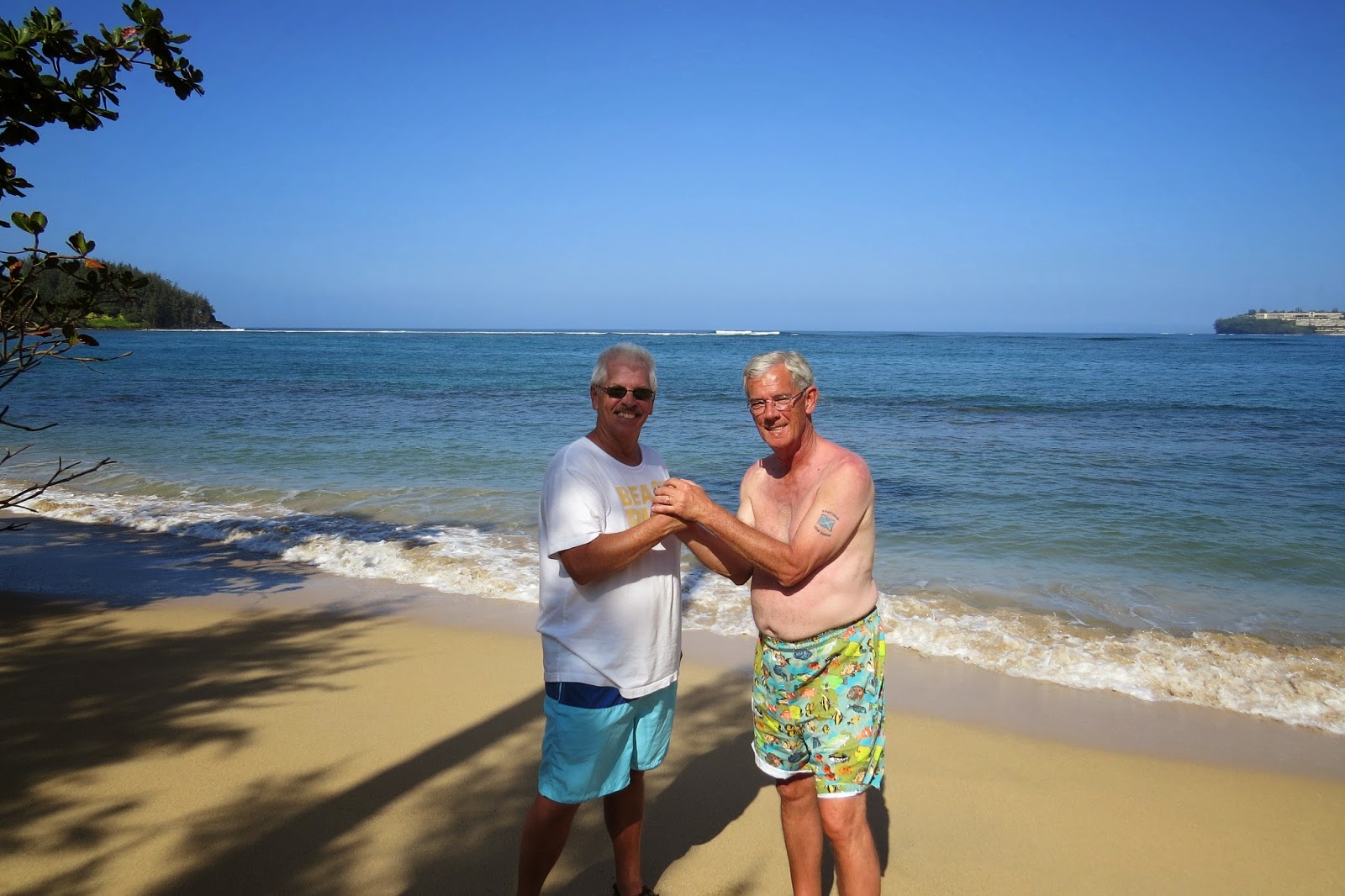
This photo makes us smile as we recall how lucky we met Jerry and Vicki in January 2015.

In my wildest nightmare, I would never have imagined the situation we are experiencing now. On the flip side, we are hopeful that the virus will eventually waft away, and all of us can continue with our lives, our plans, and our hopes for the future. 

Stay safe. Stay hopeful.

Photo from one year ago today, May 19, 2019:

This morning view from our holiday home in Connemara, Ireland. For more details, please click here.

Please people…stop gathering in crowds!…No hope until people take this seriously…

Mongooses are carnivores. When we gave them a rib bone, it was devoured.

Note: To all of our readers visiting our site via a smartphone, please click the “View web version” tab under the word “Home” at the bottom of the page to access the web version enabling you to access all of our archives on the right side of the page. We’ll be updating our site in a few months, making these extra steps unnecessary. Thank you.
Today’s photos are from May 18, 2016. Please click here for more details.

The reporting of Covid-19 cases in India may be highly skewed, with many citizens with symptoms not going to hospitals or seeking medical care. With a population of over 1.3 billion, they can only speculate on the number of cases occurring behind the scenes where many don’t have access to medical care or won’t seek medical care. 

As of today, there are 96,169 documented cases with 3029 deaths. This is only the tip of the iceberg of what is yet to come for India. These past 24-hours resulted in the highest number of new cases in a day, with over 5342 in the entire country, with 34% of the cases occurring in Maharastra, where Mumbai is the capital city.

In Nagara, Bali fish are brought in from the various boats at the Negara Harbour to be distributed to many vendors. 

These conditions don’t bode well for us getting out of here anytime soon. Why would India open its second busiest airport (next to Dehli) for international flights with these types of numbers? They won’t.

Each time I walk, I look out the window at the end of one of the corridors ten times a day before I turn around to retrace my steps. Invariably, a group of men, many not wearing face masks, commiserating in a parking lot, standing close to one another. This is common in India, and unless this behavior changes, Covid-19 won’t have a chance to level off soon.

This fishing boat with its pink and black sail passed by a few days ago.

A few of our readers have written suggesting that we can fly out when outgoing flights to other countries. But, the reality remains that planes won’t be flying empty into India to transport international passengers “out” of India. International flights won’t be available until India is willing to allow international travelers “in.” We don’t foresee this happening at any time soon.

Today, the lockdown was extended until May 31st, although some businesses have been allowed to open, including trains, buses, tuk-tuk, taxis, and small shops. Liquor and cigarettes sales continue to be banned.

These ducks hang out at the rice paddy fields, awaiting their share of rice the locals provide.

Also, several readers have suggested we order takeaway (carry-out) meals based on the repetitiousness of our meals in the hotel. Most takeaway restaurants offer foods we don’t eat or don’t comply with my way of eating. Plus, we can’t help but consider the safety of foods/meals from outside restaurants. 

During our entire time touring India, before the lockdown, we rarely dined in any local restaurants, except for a few high-end facilities while we made stops while on the Maharajas Express Train in late January and early February. 

The rice paddies are ready for planting.  See this site for more details.  “The Balinese system of irrigating their rice terraces is known as Subak. It is such an important part of Balinese culture that in June 2012, it was awarded UNESCO World Heritage Status. This method for irrigating the land was inspired by ancient Hindu philosophy, and it has been used since at least the 11th century. Using this method, the rice fields were built around temples, and the allocation of water was the responsibility of priests. For this irrigation management to work successfully, it has required that members of each community cooperate and work in partnership. Each community member takes responsibility for maintaining the system’s integrity, which is why the terraces tend to look so well maintained. The rice farmers work as a unit to create appropriate canals and dams. Another important element of the Subak system is the religious festivals that mark the cycle of the year.”

Even then, a few passengers complained they’d acquired some gastrointestinal distress from dining in those few upscale spots. While in Udaipur, we walked across the street to dine at a lovely restaurant without any issues.

But, “fast food” restaurants may not be as safe and as strict in handling food during the pandemic, making takeaway meals out too risky at this point. This is our reality.

Huge bags of rice, ready for processing, at the side of the road awaiting pickup.

In the realm of things, eating the same two meals twice a day is no big deal. They are tasty, nutritious, made with the utmost care, and served hot even when delivered to our room.

We found out we can now order our dinner at 6:30 instead of 7:00 pm, which helps since my breakfast doesn’t hold me all day. By mid-afternoon, I get ravenous, but it often passes after a few cups of decaf coffee.

The rice begins to grow for eventual harvesting by hand. Rice paddies are a prolific source of revenue in Bali and many other parts of the world.

Life in lockdown continues, day after day, week after week, and now month after month. We have no idea when this will end, where we’ll be able to go when it does, and what life will be like on the other side. Then again, neither do any of YOU.

Please hang in there with us as we pray for good health and safety for us all.

Photo from one year ago today, May 18, 2019:

A cow in a field with her two white calves in Connemara, Ireland. For more, please click here.