First full day out to sea…Mundane but memorable…

A ferry was sailing out of Southampton.

Fascinating Fact of the Day About Celebrity Silhouette:
From this site:

“Celebrity Silhouette is built to the same design as the preceding three ships. Overall, the completed ship is 319 metres (1,047 ft), with a 36.8 metres (121 ft) beam and a tonnage value of 122,400 gross tons. Celebrity Silhouette carries 2,885 passengers.

Name:  Celebrity Silhouette
Owner: Royal Caribbean Cruises Ltd.
Operator: Celebrity Cruises
Port of registry: Valletta, Malta
Ordered:1 8 May 2007[1]
Builder: Meyer Werft, Papenburg
Cost: $640 million (USD)”

Today is our first full day out to sea, with five more remaining until we arrive in New York on October 31, 2019, the day of our seventh anniversary. We booked a reservation for dinner in the Murano, a specialty restaurant, to celebrate the evening over what we expect to be a fabulous dinner.

Tonight, we’ll be dining in Qzine, another specialty restaurant with a group of 30 or more Cruise Critic members. The cruise ship arranged special pricing for the group of US $35 per person, usually priced at US $55 per person for what we experienced as a spectacular meal when we previously dined at Qzine a few years ago.

With our premium drink packages, we will be able to partake in any beverages offered on the menu, including wines and Tom’s favorite VSOP Cognac. Although I don’t drink more than two glasses of wine in a night, the quality of my selection is pertinent.
Passengers on passing boats often wave to passengers on a cruise ship.
Tonight, it should be pretty enjoyable to be seated in one of the groups at shared tables. Last night we met a wonderful couple, Suzanne and Bryan, in the bar who joined us for dinner in the main dining room. We had a chatty and delightful meal with the two of them.

The restaurant manager and staff are going over the top to ensure my meals are satisfactory, actually more than needed. After all, if they serve me a chunk of salmon and steamed vegetables, I am perfectly content. When I’m extra hungry, I order a Caesar salad minus the croutons.

Tom and I both watch the quantity of food we consume on this cruise, preferring not to gain weight. Many options are befitting my way of eating, and I could easily eat more than necessary.
This morning’s Cruise Critic meeting was held in the Sky Lounge on deck 14.
This morning we had breakfast in the formal dining room, and I ordered my usual two poached eggs, cooked well done smoked salmon, and sliced cucumber, which will hold me until dinner. Tom had three poached eggs, bacon, ½ of an English muffin, and a small triangle of hash browns.

After breakfast, we headed to our favorite spot, Cafe al Bacio, and I ordered a sugar/caffeine-free vanilla macchiato with real cream. Tom ordered the caramel macchiato, again with real cream.  

That coffee drink is my one indulgence for the day since I don’t eat fruit or any dessert. We forego lunch each day and are avoiding any off-meal times to check out the buffet on deck 14. But it’s certainly tempting.
The Sky Lounge is a great spot to stop for drinks and conversation.
Today at 2:00 pm is the “cabin crawl,” where members of Cruise Critic will tour a variety of cabin categories. We haven’t decided if we’ll do this today when we both need a nap. I had another fitful night with little sleep.
With no ports-of-call over these next six days, our posts will consist of mindless drivel, a little bit of this, and that when sea days, although pleasant for socialization, are quiet and relatively uneventful.

We’ll be back tomorrow with new photos from tonight’s gourmet adventure and whatever morsels we can share as we relax and enjoy every moment of this cruise.
Have a wonderful Saturday!

Photo from one year ago today, October 25, 2017:

Waterbucks are beautiful animals. For more photos, please click here.

Boarded the ship today and soon we’ll begin sailing across the Atlantic to the USA!…

Our cabin, friendly and tidy before our luggage arrives.

Fascinating Fact of the Day About Southampton, England: From this site:

“Archaeological finds suggest that the area has been inhabited since the stone age.[15] Following the Roman invasion of Britain in AD 43 and the conquering of the local Britons in AD 70, the fortress settlement of Clausentum was established. It was an important trading port and defensive outpost of Winchester, at the site of modern Bitterne Manor. Clausentum was defended by a wall and two ditches and is thought to have contained a bathhouse. Clausentum was not abandoned until around 410. The Anglo-Saxons formed a new, larger settlement across the Itchen centered on the St Mary’s area of the city. The settlement was known as Hamwic, which evolved into Hamtun and then Hampton. Archaeological excavations of this site have uncovered one of the best collections of Saxon artifacts in Europe. It is from this town that the county of Hampshire gets its name. Viking raids from 840 onwards contributed to the decline of Hamwic in the 9th century, and by the 10th century, a fortified settlement, which became medieval Southampton, had been established.”
After a light breakfast in the hotel’s dining room, we returned to our room to close the bags and be ready to head out the door. We ordered a taxi to take us to the cruise terminal at 10:45 am, which is a little early, but we’ve gone to the airport this early in the past, and it’s always worked out.
Alternate view of our balcony cabin.  We’re always OK with the small space since we only sleep here.

This was our first time sailing from Southampton, and we had no idea what to expect. As I write this from our hotel room, we’re hoping the Wi-Fi on the ship will be active at the time of boarding, enabling us to complete today’s post, including a few photos of the ship, Celebrity Silhouette.

With approximately 2900 passengers booked for this cruise. Check-in may be slow but nothing compared to the bigger ships with several thousand more passengers. We have avoided those vast ships.  

However, with our Elite(priority) status, we can get into a faster-moving queue, which considerably speeds up the process. The porters take all of our bags away at check-in, leaving us to carry only a computer bag which we don’t want out of our sight and the blue cloth bag containing a camera and a few other essentials.

Another cloudy, rainy day in Southampton harbor.

After boarding, most often, we head to the cafeteria or Cafe al Bacio for beverages. This is when socializing begins. Onboard the ship, we don’t dine as early as we usually do when preparing our meals. Depending on how much fun we’re having elsewhere, we strive to be seated at a shared table by 7:30 or 8:00 pm.

Generally, we won’t receive our luggage to our cabin until close to dinner or after that. Thus, we’re wearing clothing suitable for tonight’s dinner in the main dining room, not dressy but less casual than we might wear on any day. 

The muster drill transpires today at 3:15 pm when emergency instructions are delivered by ship staff. Each cabin has its designated muster drill area, outside on the deck, in a restaurant, or at the theatre.

The lounge area is on the same level as our cabin. It’s unlikely we’ll ever sit here.

Once the muster drill is over, which usually requires about 40 minutes, we are free for the remainder of the evening when the fun picks up where we left off, mid-day.

We check-in for the cruise and boarded the ship. The check-in process was seamless, with no hitches whatsoever. Within minutes of arriving at the cruise terminal, our bags were whisked away.

Tom went to the internet cafe and set up both of our accounts, and now with a good signal, we could finish today’s post. Thanks for your patience in the late posting.

Each day, we’ll be back with more photos and updates on the cruise and the ports of call we visit.

Back at you soon. Have a fantastic weekend!

Photo from one year ago today, October 24, 2018:
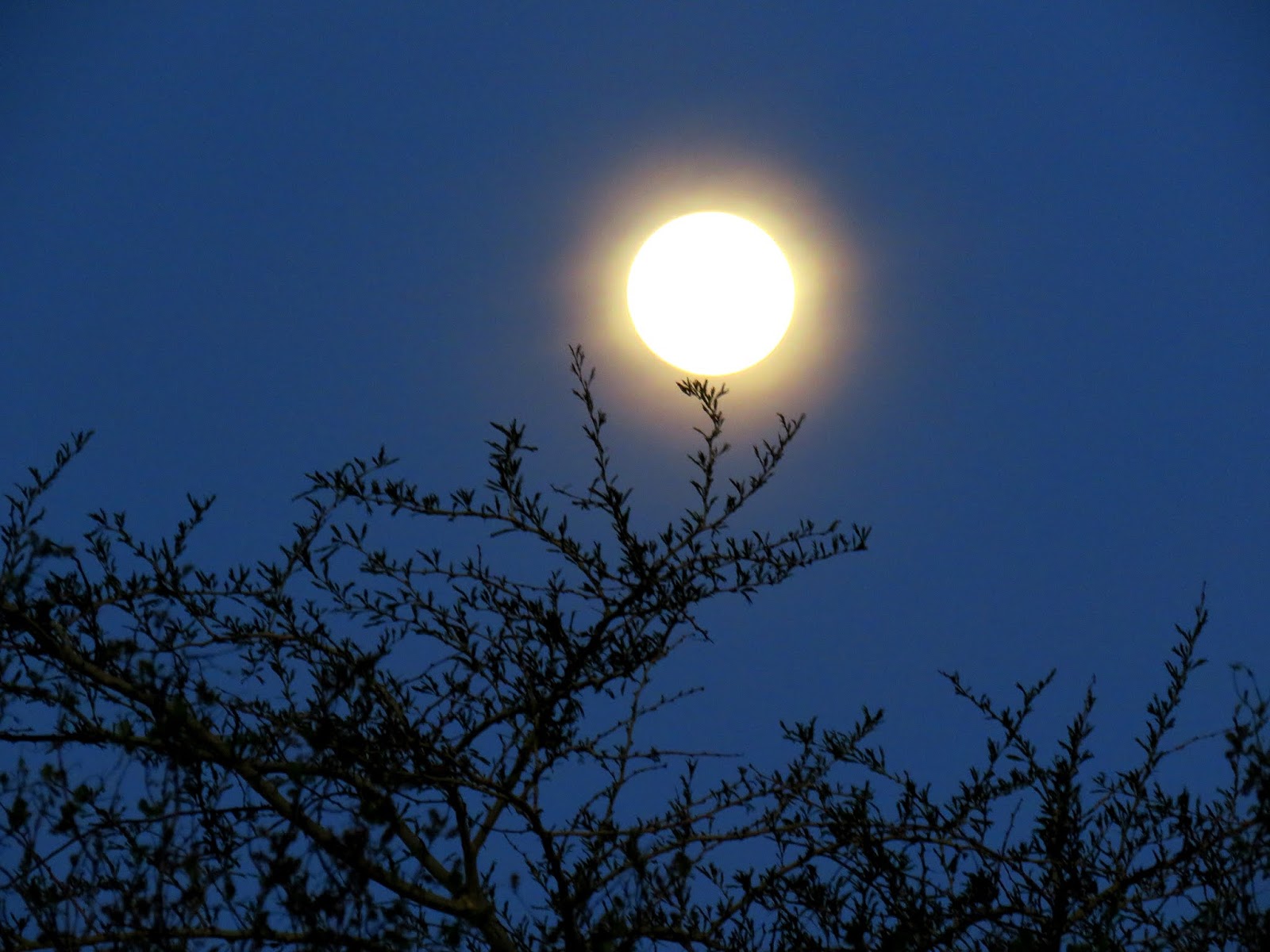
Last night’s full moon over Marloth Park. For more photos, please click here.

Southampton, England…A great hotel for two nights…

Image result for leonardo royal southampton grand harbour
The Leonardo Southampton Royal Grand Harbour hotel. (Not our photos).
Fascinating Fact of the Day About Southampton, England:

From this site:

“Southampton is a port city on England’s south coast. It’s home to the SeaCity Museum, with an interactive model of the Titanic, which departed from Southampton in 1912. Nearby, Southampton City Art Gallery specializes in modern British art. Solent Sky Museum features vintage aircraft like the iconic Spitfire. Tudor House & Garden displays artifacts covering over 800 years of history, including a penny-farthing bike.”
The hotel we selected in Southampton for two nights is the Leonardo Royal  Southampton Grand Harbour is located only minutes from the cruise terminal. For these dates, the nightly rate is GBP 180, US $231.  
Image result for leonardo royal southampton grand harbour
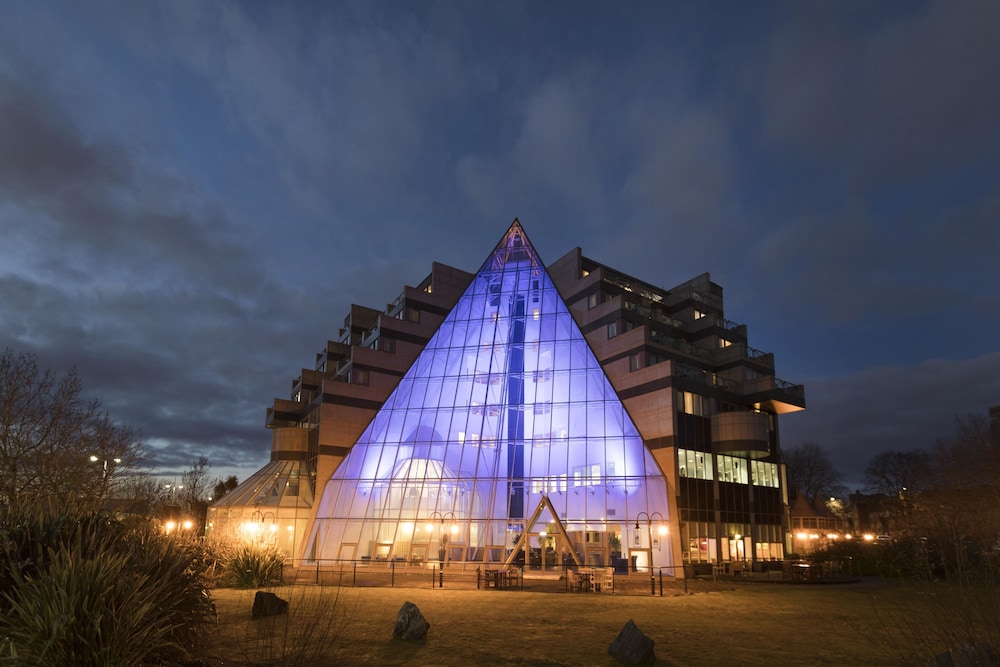
The hotel at night.

We used accumulated points in Expedia and only paid GBP 145.50, US $187.06 for both nights in a king room with breakfast included, which we prepaid at booking.

Yesterday, taking our time on the drive and stopping for a light lunch, we arrived at the hotel later than expected. Subsequently, we dined in the hotel’s restaurant.  Unfortunately, the lovely couple, Kim and Keith, whom we’d planned to meet for dinner, canceled due to Kim’s lousy cold. They didn’t want us to catch it, which we appreciated. There are plenty of germs on cruises as it is.
Image result for leonardo royal southampton grand harbour
One of the many seating areas in the hotel.

As typical for hotels, the meal in the restaurant was good, not great, with prices commensurate with what we’ve observed in the UK these past few months. Tonight, we may go out or dine in the bar, which has an excellent menu for my way of eating.  


Food is not so important to us when we have the cruise ahead of us where they’ll make everything befitting my restricted diet. In any case, we don’t make cruising about the food.  

For us, it’s the opportunity to socialize with other travelers from all over the world that make cruising unique—now, situated in the hotel bar preparing today’s post at a table close to an electric outlet without much social interaction. We’ll make up for it soon enough. 

My fast dying laptop (almost five years old) requires that I work with it plugged in with the battery on its last leg. On the upcoming cruise, we’ll have to find a spot close to an outlet. 

Image result for leonardo royal southampton grand harbour
Typical English breakfast served buffet-style in the main dining room.

We’ve been able to find an excellent place to sit near an outlet on several past cruises. Cruising on this particular ship, Celebrity Silhouette is new to us, and we’re hopeful we’ll find a spot close to all the action. 

We prefer not to be isolated when working on the post, especially when other passengers stop by to chat. It may take six or seven hours for me to complete one post with all the interruptions, but we love the interactions with other passengers and, from time to time, crew members.

Image result for leonardo royal southampton grand harbour
Cruise ships are often waiting in this harbor for enthusiastic cruise passengers.

It’s funny how passengers will say when they see us working on our laptops, “Couldn’t you have left the work at home?”  

We laugh and often say, “This is “home” at the moment.”

Yes, we continue with our daily tasks, handling photos, the posts, financial matters, banking, and so forth wherever we may be at any given time. It’s the nature of our peculiar lifestyle.

I don’t have anything in the way of photos today. It’s raining, and we don’t care to walk in the rain, nor do we want to pay a taxi to take us around when we’ve already returned the rental car.  

Image result for leonardo royal southampton grand harbour
This is where we’re seated now as we prepare today’s post.

Yesterday, when we arrived and couldn’t get a signal on the phone and thus we drove around Southampton (population 253,651) and had a good look. After these quiet months in the English (and Wales) countryside, it’s a lovely city with too much traffic and commotion for us.

The cruise will be the perfect segue back to a crowded environment. Afterward, we’ll be on Minnesota highways with plenty of traffic, horn honking, and impatient drivers, typical for any large city.

Image result for leonardo royal southampton grand harbour
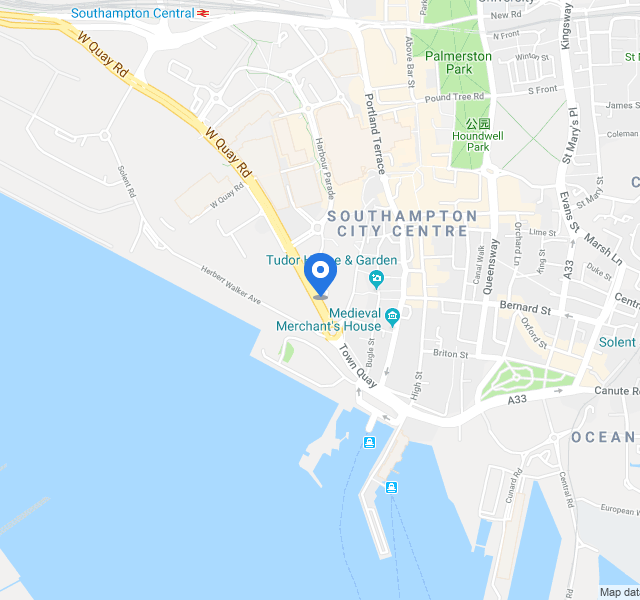
Map of our hotel and its proximity to the harbor. Regardless of the weather, we’ll still have to take a taxi to the cruise terminal.

We always say the most courteous drivers in the world are in South Africa. The slower vehicles always move to the shoulder to let others pass on both highways and dirt roads. We’ve never ceased to be amazed by this phenomenon.  

(Yeah, I know…I miss it, and every day I wonder if immigration will allow us to return and if we can rent the Orange house again…and then if “you know who” will return to see me.)

Well, folks, tomorrow is another “day-in-the-life” of these two nomads as we board yet another cruise, this time a transatlantic crossing. 

Happy hump day to all the working people, and happy any day to the retirees!

Photo from one year ago today, October 23, 2018:

Single file, from matriarch to baby.  For more photos, please click here.

Final expenses for two months in UK…Favorite photos….

The four of us in front of a large fireplace.

From this site

Fascinating Fact of the Day about Chepstow:
“Chepstow is located on the west bank of the River Wye, some 3 miles (4.8 km) north of its confluence with the Severn estuary. To the north of the town, the Wye passes through a limestone gorge, and there are limestone cliffs at Chepstow both north and south of the town centre and on the opposite (east) side of the river. The town is overlooked by the inland cliffs at Wyndcliff near St Arvans, about 2 miles (3.2 km) north of the town, and, from parts of the town, the Severn estuary and its bridges can be seen. The historic centre of Chepstow occupies part of a bend in the River Wye, and slopes up from the river to the town centre and beyond. As well as cliffs used for rock climbing, percolation of acidic groundwater has dissolved limestone to produce caves in the area, including Otter Hole, one of the longest cave systems in Britain and noted for its mineral deposits. The climate of the town is affected by its position close to the Severn estuary.

The bedrock of Chepstow is limestone, mudstone, and sandstone, overlain in places with some gravels and the clay and silt of the river’s tidal flats, which are of marine origin and up to two million years old. Most of the rock was produced in a warm, tropical marine environment when Europe was closer to the equator. The rock of Sedbury cliffs and those under Chepstow Castle are carboniferous limestones, hundreds of metres deep in the area, made of particles and shells of sea creatures from 330-360 million years ago. Layered outcrops of darker Black Rock limestone, which makes up a broad part of Chepstow’s bedrock, are very clear in cliffs along Craig Yr Afon, part of the Wales Coast Path extending from Wyebank Road, and by the link road from Bulwark Road to the M48, where the looser reddish Mercia Mudstone (which extends under Bulwark and Sedbury and forms the cliffs at the Severn) and the lighter Hunts Bay limestone are also seen.

The River Wye at Chepstow has one of the highest tidal ranges in the world.[18] The river was established as a boundary between England and Wales by Athelstan in 928. However, after the Norman conquest, areas east of the Wye, within the former Saxon royal manor of Tidenham and including Beachley, Tutshill, Sedbury, and Tidenham Chase, were included within the lordship of Striguil or Chepstow. In 1536, the river was confirmed as the boundary between Monmouthshire and Gloucestershire. Since the early 19th century, housing development has continued on the east bank of the river opposite Chepstow, at Tutshill and Sedbury. Those areas, though located in England rather than Wales, are now effectively suburbs of the town.”

____________________________________________
By crossing this bridge, near the Boat Inn Restaurant in Chepstow, we left Wales and entered England.  
Here are our total expenses for the 62-nights we spent in the UK.:
Expense      US Dollar       GBP
4 Holiday Rentals    $ 8,381.40  $ 6,426.17
Southampton Hotel (2)  $    276.94  $    213.35
Car Rental + Fuel  $ 1,985.64  $  1,529.73
Dining Out  $    675.07  $     520.07
Groceries  $ 1,502.48  $  1,157.50
Pharmacy  $    478.20  $     368.40
Tours  $      42.00  $       32.36
Total  $13,341.73  $10,247.58
Avg Daily- 62 ngts  $     215.19  $     165.28

When we look back over the past two months, mostly spent in England and most recently in Wales, we can’s help but smile, grateful that we changed our usual plan of staying in one location for longer periods.


The two weeks in Falmouth overlooking the Atlantic Ocean’s Falmouth Bay, the two weeks we lived on a farm in both St. Teath, Cornwall and then three more weeks on a farm in Witheridge Tiverton Devon and then in Chepstow, Wales have all been outstanding experiences.

This breathtaking renovated room in Chepstow Castle, may have been used as a bedroom.

These shorter-term stays have definitely inspired us to continue booking short term stays as we move forward into the future. The next bookings we are yet to arrange are for India beginning in February after our upcoming train tour on the Maharajas Express, a luxury train journey from Mumbai to Delhi.


As mentioned earlier, we decided to stay in hotels during our almost two remaining months after the six-night train excursion.  Our next booked adventure is a Viking Ocean cruise from Mumbai India on April 3, 2020, ending in Greenwich, England on May 2, 2010. 

The four of us in front of the Raglan Castle.

From there, at this point, we have no plans other than the cruise on November 10, 2020, departing from Lisbon, Portugal, ending on December 2, 2020, in Cape Town, South Africa.  We’ve yet to hear back from immigration if they’ll let us return.

The two castles presented a different perspective of life in medieval times.

Once we hear from immigration, we’ll be able to book plans between May 2020 and December 2020. It makes no sense to book anything until we know if we can return to South Africa.

In the interim, right now we’re thinking in terms of the upcoming two nights in Southampton and the upcoming 15-night cruise to the US.  Tonight, while in Southampton, we are having dinner with Kim and Keith who found us and our site from reading Tom’s posts on Cruise Critic several years ago. 

Ken and Tom at Chepstow Castle.

As the time nears to our two months in the US, we get excited at the prospect of seeing family and friends in Minnesota, Nevada, and Arizona.  We’ve yet to book flights for these locations, preferring to “play it by ear” while we’re there.  It will all work out, one way or another.

In a matter of moments, we’ll be heading out the door to make the two-hour drive from Monmouthshire to Southampton and begin the next phase of our travels.

Our two castle tours were delightful, especially with friends Linda and Ken

We’re so grateful to be in a position to continue to treasure our life of world travel for however long we can and for the opportunity to share it all with our readers.


We’ll be back tomorrow from the Leonardo Royal Southampton Grand Harbour hotel, a stone’s throw from the cruise terminal, rated four stars.  It looks fabulous online at this link. Of course, we add photos in a few days.

We were very content with our Shirenewton rental, conveniently located to downtown Chepstow.

As for our above total expenses for the 62-nights we spent in the UK, we’ve yet to add fuel for the trip to Southampton and meals for two days, nor the upcoming cruise.  We’ll do a separate “total expenses” when the cruise ends.


May your day be rich in experience and love.

_________________________________________________________
Photo from one year ago today, October 22, 2018:
The next day Tom and I and Tom and Lois visited Lisa at her home in Marloth Park where, as a volunteer with Wild & Free, she rescues and releases bush babies.  Such dedication.  For more photos, please click here.

Final full day in Wales…Packed and ready for Southampton…

Out to lunch at the Cripple Creek Inn with Linda and Ken after visiting Raglan Castle.

From this siteFascinating Fact of the Day about Chepstow:
New housing development in the twentieth century took place to the north and south of the town centre, and more recently beyond the A466 road to the west of the town. The town developed rapidly after the opening of the Severn Bridge in 1966, which replaced the car ferry between Beachley and Aust and allowed easier commuting between Chepstow and larger centres including Bristol and Cardiff. Over £2 million was invested in regenerating the town centre in 2004–05. This scheme, which includes sculptures and other public art, encountered some local criticism over its high cost but gained several national awards reflecting its high design quality. The area beside the river has also been landscaped in association with a flood defense scheme.

____________________________________________
We’re wrapping up the 11 days we spent in Wales. Our bags are packed in a manner that will make it easy to unpack for the cruise. The final bag to close is the third supplies and toiletries bag and the backpack with our laptops.


Overnight last night I backed up my computer on our portable hard drive which surprises me it still works after purchasing it seven years ago. I’ve already backed up everything to one of two clouds and thus, regardless of digital crashes, we’re covered.


In the past 24 hours, I did a lot of consolidating removing packaging of various new unopened items to already opened items, making more space in the bag.  We do this regularly but I hadn’t done it since we arrived in the UK two months ago.
Linda and Ken each had the duck breast.
As of the end of today, we’ll have eaten most of the food we had on hand since we have no intention of taking food with us onto the cruise, especially based on the fact we’ll be flying to Minnesota (from Fort Lauderdale) in a mere 2½ weeks.  That’s hard to believe how quickly the time has passed.


After I finish today’s post and we’ve had our final late afternoon meal, I’ll begin working on the final expenses for these past two months, entering totals in tomorrow’s post and also on our spreadsheet.


A few days ago we each ordered the latest and greatest Google phones which will serve us well in years to come.  We’ll no longer have to buy SIM cards.  This phone is capable of affordable short term calling and data in 200 countries. 


Once the phones arrive we’ll sign up for Google Fi which has a pay-as-you-go plan that works for us.  They aren’t long term contracts with flat monthly fees but rather plans where we purchase calling and data as needed.  It automatically “kicks-in” when necessary.
Tom’s Italian chicken pasta lunch with garlic bread, of course.

With frequent use of our laptops using WiFi provided in holiday homes, we don’t have much need for data on phones other than for navigation while driving.  With Google Fi, we’ll only use the phone feature for short calls from wherever we may be in the world since there are fees based on the country we are in. 


We’ll continue to use Skype and Messenger for free calls.  We plan to cancel our current phone number plan with Skype which enabled us to make calls to any landlines or cell phones anywhere in the world.  But, there too there are monthly fees and costs for any calls that aren’t Skype to Skype.

The plan is such that Tom and I will need to use What’s App or Messenger to call each other. Otherwise, we’d have to each pay $.20 a minute based on our combined plan, which can add up quickly.  Texts are free so we may text one another while we’re apart anywhere in the world.
My delicious lunch with three grilled scallops and a few slices of gluten-free sausage.

With my current phone almost completely dead, I’m looking forward to being able to add apps.  My current phone even with an added data card doesn’t allow for the addition of many apps.  With the new 128 gig phone, I am looking forward to downloading every app I choose. 


We’re signing off for today to get back to packing some odds and ends and soon get to work on tomorrow’s post.  We’re leaving at 10:00 am and will upload the post before we depart.  We’ll see you tomorrow with the “numbers” and some favorite photos.


Happy Monday!

________________________________________
Photo from one year ago today, October 21, 2018:
This male stole the warthog kill from the females, eventually leaving the remains for the hungry females. For more photos, please click here.

Part 2…Raglan Castle…A look inside medieval times…Wonderful dinner with friends…Two days and counting…

When the four of us walked across the drawbridge over the moat at Raglan Castle it was easy to imagine the circumstances under which they needed to close off the castle.

From this site:
Fascinating Fact of the Day about Raglan, Wales:
By 1632, a Court House was established in Raglan. “The jury to meet at the Court House at Ragland the 25th March next by ten of the clock under peyn of xls. apeece* (see below) to have a view and inquire of lands in Landenny (Llandenny) and Ragland late of Philip David Morris”, (Dec. 1632). Subsequent leet courts refer to the liberty of Raglan and in 1682 the hundred of Ragland is mentioned. Court Roll excerpts reflect the issues of the day: In 1680, ‘The bridge called Pontleecke upon the highway leading from Raglan towards Chepstow to be out of repair. Moses Morgan fined for not spending 14s of the parish money towards repairing the stocks and whipping post in the parish of Raglan’. In 1695 the repair of bridges is still under discussion, ‘The bridge called Pont y bonehouse in the town of Raglan, 1695. John Curre, gent., steward’.

There is no longer a direct train service to the village, the local railway station having closed in 1955. The railway station buildings have been removed to St Fagans. The village continued to be an important thoroughfare in the 18th and 19th centuries, which explains its three substantial coaching inns the Beaufort Arms, the Ship and the Crown where the mail coaches would stop.

____________________________________________

*By 1632, a Court House was established in Raglan. “The jury to meet at the Court House at Ragland the 25th March next by ten of the clock under peyn of xls. apeece to have a view and inquire of lands in Landenny (Llandenny) and Ragland late of Philip David Morris”, (Dec. 1632). Subsequent leet courts refer to the liberty of Raglan and in 1682 the hundred of Ragland is mentioned. Court Roll excerpts reflect the issues of the day: In 1680, ‘The bridge called Pontleecke upon the highway leading from Raglan towards Chepstow to be out of repair. Moses Morgan fined for not spending 14s of the parish money towards repairing the stocks and whipping post in the parish of Raglan’. In 1695 the repair of bridges is still under discussion, ‘The bridge called Pont y bonehouse in the town of Raglan, 1695. John Curre, gent., steward.”
____________________________________________
The doorways in Raglan Castle have interesting designs.
Last night’s dinner at The Boat Inn in Chepstow (our second visit) with Liz and Dave from Bristol was sheer pleasure.  We hadn’t seen Liz for five years when we met in South Kensington, London in August 2014.  Last night we met Dave for the first time but somehow over the years of email communication, we felt as if we knew him.
Intricate patterns carved in stone remain yet today. 

I could kick myself for failing to take any photos. The conversation was so wonderfully entertaining, it totally slipped my mind.  We had another fine meal in this highly rated bistro/pub and the hours slipped by.


Finally, it was time to say goodbye.  We each had a long drive ahead of us in the dark.  It was the first time we drove from Chepstow to Shirenewton in the dark but by this time, Tom had the route figured out, and we got back to our holiday home in no time.

The lush green countryside that surrounds the castle is breathtaking, even today with the addition of farms and homes.

Once back in the house, we settled in for a quiet remainder of the night and before too long we were off to bed.  I had a fitful night, tossing and turning, sleeping only for short periods with lots of dreams.

Window panes such as these were an integral part of the original design.

With my phone not working I used Tom’s phone to play solitaire in-between the equivalent of “naps.” It’s so boring I often fall back to sleep before too long but last night was an exception.  Overall, I don’t think I slept more than four hours.

Tom seated on the king’s throne.

You know how it is…we can easily start overthinking during the night to send ourselves into a flurry of worry and doubt.  Although generally speaking, I am not a worrier (Tom handles that for me).  But last night after two glasses of white wine at dinner, my mind was racing.  


I think I should go back to red wine on the upcoming cruise which doesn’t seem to have an effect on my quality of sleep.  On cruises, I usually have a few glasses of red wine early in the evening (at happy hour) and then switch to mineral water for the remainder of the evening.  This avoids any unpleasant after-effects.

A tucked-away toilet (referred to as a “loo” in the UK).

The cardiologist in South Africa recommended drinking only red wine (in moderation, of course) which seems to have a good effect on the heart.  I didn’t drink any alcohol for over 20 years and started drinking red wine a few years ago on cruises.


While we’ve been “at home” in the UK, these past two months, we’ve had no alcohol whatsoever.  It was only this week when out to dine with Linda and Ken and then again last night, that I tried some white wine.  No more of that for me.

More intricate stone carvings remain among the ruins.

Today, we’re washing our final loads of laundry hoping everything will dry indoors on the drying rack.  Some items seem to take three days to dry so we may be pushing it when we’re leaving on Tuesday to drive to Southampton for a two-night hotel stay and again dinner with friends we made who’ve been reading our posts for years.

“A prie-dieu (French: literally, “pray [to] God”, invariable in the plural) is a type of prayer desk primarily intended for private devotional use, but may also be found in churches. It is a small, ornamental wooden desk furnished with a thin, sloping shelf for books or hands and a kneeler.”

At noon, we’re heading back to The Boat Inn for our final meal out in Chepstow.  We made a reservation for the “Sunday roast,” a popular tradition in the UK when one may choose to order beef, pork or lamb.  Tom usually chooses the beef while I go for the lamb.  We’ll take photos to share in tomorrow’s post.

Curved window panes.

Below is the last of the information we’re posting on Raglan Castle where once again, we had a memorable experience with Linda and Ken after touring two castles this past week.


From this site:

“Despite Tudor and Jacobean rebuilding the Raglan Castle we see today is largely the work of one hugely ambitious man – Sir William Herbert.


In less than 10 years this country squire turned himself into arguably the most powerful Welshman of the age. He began his dazzling career fighting in France, where he was captured and ransomed and was knighted in 1452.


Having grown rich by importing Gascony wine, Herbert was made sheriff of Glamorgan and constable of Usk Castle. He played a crucial role in a decisive defeat of Lancastrian forces during the Wars of the Roses in 1461.”

These three windows indicate three levels from which the floors eventually
 wore away.

“The grateful new king Edward IV rewarded Herbert by making him chief justice and chamberlain of South Wales – and grandly styling him Baron Herbert of Raglan. Underlining this meteoric rise young Henry Tudor, the future King Henry VII was sent to Sir William to be brought up at Raglan Castle.


Great men need great houses. So Herbert continued his father’s work at Raglan on an epic scale, creating a magnificent new gatehouse and two great courts of sumptuous apartments. Now he could dispense hospitality with the best.

Poet Dafydd Llwyd praised his incredible fortress-palace with its ‘hundred rooms filled with festive fare, its hundred chimneys for men of high degree’.”
Tom standing in the fireplace in the massive kitchen often used to prepare meals for 100’s of guests.

“Herbert’s final accolade was the most remarkable of all. In 1468 he was created Earl of Pembroke as a reward for his capture of Harlech Castle, the last Lancastrian stronghold in England and Wales. It made him the first member of the Welsh gentry to enter the ranks of the English peerage.


He didn’t enjoy this prestige for long. Herbert was defeated and captured at the battle of Edgecote in 1469 – and brutally beheaded the very next day. The reported death of 5,000 men, mostly Welshmen, in his army makes it one of Wales’s greatest losses in battle.

The body of the ambitious earl was brought back to southeast Wales and buried in the Cistercian abbey church at Tintern. It was left to the Somersets, earls of Worcester, to usher in the glories of the Tudor age at Raglan.”


Have a superb Sunday!  Go Vikings!
_________________________________________________________
Photo from one year ago today, October 20, 2018:
A group of cape buffalo may be called an “obstinacy.”  For more photos from the “Ridiculous Nine,” please click here.

Part 1…Raglan Castle…A look inside medieval times…

Ken set up our camera timers for this photo.

Fascinating Fact of the Day about Raglan WalesFrom this site:
“Raglan (Welsh: Rhaglan) is a village and community in Monmouthshire, southeast Wales, United Kingdom. It is located some 9 miles south-west of Monmouth, midway between Monmouth and Abergavenny on the A40 road very near to the junction with the A449 road. The fame of the village derives from its castle, Raglan Castle, built for William ap Thomas and now maintained by Cadw.

The village stands at the crossing point of two Roman roads, that from Gloucester to Usk, and that from Chepstow to Abergavenny.[2] The origins of the village are unknown but Raglan was first mentioned in the will of Walter de Clare.

The earliest market in Raglan was recorded in 1354. The market cross in the town, which stands in the centre of the crossroads between the church and the Beaufort Arms Inn, consists now only of a massive base on which has been mounted a lamp post. In the large space around this stone, the markets were held, the base of the cross forming the table on which bargains were struck.

The agricultural roots of Raglan are illustrated by a 1397 account between the ‘reevem’ or reeve Ieuan Hire and Ieuan ap Grono and haywards (hedge wardens) Iorwerth ap Gwillym and Hoe ap Gwillym Goch.

The earliest records of the manor of Raglan Court are found on 26 October – 28 July 1391 during the reign of Richard II. At this time Raglan Castle was probably no more than a hill fort. After 1415 Raglan Castle was greatly expanded.

Records from 1587 refer to Raglan as a town. For the court, 13 July 1587, the marginal heading reads Burgus de Ragland cum Curia Manerii de Ragland cum membris and the caption becomes ‘The Court of William Somerset, 3rd Earl of Worcester of his said borough and the Court of the said Earl of his said manor with members’. From 1 June 1587 onwards, most courts refer to the Borough of Ragland in the following manner: ‘The Court of the said manor with the Court of the borough or the town of Ragland’.”

Raglan Castle in Raglan Wales is quite impressive.  See the information below for details.

When we embarked on the drive to Raglan Castle, located in the village of Raglan, we were concerned, once again, that roads wouldn’t be marked and it would be easy to get lost. 

Raglan Castle wasn’t as restored as Chepstow Castle but had many fascinating features. 

A GPS signal isn’t available in most of the countryside but, of course, we saved the directions off-line, as we have all along, hoping it would be helpful.  This time we arrived at our destination without incident but we wondered why it’s been so difficult in the past.

The moat surrounding the castle is a stunning feature.

Touring the two castles, both Chepstow and Raglan Castle with Linda and Ken made the experience all the more interesting. With our collective varying perceptions, the conversation flowed as we toured each castle, often pointing our great photos ops to one another.

The Moat Walk at Raglan Castle runs around its outer edge and is thought to have been added around 1600 by the fourth Earl of Worcester.

Linda and Ken seemed more enthralled with Raglan Castle but we couldn’t decide between the two.  Each has its own special features and unique persona.  In both cases, our imaginations went wild as we toured each of the ruins.

A grand view of the moat surrounding Raglan Castle.

After our lengthy tour of Raglan Castle, which took much longer due to its massive size we headed to lunch at the Cripple Creek Pub & Restaurant where we had a lovely lunch although not quite as spectacular as the prior day at The Boat Inn in Chepstow along the River Wye.

In 1938 Henry Somerset, the 10th Duke, entrusted guardianship of Raglan Castle to the Commissioner of Works, and the castle became a permanent tourist attraction. Today, the castle is classed as a Grade I listed building and as a Scheduled Monument, administered by Cadw.

As a matter of fact, tonight, we’ll be meeting longtime friends/readers Liz and Dave at The Boat Inn for dinner (referred to as supper in this part of the world).  We’re so looking forward to them and…dining in that fantastic restaurant once again.

Tom took a rest on this two-wheeled cart.

For the information we gathered about Raglan Castle please see below.  Tomorrow, we’ll add additional information as we wrap up the two-day post.

From this site:
“The Welsh fortress-palace was transformed into a regal residence. The unmistakable silhouette of Raglan crowning a ridge amid glorious countryside is the grandest castle ever built by Welshmen.

We can thank Sir William ap Thomas, the ‘blue knight of Gwent’, for the moated Great Tower of 1435 that still dominates this mighty fortress-palace. His son Sir William Herbert, Earl of Pembroke, created the gatehouse with its flared ‘machicolations’.”

Raglan Castle was at least twice the size of Chepstow Castle which we shared in the past two day’s posts.

“These stone arches allowed missiles to be rained down on attackers. But Raglan came 150 years later than the turbulent heyday of castle-building. It was designed to impress as much as to intimidate.

Under various earls of Worcester Raglan was transformed into a magnificent country seat with a fashionable long gallery and one of the finest Renaissance gardens in Britain. But loyalty to the crown was to prove its undoing.”

Note this window’s scalloped edge.

“Despite a garrison of 800 men and one of the longest sieges of the Civil War, it fell to parliamentary forces and was deliberately destroyed. Among the looted treasures was a piece of Tudor wooden panelling, now proudly displayed in the visitor centre after being rescued from a cow shed in the 1950s.

Despite Tudor and Jacobean rebuilding the Raglan Castle we see today is largely the work of one hugely ambitious man – Sir William Herbert.

In less than 10 years this country squire turned himself into arguably the most powerful Welshman of the age. He began his dazzling career fighting in France, where he was captured and ransomed, and was knighted in 1452.”

As the moat wraps around the spectacular castle.

“Having grown rich by importing Gascony wine, Herbert was made sheriff of Glamorgan and constable of Usk Castle. He played a crucial role in a decisive defeat of Lancastrian forces during the Wars of the Roses in 1461.


The grateful new king Edward IV rewarded Herbert by making him chief justice and chamberlain of south Wales – and grandly styling him Baron Herbert of Raglan. Underlining this meteoric rise young Henry Tudor, the future King Henry VII was sent to Sir William to be brought up at Raglan Castle.”

Today, the sun is shining and we plan to take a walk in the neighborhood. There’s a beautiful church nearby which we’d only seen from the car in the pouring rain.  

That’s all folks.  We’ll see you again tomorrow with new photos and Raglan Castle facts.  Please check back.

Be well.
_________________________________________

Photo from one year ago today, October 19, 2018:

“Leopards are the least social – and perhaps the most beautiful – of the African big cats. They usually keep to themselves, lurking in the dense riverine bush or around rocky koppies, emerging to hunt late in the afternoon or at night.”  For more photos please click here.

Part 2…Chepstow Castle…A look inside medieval times…

During various stages of the restoration of Chepstow Castles, bars were placed across low windows for the safety of tourists.

Fascinating Fact of the Day About Chepstow:

From this site:
“In the 19th century, a shipbuilding industry developed, and the town was also known for the production of clocks, bells, and grindstones. In 1840 leaders of the Chartist insurrection in Newport were transported from Chepstow to Van Diemen’s Land. The port’s trade declined after the early 19th century, as Cardiff, Newport, and Swansea became more suitable for handling the bulk export of coal and steel from the Glamorganshire and Monmouthshire valleys. However, shipbuilding was briefly revived when the National Shipyard No.1 was established during the First World War and for a short period afterward, when the first prefabricated ships, including the War Glory, were constructed there. The influx of labour for the shipyards, from 1917, led to the start of “garden suburb” housing development at Hardwick (now known locally as “Garden City”) and Bulwark. The shipyard itself became a works for fabricating major engineering structures. From 1938, Chepstow housed the head office of the Red & White bus company, on Bulwark Road.”
_______________________________________

This will be the last day of presenting photos from Chepstow Castle. Tomorrow, we’ll move on to Raglan Castle for two days. For the remaining two posts from Chepstow, Monday and Tuesday, we’ll include some favorite photos from the 11 nights we spent here.

Each door in Chepstow Castle has unique characteristics.

After we spend two nights in Southampton before boarding the cruise, we’ll tally the total expenses for our two months in the UK from August 23rd to October 24th. This post will appear on the day we board the ship.

These large areas leave a lot to the imagination.

From that point, all posts for 15 nights will be cruise and ports-of-call related. I realize that while we’re cruising posts may be redundant but as always, on yet another cruise of our total of 25, we’ll do our best to keep it interesting and informative.

In this case, the presence of vines created such a pleasing effect, it remained in place.

Chepstow Castle will remain in our minds for a long time to come. Lately, we’d been saying one can tire of touring old buildings which could most likely occur after seven years.  

Another fascinating doorway.

Undoubtedly, we’ll continue to peruse historic churches, restored castles, as well as significant old structures throughout the world. It’s impossible not to do so.


Many castles we’ve explored in the past have been totally restored with furnishings and accouterments typical for the era. The rich decor is often appealing and interesting but the medieval period has definitely piqued our interest while in the UK.  
Ken was intent on taking many photos.

The varied aspects of a castle’s ruins leave much to the imagination inspiring us to research data we can share here with our photos.


For more on Chepstow Castle, please see below:
“Foundation, 1067–1188

The Great Tower
The speed with which William the Conqueror committed to the creation of a castle at Chepstow is testament to its strategic importance. There is no evidence for a settlement there of any size before the Norman invasion of Wales, although it is possible that the castle site itself may have previously been a prehistoric or early medieval stronghold. The site overlooked an important crossing point on the River Wye, a major artery of communications inland to Monmouth and Hereford. At the time, the Welsh kingdoms in the area were independent of the English Crown and the castle in Chepstow would also have helped suppress the Welsh from attacking Gloucestershire along the Severn shore towards Gloucester. However, recent analysis suggests that the rulers of Gwent, who had recently fought against King Harold, may initially have been on good terms with the Normans.

The precipitous limestone cliffs beside the river afforded an excellent defensive location. Building work started under William FitzOsbern in 1067 or shortly afterwards. The Great Tower was probably completed by about 1090, possibly intended as a show of strength by King William in dealing with the Welsh king Rhys ap Tewdwr. It was constructed in stone from the first (as opposed to wood, like most others built at this time), marking its importance as a stronghold on the border between England and Wales. Although much of the stone seems to have been quarried locally, there is also evidence that some of the blocks were re-used from the Roman ruins at Caerwent.

The castle originally had the Norman name of Striguil, derived from the Welsh word ystraigl meaning “river bend”. FitzOsbern also founded a priory nearby, and the associated market town and port of Chepstow developed over the next few centuries. The castle and the associated Marcher lordship were generally known as Striguil until the late 14th century, and as Chepstow thereafter.

Expansion by William Marshal and Roger Bigod, 1189–1300

It’s easy to imagine weddings held in this area.

Plan of Chepstow Castle from 1825
Further fortifications were added by William Marshal, Earl of Pembroke, starting in the 1190s. The wood in the doors of the gatehouse has been dated by dendrochronology to the period 1159–89. Marshal extended and modernised the castle, drawing on his knowledge of warfare gained in France and the Crusades. He built the present main gatehouse, strengthened the defences of the Middle Bailey with round towers, and, before his death in 1219, may also have rebuilt the Upper Bailey defences. Further work to expand the Great Tower was undertaken for William Marshal’s sons William, Richard, Gilbert, and Walter, in the period to 1245.

In 1270, the castle was inherited by Roger Bigod, 5th Earl of Norfolk, who was a grandson of William Marshal’s eldest daughter, Maud. He constructed a new range of buildings in the Lower Bailey, as accommodation for himself and his family. Bigod was also responsible for building Chepstow’s town wall, the “Port Wall”, around 1274–78. The castle was visited by King Edward I in 1284, at the end of his triumphal tour through Wales. Soon afterwards, Bigod had built a new tower (later known as “Marten’s Tower”), which now dominates the landward approach to the castle, and also remodelled the Great Tower.

A grassy courtyard.  Although there is grass in many areas of the castle it’s unlikely grass was planted in any areas.  For tourist purposes, the beautiful lawns highlight the less colorful castle.
Decline in defensive importance, 1300–1403
From the 14th century, and in particular the end of the wars between England and Wales in the early 15th century, its defensive importance declined. In 1312 it passed into the control of Thomas de Brotherton, Earl of Norfolk, and later his daughter Margaret. It was garrisoned in response to the rebellion of Owain Glyndŵr in 1403 with twenty men-at-arms and sixty archers but its great size, limited strategic importance, geographical location and the size of its garrison all probably contributed to Glyndŵr’s forces avoiding attacking it, although they did successfully attack Newport Castle.
The 15th to 17th centuries.

In 1468, the castle was part of the estates granted by the Earl of Norfolk to William Herbert, Earl of Pembroke in exchange for lands in the east of England. In 1508, it passed to Sir Charles Somerset, later the Earl of Worcester, who remodelled the buildings extensively as private accommodation. From the 16th century, after the abolition of the Marcher lords’ autonomous powers by King Henry VIII through the Laws in Wales Acts of 1535 and 1542, and Chepstow’s incorporation as part of the new county of Monmouthshire, the castle became more designed for occupation as a great house.”

For the continuation of this information, please click here
The stones used in building and restoring the castle vary in color creating an appealing aesthetic.

We’d planned to drive to Chepstow for lunch today but have decided to stay in due to the heavy rain.  We’d hoped to have lunch on our remaining days at the local pub/restaurant but after yesterday’s inferior lunch, we changed our minds. Tomorrow evening we’re meeting up with readers/friends Liz and Dave for dinner in Chepstow. 


The food was not the quality and freshness we’ve experienced elsewhere in Chepstow or other areas in the UK.  Thus, tomorrow Saturday, Sunday and Monday, we’ll dine in Chepstow at one of its many wonderful restaurants. 
Glass windows were used in Wales as follows: “1066 to 1215 AD was the Norman period, which used glass in churches and some fortified buildings, castles, etc. 1216-1398 AD, the High Middle Ages, saw the introduction of Gothic and early English church architecture with much larger windows openings comprising smaller leaded panes.”

Today, we’ll put a dent in our remaining food by having a late lunch (instead of breakfast) and a lite bite in the evening.  

Moss and vines typically grow on stone structures in humid climates. although it can be destructive to the longevity of the structure.  For restored castle and other publicly displayed ruins, often the vines and moss are regularly removed.

The time is flying so quickly! We’re only six days from boarding the cruise in Southampton and only three weeks from today to arriving in the US. We’re looking forward to it all.


Have a healthful and peaceful day.
____________________________________
Photo from one year ago today, October 18, 2018:
“Formerly widely distributed throughout the bushveld regions of South Africa. In the 19th century, it was exterminated by hunters, except in KwaZulu-Natal’s Umfolozi region. Although now thriving where it has been re-introduced into parts of its former region, it still suffers from poaching.”  For more photos please click here.

Part 1…Chepstow Castle…A look inside medieval times…

Chepstow Castle was impressive as we approached.

Fascinating Fact of the Day About Chepstow:

From this site:
Chepstow was given its first charter in 1524 and became part of Monmouthshire when the county was formed. The town appears as “Strigulia”, “Chepstowe” and “Castelh Gwent” on the Cambriae Typus map of 1573.[10] The castle and town changed hands several times during the English Civil War and the regicide Henry Marten was later imprisoned and died in the castle. The port continued to flourish; during the period 1790 to 1795, records show a greater tonnage of goods handled than Swansea, Cardiff, and Newport combined. Chepstow reached the peak of its importance during the Napoleonic Wars, when its exports of timber, for ships, and bark, for leather tanning, were especially vital. There were also exports of wire and paper, made in the many mills on the tributaries of the Wye. An important aspect of Chepstow’s trade was entrepôt trade: bringing larger cargoes into the manageable deep water of the Wye on high tide and breaking down the load for on-shipment in the many trows up the Wye to Hereford past the coin stamping mill at Redbrook, or up the Severn to Gloucester and beyond. Chepstow also traded across the estuary to Bristol on suitable tides to work vessels up and down the Avon to that city’s centre. Many buildings in the town remain from the late 18th and early 19th centuries; the elegant cast-iron bridge across the Wye was opened in 1816 to replace an earlier wooden structure.”
_______________________________________
Our tour through Chepstow Castle on Tuesday with friends Linda and Ken, who live in South Africa was delightful. We took our time as we wandered through the historic structure reveling its magnificence and the skill with which it has been partially restored to its original beauty over the years.
The main entrance to the castle.

Wales/England/UK takes pride in the maintenance of their castles which was evidenced on both Tuesday and Wednesday when we toured yet another stunning structure with Linda and Ken, Raglan Castle which we’ll share in a few days once we’ve completed posting photos of Chepstow Castle.

Coat of arms on shields at the entrance gate.

With both Linda and Ken as skilled photo enthusiasts, we all ran about seeking the most advantageous photos ops of which there was an endless supply.  We oohed and ahhed from area to area totally in awe of what our eyes beheld.

Unfortunately, it was another cloudy day but it never rained while we were touring the castle with Linda and Ken.

Of course, we couldn’t wait for the opportunity to do research to discover more about the castle and its varied history.  The Internet was rife with comments and observations at numerous sites. 

 Linda and I bundled up on a cool day.  I had three layers under my hoodie.

However, we’ve found the history we’ve included today and in the next few days was most thorough and comprehensive at this site, one we often use for historical facts.  

Ken and Tom posing at a window.

There’s some controversy if Wikipedia’s information is accurate but we often find other information, perhaps written as a “personal observations” less accurate as opposed to the history itself that Wikipedia strives to present.

Inside the entrance courtyard.

Here is a portion of the information on the building of Chepstow Castle we gleaned from the above-mentioned site which we’ll continue to add to in the next few day’s posts:

“Chepstow Castle (Welsh: Castell Cas-gwent) at Chepstow, Monmouthshire, Wales is the oldest surviving post-Roman stone fortification in Britain. Located above cliffs on the River Wye, construction began in 1067 under the instruction of the Norman Lord William FitzOsbern. Originally known as Striguil, it was the southernmost of a chain of castles built in the Welsh Marches, and with its attached lordship took the name of the adjoining market town in about the 14th century.

In the 12th century, the castle was used in the conquest of Gwent, the first independent Welsh kingdom to be conquered by the Normans. It was subsequently held by two of the most powerful Anglo-Norman magnates of medieval England, William Marshal and Richard de Clare. However, by the 16th century its military importance had waned and parts of its structure were converted into domestic ranges. Although re-garrisoned during and after the English Civil War, by the 1700s it had fallen into decay. With the later growth of tourism, the castle became a popular visitor destination.”

Many floors of the castle were long gone but it was easy to determine where the
floors were located by the placement of fireplaces and windows.

The ruins were Grade I listed on 6 December 1950. (In the UK, ruins are graded by number with those in the poorest condition at the lower end of the spectrum. If they aren’t graded, they may be subject to demolition.  Obviously, not all ruins are worthy of restoration).

It was easy to imagine how an area such as this would have been used in centuries past.

“Chepstow Castle is situated on a narrow ridge between the limestone river cliff and a valley, known locally as the Dell, on its landward side. Its full extent is best appreciated from the opposite bank of the River Wye. The castle has four baileys, added in turn through its history. Despite this, it is not a defensively strong castle, having neither a strong keep nor a concentric layout. The multiple baileys instead show its construction history, which is generally considered in four major phases.  The first serious architectural study of Chepstow began in 1904 and the canonical description was long considered to be by Perks in 1955. Recent studies have revised the details of these phases but still, maintain the same broad structure.”

The sun peeked out just as we were done with our self-tour.  

It’s easy to imagine life in a castle during the medieval era.  Of course, many of us have had an opportunity to watch TV series and movies depicted the difficult lives of the occupants of the castles (and more so for those outside the castle).

This stunning parlor or bedroom had obviously been restored to what may have been it’s natural beauty.  This room is awe-inspiring.

Disease was rampant and life expectancy was alarming low: “Life expectancy at birth was a brief 25 years during the Roman Empire and it reached 33 years by the Middle Ages and raised up to 55 years in the early 1900s. In the Middle Ages, the average life span of males born in landholding families in England was 31.3 years and the biggest danger was surviving childhood.”

The view through an arched doorway…
What a stunning experience we had on Tuesday with Linda and Ken followed by the over-the-top lunch we had at the Boat Inn in Chepstow along the River Wye.  If you missed yesterday’s post, please click here.
The leaves are turning on the beautiful trees on the grounds of Chepstow Castle.

Today, we’re back on our own planning to walk down the road for lunch at the local pub.  Much to our delight, the sun is shining although the temperature is quite cool, starting this morning at 46F, 8C.  I suppose this cool weather is good for us to adjust when we’ll be in bitter cold Minnesota in a mere 22 days.


Have a bright sunny day filled with warmth and comfort.
____________________________________
Photo from one year ago today, October 17, 2018:
A female resting beside her mate.  For more, please click here.

A fantastic day with friends…A castle..A memorable meal…

Us and Linda and Ken having a few drinks at the Boat Inn in Chepstow.

Fascinating Fact of the Day About Shirenewton, Chepstow, Monmouthshire, Wales:

From this site:
“After the Norman conquest of England, Chepstow was a key location. It was at the lowest bridging point of the River Wye, provided a base from which to advance Norman control into south Wales, and controlled river access to Hereford and the Marches. Chepstow Castle was founded by William Fitz Osborn, 1st Earl of Hereford, in 1067, and it’s Great Tower, often cited as the oldest surviving stone fortification in Britain dates from that time or shortly afterward. Its site, with sheer cliffs on one side and a natural valley on the other, afforded an excellent defensive location. A Benedictine priory, now St Mary’s Church, was also established nearby. This was the centre of a small religious community, the remains of which are buried under the adjoining car park. Monks, originally from Cormeilles Abbey in Normandy, were there until the Dissolution of the Monasteries.”
________________________________________

With little time this morning to spend on presenting facts and photos about our outstanding experience at the Chepstow Castle, which we’ll share in a few upcoming posts starting tomorrow, today we’re posting photos from our memorable lunch with Linda and Ken.

We stopped at a cafe for tea located next to Chepstow Castle.  We loved the colorful tea timer!

As it turns out, based on their schedule we’ll only have one more day to spend together and we’re all making the most of it.  Our friendship with Linda and Ken began in 2013 when we met them through Kathy and Don when we spent our first three months in Marloth Park and continued as we stayed in touch over the years. 

We walked along the River Wye to the Boat Inn for lunch.

While living in Marloth Park for 15 months beginning in February 2018 and ending in May 2019, we had many opportunities to socialize with them including a week they spent staying with us at The Orange House where we lived during that extended period.


They, along with Kathy and Don and many other friends became a part of our social circle with everyone being loving and supportive during and after my recent open-heart surgery.  

We stopped to check out the various relics.

With no family around these friendships meant the world to both of us.  Now, healed and ready for action, we met aChepstow Castle at Chepstow, Monmouthshire, Wales is the oldest surviving post-Roman stone fortification in Britain for a rewarding experience in a castle.

Ken ordered the fresh trout which he enjoyed.

Over the years of our world travel, we’d seen many castles but none impressed us more than Chepstow Castle.  We can’t wait to share the photos and stories of this stunning piece of history.


But, today, it takes less time to present our dining experience after our visit to the castle than it will when we begin sharing castle details tomorrow.  However, in no way do we want to minimize the significance of this exceptional dining experience so conveniently located a short walk from the castle.

Both Linda and Tom ordered the Guinness Beef Pie.  They both loved this dish with bread and veggies on the side.

To be able to spend time with friends after such a long period of our own, was refreshing.  The last time we had an opportunity was when we were in Ireland between May and August when friend Lisa and Barry came to Connemara to spend time with us.

Two plates of steamed vegetables were placed on the table.

The walk through the castle was outstanding but when we had an opportunity to sit down for tea in a charming coffee shop and later for lunch at The Boat Inn, the day proved to be rich and fulfilling.

This was the largest and most delicious plate of mussels I’ve ever had.  The sauce was made with butter, lemon and cream without flour.  I’d like to return to the Boat Inn one more time before we depart to order this again.

Here’s information on the historic Boat Inn: 
From this site:
The Boat Inn, The Back, Chepstow
“An inscribed date in this building suggests that it was erected in 1789. The original character has survived in many of the interior features, such as the low ceiling and stone flags on the floor. At one time the inn was known as the Chepstow Boat. From around the Second World War to the 1980s the building was a private home. Inquests were held in the building in the 19th century, often into the deaths of people recovered from the river. See the Footnotes below for the names of previous Boat Inn licensees.

The inn was built alongside a dry dock, where ships’ hulls were repaired until the mid-19th century. This waterfront area is known as The Back, an old word for quay or wharf. Previously it was known as “Hell’s acre” because of the rowdiness and fights were common when sailors hit the bottle in the dozen or so pubs in the area.

In 1880, four men who held “respectable positions” in local society, were tried for hauling a fishmonger called Thomas Scott from the Boat Inn and throwing him into the river on the evening of the Chepstow boat races. The defendants said Scott had reneged on a bet. They were fined 30s each, plus costs, and told they were lucky not to be on trial for manslaughter.

The area was once the hub of Chepstow’s maritime activity. There were two slipways, and officers kept watch from a Custom House to ensure the correct duties were paid on incoming goods. Timber was one of the main commodities which passed through. Tourists boarded pleasure boats here for trips on the river Wye, and in 1840 Chartists who took part in the Newport uprising of 1839 departed from here after being sentenced to transportation to Australia. Light industries thrived in the vicinity, including a blacksmith’s forge, a sawmill and a bobbin factory.

One area of the Boat Inn, in the section to the right of the entrance, is said to be haunted. A notice painted on the wall advises customers: “While sitting here you [may] experience a sudden shiver or catch a fleeting glimpse of a figure from times past.”

After lunch, we chatted by the fireplace in this relaxing area of the restaurant.


It’s almost time for us to get on the road to drive to yet another castle where we’ll meet up with Linda and Ken to tour the Raglan Castle and later, once again, find a restaurant where hopefully we’ll have as good a meal as yesterday and no doubt, another great opportunity to chat with these dear friends.


We’ll be back tomorrow with more.  May your day be fulfilling and meaningful!

__________________________________________

Photo from one year ago today, October 16, 2018:
The continuation of photos of the “Ridiculous Nine” we’d seen while on safari in Kruger National Park with friends from the US, Tom and Lois. “Black-backed jackals are closely related, both genetically and physically, to side-striped jackals. They are leanly built and quite hard to spot in the wilderness as they swiftly move through the terrain into areas of thicker vegetation, with their long, bushy tails bouncing behind them. They are a ginger color below the middle of their sides and their shoulders, and a mixture of black and grey above this line on their backs (the origin of their name). They are generally smaller than they appear in photographs and weigh only 6 to13 kg (13 to 29 lb), the same approximate size as most species of dwarf antelope.”  For more details, please click here.