An interesting question posed by a friend and reader…What do citizens of the world think of America?…More new sightseeing photos…

We stopped along the drive on the Hibiscus Highway, a 70 mile stretch along some of the most exquisite scenery in the South Pacific, to check out the fisherman using nets to catch the day’s bounty.

A co-worker/friend of Tom’s from his 42 years on the railroad, apparently has been reading our posts. A few days ago, he posed a question in the comments section at the end of a post as follows:

“Jess & Tom: If possible, could you give your perspective of what the citizens of the world think of America. From the most uplifting conversations you’ve had to the most bizarre perspective, you’ve encountered. I know that in your writings you stay away from politics so if you prefer not to answer that’s fine. Rick”

I responded to Rick explaining that over the next several days, we’d respond to his query in the best way we can. We wrote back, his comment below, the following:

On a small island, it’s not unusual to spot abandoned boats, cars, and other vehicles when the cost to dispose of them otherwise could be prohibitive.

“Rick, great to hear from you. We do appreciate that you’re following along with us. It means so much to us both. You posed an interesting point that is definitely fodder for a post. How we’ll do this without imposing our personal political views will be tricky. But, we both feel it’s worth and try and worth a challenge we both would like to pursue. I assure you, Tom will be chiming in during the process. Our response will be online in the next week for sure. Warmest regards, Jess & Tom”

Rick, you are so right. We make a concerted effort to avoid expressing our political views in our posts. Based on the overall content of our site and the nature of our lives, politics don’t play a role of any consequence.

But, the essence of your question is not how we feel about politics in the US, which takes us off the hook in our response, but how America/Americans are perceived by the other citizens of the world.

The fishermen sell whole fish at a section of the Farmer’s Market. Without a good filet knife, it makes no sense for us to purchase an entire fish. Next time Mario fishes, he said he’d save some for us.

Overall, citizens of other countries’ perceptions are that America is still the land of endless opportunity and freedom. But others we’ve met have expressed their concerns for the political and financial climate in the USA. 

Their opinions are purely based on what they hear on the news and from vacations/holidays they take to the US often away from the trials and tribulations of daily life one rarely experiences when staying in a hotel or visiting with friends and family. 

For many, not all, it’s not unlike Americans traveling to Mexico, staying in a nice hotel and never leaving the area, for example, Cancun, a “metropolis of a sort” whereby a traveler never needs leave the area to see how people really live.

This boat was tied to a tree onshore.

We’ve found that perceptions of America are often predicated by their own country’s experiences with America in past wars, conflicts, and economic interaction as to whether their opinions are favorable or unfavorable.

Many countries we’ve visited have been a part of the old European empires. As these countries have gained their independence, including Fiji, our current location, the citizens maintain a negative perception based on the way their ancestors were treated over the generations.

We’ve found that America’s alliances with many of these formerly empire nations have “rubbed off” into the perceptions many citizens perception of the USA. Does this have an effect on us?

Enormous tree roots growing on the beach.

In a way, yes.  Often, their perceptions are tempered based on the fact that many US citizens bring dollars spent during travel into their countries providing jobs and revenue for their businesses. We see this in our daily lives as we are diligently fussed over and cared for by locals wherever we go. There has yet to be an exception to this.

However, the kindness and generosity of time and spirit don’t go unnoticed. We attribute this to the nature of the citizens ingrained in them once again over generations.

The most vehement attitude we’ve experienced over these past three years has been by other travelers. Let’s face it, we all carry certain opinions about citizens of various countries besides our own. These are often difficult to hide. Based on our lives of travel, we strive, every single day to avoid preconceived notions, perceptions, and stereotyping of a race, a country, or a group of people.

Ratnesh explained that there had been a fire on this boat and it has been on blocks in this spot for some time.

Those on vacation/holiday or a cruise may choose not to hold back their opinions. At times, we encounter a rare situation whereby they express many negative comments about the US, its citizens, its politics, and its lifestyle. Often, this occurs when on a cruise, mixed together with citizens of many countries.

Are we ever rejected due to our American status? I wish we could quote specific situations in response to Rick’s questions. However, when we’re privy to such negative comments, we tend to sit back and listen, rather than engage in a negative interaction, presenting ourselves as the “ugly American. At times, quiet and dignity are our best defense. 

For a specific example, which has a tendency to become politically charged, we find a certain area of the world having negative perceptions of US citizens based on the fact that generally, and I stress generally, we choose to speak only one language when many citizens of other parts of the world speak two or more languages, at times as high as five.

A creek running beneath the road we traveled to the sea.

On the flip side, many citizens of the world have a perception that moving to the US would solve all their problems, lighten their political frustrations, and open doors for great medical care, affordable housing, and living costs.

Later, when they travel to the US to find how expensive it can be, they may change their opinions as to the affordability of living in the US. For example, tipping is common in the US, albeit often expected in many service-related industries. 

We’ve found that tips we may offer, (out of habit) are either turned down or expressed as being too generous.  For example, here in Fiji, we will leave tips for our service staff and driver with recommendations from our landlord to avoid setting an unrealistic precedent. We’ve heard this over and over again. At times, we’ve been told, not to tip at all.

The marina is used by many part-time and year-round residents. From our veranda, we saw these sailboats wafting by.

Some citizens of the world have a perception that Americans are “rolling in dough.” This perception can result in our paying higher prices for products and services unless specific prices are posted. Neither of us is naïve enough to fall prey to these scenarios. Negotiation for services in one thing. Refusing to pay a certain price with an argument, is another. We tread carefully to avoid offending anyone or engaging in confrontation.

We must “qualify” today’s comments to a degree. Our observations may be skewed based on the fact that we rarely live in or near large cities. The perceptions of America/Americans in rural areas can be dramatically different than those in large metro areas. The only times we’re around crowds of citizens of the world is on cruise ships and in the hustle and bustle of tourist attractions.

No, America isn’t loved and revered everywhere we travel. However, overall we are treated with kindness and respect, whether or not we are making a purchase or benefitting the party in any manner. Generally, and I stress generally, we’re accepted wherever we may go.

Driving along the Hibiscus Highway is a worthwhile way to spend a day. More new photos tomorrow.

Rick, thank you for your inquiry and we hope in part we’ve answered your questions. If we haven’t, please feel free to email or comment further. We welcome your and other readers’ comments, questions, and opinions and always strive to answer them as promptly and comprehensively as possible.

Please don’t hesitate to request a specific topic you’d like to see us address in our posts.

Have a fabulous weekend as we roll further into October, the fall season in the Northern Hemisphere and spring in the Southern Hemisphere. 

Photo from one year ago today, October 3, 2014:

Once we arrived in Kona, it was necessary to take a “tender” to shore. Along the way, we spotted this cute little island. For more details of our time in Kona, Big Island, Hawaii, please click here.

An outing filled with culture and unique and unusual finds…Fun photos to share today!…More to follow…

As we slowed down the car to take photos of the sea, my eyes caught something black moving at a distance. Getting out the car where there was no fence to keep these piglets contained, we squealed with delight, as did this little white piglet who seemed happy to see us.

With a mostly sunny day, we could hardly wait for Ratnesh to arrive to take us out to tour the local scenery. This island and this particular area are most commonly visited by tourists who are avid scuba divers, snorkelers, and seminar attendees at the world-renowned speaker Tony Robbins at his resort, Namala (more on that later after our upcoming visit and tour).

There aren’t as many tourist attractions here with a total of only 14 listed on Trip Advisor’s website that doesn’t include scuba diving. We already visited a few of these sites and will partake in some of the others that don’t include scuba diving.

I guess those who’ve been following us know that I love pigs.

Instead, we immerse ourselves in what appeals to us more than any tourist attractions, the life of the people of Fiji, living for generation on this small island of Vanua Levu, living a life of joy and happiness, always with a warm smile on their faces and a heartfelt “bula!” 

If seeing and being only a small part of their lives during our short three-month stay is all we do, we’ll have experienced more than any brochure or promo piece could ever have accomplished. 

To our good fortune, with Ratnesh as our guide and driver, a kindly and good soul with powerful religious convictions, we are allowed an inside peek into the lives of his people going back many generations. He shares snippets of their traditions with us as we drive.

It appears there were no less than five piglets.  The mom was contained within this wood structure, but the piglets could easily wander about.

Although we ask him questions as we drive, we respect the boundaries of those areas he chooses not to discuss, instead of focusing on that area in which he takes great pride, like yesterday when he shared the stories of the harsh treatment of Fijians before they gained their independence on October 10, 1970.

Included in this link is the detailed history of the Fijian Islands that history buffs may enjoy reading. Reading this site gave us a clearer perspective of Fiji’s history, its resourceful people, and its long road in the development of its independent status. 

With the holiday upcoming in a week, we’ll ask the locals as to the expected celebrations and how, if possible, we may participate, only possible for us with transportation. Next time we see Ratnesh, we’ll ask about his plans for that day, if in fact there is a big celebration in Savusavu.

There was no fence keeping the piglets from wandering off. This wood structure was located on the ocean side of the road with no house nearby other than those across the main road that led to the village.

Yesterday, we drove for two hours to see those areas that Ratnesh explained we may find most interesting. He reveled in our enthusiasm over the “simple” aspects of life in Fiji, whether it be an unusual rock formation, a minuscule island with three trees growing, or a blue lagoon, one would imagine only in their dreams.

It was a glorious day followed up by him dropping us in the center of the village to tend to another customer, promising to return in an hour, giving us plenty of time to wander about the village, stopping in shops and various establishments leaving us ample time to purchase vegetables in the Farmer’s Market and a dozen items in the tiny three aisle grocery store.

The closer we approached, the closer these two came to toward us. We stayed back to avoid disturbing the huge mom contained in the pen.

Much to our delight, two of the several grocery store helpers pointed out that fresh mushrooms had arrived (we purchased all three packages) and two other others we’d previously been unable to find;  cream cheese (we purchased all four packages) and a “turner” (spatula for flipping eggs). 

The helpers were thrilled that the items we inquired about had arrived. Maybe it’s pompous to suggest they ordered these specifically for us but, by the way, they expressed such enthusiasm when we put them into our trolley, we imagined they did in fact have influence in the arrival of these items. We expressed our gratitude with multiple “vinakas” and smiles on our faces.

As we walked away, the adorable white piglet came toward us, “Hey, where are you going?”

As planned, Ratnesh returned in less than an hour as we were checking out. We loaded the car with our stuff and off we went to see Helen at Fiji Meats much further down the road. 

When we arrived to a sign on the door stating, “Back at 4,” we only had to wait a couple of minutes until her return. By the time she had the door open, no less than a half dozen shoppers were waiting to make their meat purchased. The two roasted chickens we ordered early in the morning were ready to go in the heated roaster. 

The ferry that was awaiting passengers for its daily run to the main island of Viti Levu takes several hours.

A pair of anxious tourists ahead of us in line expressed their desire to purchase the chickens in the roaster that were earmarked for us. Helen politely explained she was holding them for us from our order early in the day.  They run out of these chickens each day and it’s imperative to preorder if arriving at 12 pm.  

Had we not planned our entire week’s menu and already shopped for all of the ingredients, we may have been willing to share. But, with no car of our own, and Thursday, our new shopping day when mushrooms arrive at the market in the morning, we’d have been one day short of making it to next Thursday.

The small freezer packed with ice cube trays prevents us from “stocking up” on anything more than what we’d use in one week. We’ve got meal planning worked out, down to a science.

The beach along the drive to the village.

On the way home, I checked the camera to discover I had enough photos to share for many days to come. Before bed, I went through every photo, eliminating the “duds” leaving those in place we’re excited to post, today’s is no exception.

As we share these photos over the next several days, the theme and accompanying stories will evolve, as we continue to discover more and more about this lovely island and people of Vanua Levu and this sleepy village of Savusavu and its surroundings.

Enjoy the day!

Photo from one year ago today, October 1, 2014:

Here we are in Hilo on the Big Island, one year ago, when our ship docked at the port. Although we’d be living in Hilo for six weeks beginning in December when our family would begin to arrive, we decided to take a bus which proved to be the wrong bus and we ended up at an odd location. Check here for details as we laughed over faux pas.

Working through the ups and downs of living in remote areas…

This is actually a dine in restaurant in the strip mall with two tiny tables for diners and minimal cooking space for the cook.

There’s an app I downloaded, Live Writer from Microsoft that enables me to write the post offline and upload it later to Blogger to post online. I’ve used this app many times over these past three years when there was no wifi signal and/or no electricity that obliterated the signal. I can prepare the post offline and upload it later once we’re back online.

Last night, after dinner, we had no signal. Luckily, after dinner, we watch a few shows to keep us entertained throughout the evening. Neither of us has ever enjoyed reading in the evening before going to bed. Once we retire for the night, reading a book on the Kindle app on our phones helps lull us to sleep. 
 
Often, if we awake during the night, unable to fall back to sleep, we may read a little more, once again able to fall back to sleep. Some mornings I awaken with the phone still in my hand or under my pillow. Oh, I know about radiation from the phone. Perhaps without service, our phones emit less of a signal. Who knows? 

Savusavu’s version of a strip mall.

One can only be cautious about so many things in life, leaving the rest to chance and good fortune. We only use the phone for short local calls, reducing the time the phone is spent next to our heads.

With no lamps or lighting other than the bright overhead light in the bedroom, reading a hardcover book is out of the question. Also, we’ve never had an interest in hauling physical books with us. Often we speak to other travelers our age who still prefer a paper book in hand. We get this. But, this lifestyle dictates that we read on our phones which I was doing long before leaving for our travels, many moons ago.

I recall watching the entire first season of “Glee” on my phone while working out on the elliptical at the health club on my phone, listening with earbuds, loving every moment. Surely, young people of today watch movies and TV shows on their phones without giving it a thought. Certainly, us older types aren’t exempt from participating in this type of pastime, freely using available technology.

This restaurant seems huge in comparison to the two table spot in another photo.

When we awoke at 6:30 this morning, still with no wifi signal, I expected the only way I’d be able to post today would be by using Live Writer and hoping for a blip of a signal long enough to upload it at some point.

When we first arrived in Fiji and the signal was bad, I was able to use the SIM card signal on Tom’s phone as a hot spot connection in order to upload the post.  Hopefully, today I’ll be able to do the same if we can’t get back online. As we’ve mentioned the signal on Tom’s phone is too weak to do much online.

There’s no question that not being able to be online is a huge factor in our level of satisfaction in where we’re living. We were lucky to be able to lock up the two vacation homes in Tasmania last week during a period we could get enough of a signal to research possibilities.

The bus depot in the village.

With one more gap to fill and research for the future, we’re at a loss without service, not only in that it impedes posting, a daily objective but, it prevents us from continuing our research, an ongoing process, we both find great pleasure in accomplishing, the search, the negotiations, the final contract and hopefully, the end result.

We feel bad for Mario. He’s quite the property owner/manager possessing a high degree of dedication and determination to provide the very best for his clients. His hands are tied. He’s worked steadily with the phone company to get the service working properly in this area. Obviously, some of his efforts have been in vain. We had better wifi service in Africa, living in the bush.

Burning garbage and refuse is allowed on the island.  Fortunately, there aren’t as many fires burning as there was in Kenya.

With the SIM card, we purchased on Tom’s phone, he can stay busy listening to the radio stream and his favorite, Garage Logic, from Minnesota. If I can get this post online today, I’ll be happy. At 1:00 pm today, Ratnesh is picking us up for sightseeing and shopping.

Today’s sunny skies make us excited that it may continue throughout the day. We’ve been disappointed that we haven’t been able to upload more amazing Fiji photos since our arrival. After all, we are in a beautiful place. 

We find these African tulips in most tropical countries.

As we’ve mentioned in the past, I’m not a skilled enough photographer to be able to take great photos on cloudy days and certainly not during rainstorms. But Tom begs to differ with me when we go back to review the photos of the Gardens of Versailles in August 2014 all taken during a rainstorm with the camera in a plastic bag in an attempt to keep it dry. 

Taking those photos in Versailles was quite a task which later we laughed over but now, with two more months on this island, I see no reason to go through that type of challenge when we can expect some sunny days. Also, why risk ruining the camera? There certainly aren’t any replacement options here on Vanua Levu.  Shipping rates are through the roof to this far away location making replacing any equipment too costly.

We’ve stopped taking the time to remove power lines from our photos.  They’re a fact of life in most areas.

We’re having snail mail sent to us from our mailing service in Nevada, three envelopes opened and stuffed into one letter-sized envelope, a few containing replacement credit cards that include the “chip technology.” The cost for priority mail for this single envelope was US $26, FJD $57. For FED EX with a three to five-day delivery, it was USD $114, FJD $248, an amount we just weren’t willing to pay for a single envelope. Hopefully, it will arrive in the next month or so.

So this morning, we’d experienced a modicum of frustration over the wifi issues. Otherwise, we’re quite fine.  Sure, there are a few annoying items with the rain, the ants, the lack of areas nearby suitable for walks, the uncomfortable bed, the limited products at the grocery store, and the tiny coffee pot. But, we don’t want to mislead our readers in claiming that everything is always rosy. In our old lives, there were frustrations of daily life as well, as there always is.

But there are many wonderful aspects we treasure. We think of Mario, the great owner looking out for us, the friendly support staff, the joy of visiting the various markets, the constants sounds of birds singing, the beautiful views, and the exquisite vegetation. We’ve learned to “Love, the One You’re With!” 

Nawi Island is across from the village.

This morning I called Helen, the owner of the tiny meat market in the village, Fiji Meats, asking her to hold two cooked chickens for us, which we now order weekly.  She recognized my voice and with warmth and enthusiasm in hers, she took our order with a heartfelt “vinaka” (thank you). It’s that kindness and familiarity that makes everything OK.

As I finish this post, Junior stopped by. He and Mario went up on the roof and reset the main switch to the Internet. We’re back on! Now, we can post, pay our bills online for the month of October (it’s the 1st here today), say hello to friends and family, and continue the search, the ongoing search for the next leg of our journey. As for today, we can now settle back and enjoy the moment, heading out on a sunny day!

Have a fabulous day!

Photo from one year ago today, October 1, 2014:
Although we had an upcoming almost two weeks to live in Honolulu/Waikiki, we got off the ship to wander about the downtown area of Honolulu. For more details, please click here.

Reflections…Housebound or homebody happiness?…

Footbridge over the creek in the village.

At 5:30 this morning, I tiptoed across the creaky wooden floor in the bedroom quietly shutting the door behind me in hopes of not awakening Tom. I had a strange sense of sunshine pending on the horizon from little slivers of light reflecting in the room, glistening in stripes through the rows of jalousie windows.

The sun was making a feeble attempt (not that the sun ever does anything but produce heat, solar flares, and radiation) to peek through a band of unenthusiastic clouds (not that the cloud possess any emotion) preferring to own the sky for yet another day.

Tossing hopes of sunshine, I booted up my laptop with the hopes of continuing to download a show after several wasted attempts yesterday. There was no signal, just a feeble “limited” notation on my desktop taskbar. I unplugged the in-wall router, waited 30 seconds and plugged it back in. Nothing.

This beach walk is comparable to the “esplanades” we walked in Australia at various beaches.

Should I be up for the day, shower and dress, make my tiny pot of coffee (we make one for each of us with the pot too small for two) to sit down in an attempt to write a few words, albeit between “limited” and “online”? 

Or, shall I return to bed, squinting to read the over-sized letters on the Kindle app on my phone (my contacts weren’t in yet), to gain more momentum to finish the good mystery that I’ll soon devour, as I do with no less than three books a week?

I opted for the later, returning to bed, falling back to sleep after Tom got up. I slept until 7:30, an odd habit I’ve developed over these past months. The extra sleep is good, upping my nightly ante to a total of seven hours, far more than Tom manages, by getting to bed at midnight and up and “at ’em” by 6 am most days.  Today was no exception. 

Many locals and some tourists take this bus to other parts of the island.

By the time I was dressed, showered, and prepared myself for the day, in the expectation of avoiding that “just out of bed look,” I poured the first cup of coffee (Tom had made my tiny pot when he heard me get up), lightening it with a load of the nicest thick cream on the planet. Once again, I sat down in the not-so-comfy chair, hoping to find a signal sufficient enough for today’s post. Tom was able to get online making my prospects look good.

Now, at 9 am, with a signal in tact, the sun has peeked out through the fast-moving dark clouds which surely will turn into rain again today with the 60% chance predicted. Tomorrow, Ratnesh is coming to get us, rain or shine. We need to get out.

Today, I’ll busy myself experimenting in the kitchen in an attempt of conjuring up a batch of homemade Italian sausage, after finding a recipe online. A few of the spices needed weren’t available in the market. I chose alternatives. There isn’t such a thing as Italian sausage here, nothing even close. 

Clothing for sale at the “chemist.”

We’d like to make our favorite pizza recipe and the pasta free lasagna we’ve come to love both of which require tangy Italian sausage. Fennel is a necessary spice in making the sausage. It was only available in the seed form, impossible to use unless cooking in a pot for hours, breaking down the flavors. 

With no coffee grinder, mortar and pestle or any type of grinding device, I had no choice but to dig out the plastic blender in the cupboard to see if it would grind the seeds. 

Tom helped me with the simple task of plugging it in. There are numerous types of adapters/converters used in this house and finding the appropriate device is necessary to avoid burning out an appliance or the fuses.

The town council building located in the center of town.

Electrical is “his thing” which could easily been “my thing” had I taken an interest in learning about all the various adapters, many of which we carry with us, others plugged into a variety of outlets in various homes throughout the world. I haven’t been even remotely interested in flooding my brain with electrical thoughts. He has. It’s not surprising how we automatically gravitate toward tasks befitting our innate skills.

As shown in the photo below, the blender did a great job of grinding the fennel seeds adequately for use in making the sausage. I won’t use casings. I’ve always preferred using the bulk Italian sausage (not in casings) which, on occasion we’ve found in only a few countries. Most often, if we do find Italian sausage, we remove the casings anyway for ease of use.

In Australia, we didn’t find the taste of the available Italian sausage to our liking. We used an alternative, a German cheese sausage spiced well but not tasting Italian. Those little sausages can’t be found here nor is there any possible alternative. Tourists don’t come to these islands to cook Italian meals or for that matter eat Italian foods or…for that matter, to cook at all. 

The blender I found to grind the fennel seeds for making the sausage. It worked out well as shown in the cup with the ground seeds. There are lemons ripening on the window sill.

The local curry is the big draw in the South Pacific which is not to Tom’s liking after all the time we spent in Morocco. I love the flavor, hot and spicy but, can’t seem to interest Tom in eating out when the smell of the curry permeates the air at the restaurants. Plus, many curry and side dishes are made with some form of flour, sugar or starch, making it pointless to dine out. 

A piece of grilled meat or fish and a steamed veg would be what I’d get in a restaurant, hardly worth the taxi fare and the restaurant’s bill. I learned my lesson long ago, also in Morocco, not to eat fresh salad in restaurants in many countries. 

In the village, where all of the restaurants are located, they’re using ‘city” water, not the fresh spring water we have here in the Korovesi neighborhood, generously supplied by Seawak from the spring on his land.  We’ve consumed that water since the day we arrived with no ill effect.

View from the upper level of a shop we investigated.

Paragraph after paragraph, I continue on and now close to 11:30 am, the peeking sun is long since gone, replaced by ominous clouds rearing to unload their day’s bounty. 

I’ll make the sausage using the spices we have available, hand chop cabbage, carrots, and onions, “snap” the green beans while deciding on how we’ll “test” the sausage in tonight’s meal of perhaps sausage and onions in a red sauce with hand-grated “pizza cheese.” When done cooking, I’ll read my book off and on when the Internet is down, attempting when it returns, to once again slowly download a few shows for tonight’s viewing.

Are we bored? Not yet. If the rain continues over the next two months, we may become so. For now, we continue to find ways to busy our minds and bodies to the best of our ability while living in this remote area, high atop a hill, where a walk in the neighborhood is an unlikely prospect but, with a view that is unstoppable, along with our spirit!

Photo from one year ago, September 30, 2014:

Honolulu was one of the several ports of call during the remainder of the cruise. Knowing we’d be staying in the busy city for 13 nights, we didn’t take a tour with the ship or other passengers. Instead, we walked off the ship wandered the city on foot, later returning to the quiet ship and pool, almost to ourselves.  For more details, please check here.

Upcoming payments for vacation homes and cruises…How much is the rent here in Vanua Levu and the upcoming rentals?

Junior, the thoughtful head maintenance and landscaping guy on the property explained how he nurtures the orchids by adding coconuts as the ” parasitic” to enhance the growth of the orchids.  See photo below.

Yesterday, we paid the balance of the payment due for the next house, when we move to Viti Levu, the main island of Fiji in a little over two months.  The USD $1,800, FJD $3,919 was the balance due on a total rent for one month of USD $2800, FJD $6,096. 

At the time we booked the second house, we hesitated a little over the price, higher than the rent for the house here in Vanua Levu at USD $2,000, FJD $4,354 per month for a grand total of US $6,000, FJD $13,063 for the entire three month period.

Based on the fact that we stay in most locations longer than the average traveler’s one or two weeks, we’re often given a discounted rate.  Although the owner may not bring in as much income from our rental period, they can’t ever count on having the property rented 100% of the time.  Also, there are additional expenses accrued in the turnover process.

It wasn’t easy finding a good house at an affordable rate near the ocean yet far from the hustle and bustle of Nadi, the capital city.  Once we arrive we’ll rent a car for the 95 mile drive from the airport.


We posted this photo earlier when we weren’t sure of its species.  Yesterday, when Junior stopped by to see if we needed anything, he explained that he’d tied this coconut to the orchid tree which enhances the growth and beauty of the orchids via the nutrients of the coconut. 

With the house a short distance to a beach we can walk at our leisure with hotels on either end it will be quite different than this house in Savusavu where its impossible to walk on the beach in the mountainous region, although there are beaches in other areas.

Also, the house in Viti Levu it has a pool and patio furniture outside the living room door. The pool here, although adequate for swimming, has no space for lawn chairs or chaise lounges, making it less appealing for us.  There’s nothing like a swim in the pool followed up by a drying-off while sitting in a chaise basking in the sun for a short period.

Every location has its pluses and minuses and the minuses are often only a matter of perception and lifestyle.  Undoubtedly, we have peculiarities and preferences that may not matter to the next visitor.  In essence, this house in Savusavu is ideal for many travelers who prefer a quiet location.

As for upcoming payments due by the end of 2015, having just paid the above mentioned balance, we only have two more payments due:

1.  USD $3,871, FJD $8,428 – 14 day cruise on the Celebrity Solstice – Sydney to Auckland (Total fare USD $4771, FJD $10,387
2.  USD $4,616, FJD  $10,050 – 3 month (88 days) rental for the alpaca farm in New Zealand (Total rent USD $5,615, FJD $12,225)

Badal, Sewak’s dog has been visiting us almost every evening.  We’d love to give him affection but in the pouring rain he’s been quite a mess.  Once it clears we’ll happily spend time with him.  He lives entirely outdoors but is well fed and cared for.  With Sewak and his wife vegetarians, we wonder what Badal eats. 

The thought of only having to pay out USD $8,487, FJD $18,478 by December 31st gives us a little peace of mind.  Also, the way my little brain works inspires me to figure out the daily rental (per se for the cruise fare, too) for the above mentioned 14 days and 88 days, respectively, which translates to USD $83 a day for “rent.”  Not too bad by our standards.

Of course, once January arrives, we’ll have a ton of expenses to shell out for several upcoming cruises and rentals in 2016.  We’ll get back to those costs in the new year.  I can’t think about that now.  We’ve carefully budgeted all of these expenses resulting in no need for worry or concern.

The rent itself is only a part of the expenses we bear each month:  groceries, dining out, transportation (car rental and driver as applicable), airfare, excess baggage fees, entertainment, shipping fees, insurance for health and belongings in our possession and a glob of miscellaneous items as we continue to replenish supplies and products we regularly use.

Keeping track of these expenses in quite a task that only works without stress when handled as the expenses occur.  Letting them pile up, which we don’t do, would certainly be instrumental is causing angst and frustration. 

As the rains continue, flowers are blooming throughout the yard.

If our website and travel writing small business weren’t subject to a small (and I mean, small) write-off each year, we’d still keep track of every expense.  How easy expenses could get out of control, beyond one’s means, putting a fast end to the affordability of continuing on?

With our careful and diligent planning and documenting of every last expenditure, we’re always at ease knowing we can afford the next month, the next leg and the next year.  That type of worrying wouldn’t fit well into our motto of “stress free” living. 

As a result, we have no option but to be frugal by our own self-determined standards; avoiding wastefulness, not choosing luxury over peace of mind, selecting affordable rentals and at times, forgoing convenience.

Beautiful colors.

For example, we could have rented a four wheel drive vehicle while in Savusavu which is required to make it up this mountain from the main road.  The rental fees for such a vehicle made no sense at all.  Were such a vehicle available the monthly rental fee would be in excess of USD $3,000, FJD $6,531. 

With Ratnesh’s hourly rates at USD $13.78, FJD $30 for driving to sightsee as opposed to USD $9.19, FJD $20, for round trips to the village, we could use his services for three hours a day for USD $41, FJD $90 and still get nowhere near the cost of a monthly car rental.  Plus, Vanua Levu is a small relatively low population island, not warrantying that amount of travel by any stretch of the imagination.

Thus, a sensible decision was made, especially since we’d would have hardly used a rental during these past three rainy weeks.  As we’ve mentioned in the past, we don’t feel trapped having been without a car on many occasions either walking (where applicable) or utilizing the services of a taxi or driver as needed.

Bananas growing in the yard.

Are we “tightwads” in the truest sense of the word?  Not at all.  We purchase any food items our tastes so desire when cooking or dining out (where possible), we generously tip the support staff and driver at the end of each stay, we pay substantial shipping and excess baggage fees (now with less cringing) and, we continue to book balcony cabins on every cruise our hearts so desires. 

These expenditures certainly don’t fall into the category of “tightwad.”  For us, these “extras” are a way of life that contribute to the ease of travel and above all, the degree of enjoyment we glean as we continue on.

Keeping track of all of this seems to add an another element of pleasure, one that we derive from knowing where we stand and the accompanying peace of mind that comes with it. 

___________________________________________

Photo from one year ago today, September 29, 2014:

One year ago, we were fast approaching the Hawaiian Islands, where we lived for a total of eight months during which our family visited us on the Big Island.  Its hard to believe in a few days, we’ll be sharing photos of Honolulu when our cruise ended on October 5, 2014. Where has the time gone?  For more details, please click here.


Unbelievable rain…Day after day…Bad weather seems like a lifetime ago in Minnesota…

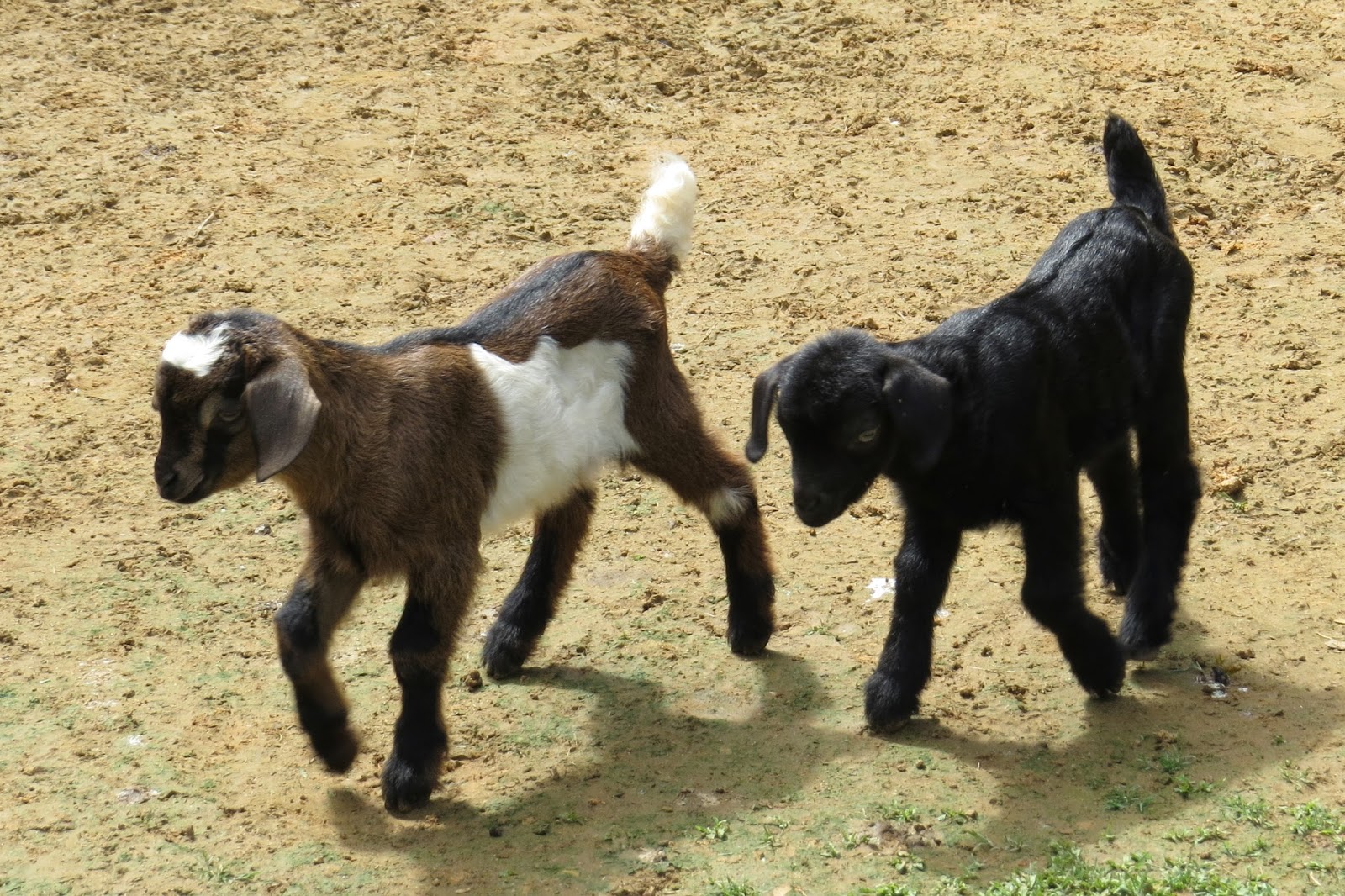
These baby goats are less than a week old.  They seem to hang together constantly. Notice the bit of greenery in the mouth on the one of the left. 

During a short stint of sunshine, we managed to take these photos shown today a few days ago when we took a drive with Ratnesh. As soon as we see another sunny day, we’ll be back out taking more new photos to share here.
 
Who would have thought that it would rain 17 days of the past 20 days since we arrived on September 8th?  Had we expected this, we’d have taken greater advantage of those few sunny days and explored more than we have. Instead, we spent an enjoyable time in the village languishing over its easy pace, people watching, fresh food shopping, and relishing in its unique charm.

Then again, who knows about the weather and can predict when to venture out in good weather? With no news to watch without a TV, we have no idea how long this will last which could ultimately be months. It could conceivably rain for the balance of our time in the islands, as Fiji now heads into its rainy season. We’ve accepted this fate. Having experienced relatively good weather all over the world, we’ve little right to bemoan the facts of nature. 

The “kids” decided to check out the chickens during our visit to the egg farm.

Over these past weeks, we’ve waited to go on any long treks, hoping for sun. With most scenic spots requiring a bit of a hike, we take no risks in doing so in the rain when paved paths are nonexistent. 

We’ve never minded getting wet, having done so over and again while sightseeing. But, taking photos when it’s raining is a nuisance, resulting in less than ideal photos.

Early on, we disposed of a water protective cover for a prior camera, when its bulkiness and difficulty to use made it useless. We’ve chosen not to haul protective rain gear for ourselves or for the camera. We don’t even have an umbrella and our parkas with hoods aren’t intended as raincoats. We simply don’t have the room or weight availability in the luggage. 

The baby goat on the left appeared to have developed a leadership role at this early stage in their lives.

Also, I’m not a good enough photographer, nor do we have a good enough camera, to be able to take great shots on cloudy days although I continue to try. I frequently make adjustments in the settings, only to disappointment over rainy and cloudy day shots. When a better quality, lightweight, affordable camera hits the market and we’re in a location to make a purchase, we’ll upgrade. 

For now, our cameras are lasting about 18 months, becoming destroyed by the rampant humidity everywhere we travel. Spending $1000’s for a more suitable camera makes no sense, especially with the heavy equipment and lenses required to accompany it. For now, we have a camera, a case, a tripod, and three extra batteries with a charger. That’s working for us.

Fortunately, neither of us have any type of emotional reaction to endless days of bad weather. After all, we lived in the frozen tundra of Minnesota; Tom, for all of his life; me for over 40 years.   

Mom goat often referred to as a nanny or doe, hung back, waiting for kids to return to nurse.

Although some Minnesotans (and elsewhere) suffer from SAD (seasonal affective disorder) during the long winter months, neither of us has suffered from weather or seasonal disorders other than annoyance over being stuck in traffic, being snowed in, and having the responsibility of clearing the road and walkways in front of our former house. Those days are long since past. 

I easily recall Tom returning home from working on the railroad after a 12-hour shift with two or more long hours of round trip driving time in inclement weather having to haul out the snowblower to spend another two hours walking back and forth in the road in blizzard type and frigid conditions to clear a path on the road and steps. 

When he was done with the dreadful job, he’d come inside, pulling off his bulky outerwear, his mustache, and eyebrows covered in ice, with nary a complaint. I’d look at that mustache and my heart would flip flop with love and compassion for a job well done, feeling helpless that my poor spinal condition prevented me from being any help. 

This “kid” hung close to his mom.

Instead, I stayed indoors, baking anything that smelled like cinnamon, butter, and vanilla hoping he’d get out of his soaked clothes to sit down with a cup of hot coffee and a plate of a buttery confection to ease his frozen and weary state. 

As romantic as that may sound, that weather was highly instrumental in our decision to get out of that climate, that frozen-tundra lifestyle of short, humid summers with the chill of winter grasping at our shivery existence often as early as September. 

We easily recall the Halloween blizzard in 1991, the year we met when Tom tried to get to me after his work shift ended, having to turn around on the freeway to return to his home when cars were piled up on the freeway, skidding out of control. All Minnesotans (and others from frigid climates) have stories to tell of snow-related situations they easily recall from years past.

The colors of vegetation in Fiji center around the reds and pinks as in this feathery flower.

Early this morning, awakened by the sound of the rain pounding on the tin roof, at 4:00 am I got out of bed figuring this might be a good time to download a few of our favorite shows on Graboid. Alas, there was no signal at all. The constant rain appears to have an impact on the wifi in Fiji, one we must accept as a fact of life.

Heading back to bed, I began reading the mystery novel on my phone, finally drifting off again at 6 am just about the time Tom was getting up. I managed to sleep for another hour feeling refreshed and ready for a new rainy day.

It’s not snow. It’s not cold. We’re comfortable. We’re content. And, most of all, we feel fortunate for another day to begin.

Happy day to each of you!

Photo from one year ago today, September 28, 2014:

One year ago today, we posted this video of water swishing in the pool during rough seas as we made our way across the Pacific Ocean to Hawaii on the Celebrity Solstice, a ship we’ll be sailing on again in a little over three months. For more details, please click here.

Part 2…A look at “real life” in the Fijian Islands, often centered around farming…

Today’s late posting is a result of a poor wifi signal which has made posting photos and line spacing difficult.  We apologize for the delay.

This duck’s unusual crown caught our attention. He seemed proud of his facial characteristics.

Once we arrived at Kusma’s house to purchase the eggs, we waited outside taking photos of the various chickens, roosters, and ducks wandering about her front yard. 

We weren’t certain if there were more chickens at the back of the house. We preferred not to intrude asking to see more. There were plenty of chickens, gathering around our feet, pecking here and there, seemingly content and busy in their simple chicken lives.

The several roosters began to crow, taking turns at the spotlight.  One, in particular, appeared to be the “cock of the walk” strutting about with a sense of confidence we’d only seen in lions, not necessarily in chickens. It was highly entertaining.

Not only were there chickens wandering about the yard, but there were also a few ducks.

A dear friend of mine in Minnesota lived five minutes from us. She had a well-equipped chicken coup, kept suitably warm in the frigid winters. When I’d visit, she’d holler, “Chickens!” They’d come running, making me howl. She also had a few adult goats, two sisters, that would sit on our laps while in lawn chairs in the garden, while we chatted with cups of coffee in hand. Even then, I couldn’t get enough of animals, regardless of their species.

Kusma came outside and Ratnesh introduced us.  She spoke a little English but not much. The overwhelming majority of Indo-Fijians speak Fiji Hindustani or Fiji Hindi. This language developed out of contact between speakers of different dialects of Hindi/Urdu (one of the native languages of India) and their bosses on the colonial-era sugar plantations.”

She shook our hands with a hint of trepidation, looking at Ratnesh, a relative whom she knew well, for his approval. He nodded assuring her we were good. In as few words as possible, I explained we’d be staying here in the neighborhood of Korovesi, (comparable to a suburb) for a total of three months and would like to buy her eggs regularly if that was acceptable to her.

The chickens were nibbling on something in this tin bowl. The contents could certainly be a determining factor if the eggs would be considered organic, although they wouldn’t be “certified” by any means, a process not done here in Savusavu.

As best as I could, I explained that Usi would pick them up for us in the future with the ride too difficult in a vehicle. We didn’t see any cars or trucks in the yards of the houses in that mountainous difficult-to-reach area.

I kindly asked for four dozen eggs, for now, knowing we still had the rough walk back up to the car and Ratnesh insisted he carry them.  We’d brought along the cloth bag we purchased in Kenya that has traveled well, laundering it on occasion and happy it’s worn so well for a $2 purchase so long ago. The four dozen eggs fit perfectly into the bag.

She charged us FJD $20, USD $9.20 which translates to FJD $5.00, USD $2.40 a dozen. Not too bad a price for free-range and antibiotic-free eggs. She may charge the local less, but we were content to pay her whatever she deemed fair.

It looks as if a pair of shorts fell off the clothesline and one of the birds dragged it away from the line.

Whether or not her eggs could have been classified as organic under other circumstances remains to be seen, as described below, for example from the USDA (not necessarily our favorite government entity):

“The label USDA Organic is your best bet when buying chicken or eggs. In terms of chicken, it means that your bird has been fed a vegetarian diet that is also organic and therefore does not include any GMOs (genetically modified organisms) or chemical pesticides.

It also means that the birds must be raised according to organic standards within two days of being born, are not fed any hormones, antibiotics, or drugs, have access to outdoor space, clean drinking water, and be raised “per animal health and welfare standards” according to the USDA.”

The roosters were competing for crowing rights, each taking his turn.

We highly doubt Kusma’s chickens are given hormones, antibiotics, or any other types of drugs. We witnessed the free-roaming aspect when we arrived unannounced to a few dozen chickens and several ducks wandering in the front yard. We noticed a faucet with spring water provided for the chickens and the household. There’s no city water in the area. (We’ve had no problems drinking the spring water, although if in town, we’d only drink bottled water).

We also noticed a large tin bucket filled with some type of feed.  We can’t assume the feed in that bucket was non-GMO. But, pesticides aren’t used in Fiji or, for that matter, in many other parts of the world. Most free-range chickens are fed some type of feed when the immediate surroundings may not provide enough nutrients to produce good eggs. (Kusma’s yard had been well pecked to the bare soil in spots).

We observed this with feral chickens in Kauai, in the thousands or more, skinny and malnourished living off the land, still able to produce offspring and survive. Residents we spoke with explained that many have tried catching and cooking them only to find they’re tough and relatively inedible.

Homes with tin roofs, many worn and old, maintained to the best of the ability of the owners over decades.

Perhaps the bucket a few of the chickens were nibbling from contained Kusma’s leftover food scraps for all we know. Goodness, when I cook each day, I have enough leftovers to feed that many chickens bits of meat and vegetable scraps. We didn’t ask. Many local people don’t have a lot of resources to purchase chicken feed and may easily manage off of what is available in their daily lives or growing under their feet. 

Kusma took the Kenya bag from us, entered the house, and several minutes later returning with the four dozen eggs in used crates (which we’ll return) neatly fitting into the bag. It was heavier than one might expect. 
Taking several photos, eggs in hand, we said goodbye thanking Kusma with a heartfelt “vinaka” (thank you in Fijian), and began the muddy trek back up the hill to the car. Luckily, Ratnesh has cardboard for floor mats in his car. We tried getting the mud off our shoes as best as we could on the wet grass, unable to completely do so.
We made it back without slipping or falling and once again were on our way to the village for the rest of our shopping. The cloud cover had returned and the air was thick with humidity. 
These large pots in the window of the hardware store inspired me to stop in to look for a kitchen utensil.
Ratnesh dropped us off at the Farmer’s Market where we could easily scurry about to our favorite vendors finding everything we purchase each time. Then, we made the short walk across the road to the small grocery store for the balance. 

When checking out, I called Ratnesh to pick us up. With disappointment in his voice, he explained he wouldn’t be able to pick us up for another 25 minutes. He was picking up a customer for a ride to the airport.

We’d told him he’s free to take other fares after dropping us off, not asking him to wait for us. We’d anticipate the shopping would take longer but having gone shopping only four days earlier we needed only a dozen items at the grocer. Thus, we called him 30 minutes earlier than he’d expected.

After paying for our food, the clerk told us we could leave our food inside in the trolley inside the AC store while we waited.  The trolleys aren’t allowed outside nor could they make it down the several steps to the street. Hands-free, we stood outside the building for 25 minutes waiting for Ratnesh.

Easily entertained while people-watching, the time passed quickly. I ran across the street to a hardware store while Tom stayed behind. Would they carry a “turner” (spatula) used for flipping eggs? They had some huge pots in the window as shown in the above photo. Surely, they must have kitchen wares.

Houses in the surrounding area.
They didn’t have a turner or any other kitchenware and suggested we try the grocery stores which we’d already done without any luck. There is no kitchen wares type store anywhere in Savusavu.  Why would they when such items are handed down from generation to generation or otherwise shipped when foreigners decide to make Fiji their full or part-time residence? Tourists don’t typically purchase kitchen utensils. 

When Ratnesh returned we head directly to see Helen at Fiji Meats, who was holding two roasted chickens for us after we’d called earlier in the day with the request. They’re delicious, wheat-free, and easier to purchase already roasted rather than using the portable atop our kitchen counter, making the house hot on these hot humid days.   

Once back home by 4 pm, I was busy until dinnertime, washing all the veggies and attempting to make room in the tiny refrigerator for everything we’d purchased. The fridge and freezer are the same sizes we had in Trinity Beach and many other locations.  I’m getting good at this task, somehow managing to fit everything inside, fresh washed and ready to prepare.

Yesterday afternoon, I washed the outside of two dozen of Kusma’s eggs in a  bowl of lukewarm water with a little sink soap.  Getting the exterior clean is important when cracking open raw eggs to avoid contamination.

Taking a better part of the afternoon, I cooked four packages of streaky bacon (10 slices per pack) to make another batch of Tom’s favorite breakfast quiche (crust-less), dicing each slice of bacon into bite-sized pieces, hand grating the cheese, dicing and precooking the onions. Cracking the 24 cleaned eggs, I was pleased not to find a single bad egg.

Unusual marking on this duck gave him the rights for the main photo today.
Baking the egg dish in three batches since I only had the two pans we’d shipped from Australia, the end result was 20 portions which I  always freeze in sandwich bags for three days portions, taking out a new bag each three days to defrost in the refrigerator overnight. Tom has this every morning for breakfast. Although I love this dish, I’m never hungry in the morning.

With the leftover cooked bacon I’d diced, I made the Ghee, Garlic, and Bacon Green Beans with lots of spices. I’d carefully washed the green beans but when done cooking the dish while placing it into a container, I spotted a worm I’d cooked in the pan while sautéing the beans. I flicked it away and continued on. We reheated a batch to have with dinner last night and will do so again tonight.

I feel like a farm wife in some ways. Although I don’t clean much, other than after cooking and only hand wash kitchen towels and my underwear, I find myself spending the better part of each afternoon preparing food that may have already been prepared when purchasing it years ago in the US.

The only thing missing from being a real farm wife is the mashed potatoes, homemade bread, and of course, the apple pie with hand-rolled crust. I made those in our old lives prior to eating this way. Instead, now, we have mashed cauliflower on occasion, low carb grain free muffins, and coconut cookies for dessert. No complaining here. It’s all good.

For those of our readers disinterested in food, we apologize for this extended period of stories about purchasing and preparing local foods. For now, we’ll move on to other topics. Thanks for hanging with us.

For the foodies out there, we often receive comments and support for our discussions about food shopping and prep particularly from those attempting to adopt a more healthy manner of eating. Thank you all for the positive feedback.

Have a fun-filled safe weekend, treasuring every moment. It’s raining again today. So it goes…life in the tropics.

Photo from one year ago today, September 27, 2014:

Rough seas and all, the Captain’s Club party aboard the ship carries on as we continued on course to Hawaii. For more details, please click here.

Part 1…A look at “real life” in the Fijian Islands, often centered around farming…

As we approached this pair atop this table turned away from us while others curiously meandered toward us.

The longer we’ve traveled, the less interest we’ve had in traditional tourist points of interest, other than the often revered scenic beauty at particulars sites and the viewing and photographing wildlife indigenous to the country.

As we shape our “travel personalities” we’ve found a gradual change over time, one in which we’re often unaware until…a scenario is presented to us and we are overwhelmed with a sense of intrigue, compassion, and enthusiasm to gain insight into the lives of the true locals, generations of families working hard to survive in an often difficult environment.

So it was yesterday when we stumbled upon such an opportunity when all we wanted was to purchase fresh, free-range eggs. Since our arrival, buying eggs at the market, we’ve found at least two of each dozen to be rotten like we’ve never seen before. Rotten eggs (black on the inside) are most likely caused by bacteria. 

This is the beginning of the dirt road we traveled to Kusma’s house. Bouncing in the car made it impossible to hold the camera steady.  Thus, a few blurry photos today.

We realize this is a risk when buying free-range eggs from a market when we have no idea how or where they’ve come from or how long they’ve been sitting on the shelves. In asking around, we discovered from our sweet housekeeper Usi, that there’s an egg farm nearby, not necessarily easy to get to. 

Usi suggested we ask Ratnesh to drive us up the mountain to a little village of approximately 60 homes and see Kusma, whose entire family income is derived from the sale of eggs. The thought of being able to add even a tiny bit to that income, purchasing her free-range, chemical-free eggs during our remaining time in Savusavu, only added to our enthusiasm. 

Buying local has been an ongoing objective as we’ve traveled the world, supporting the hard-working local farmers and food producers in our desire for chemical-free, fresh foods befitting our way of eating.

I’d wished we could stop for photos but Ratnesh had to maintain momentum the higher we climbed.

Yesterday, when the sun peeked out for a short period with a downpour predicted in the afternoon, we called Ratnesh to take us to the egg farm and another trip into town for the Farmer’s Market, grocery and meat market. 

It makes us smile at how little we typically purchase at the grocery store, using yesterday’s purchases as an example; bar soap, paper towels, plastic bags, sponges and sink soap, locally made cultured sour cream (used in making salad dressing), canned coconut cream (without added sugar), real cream from New Zealand for coffee, ground coffee (only one brand available), sea salt (we’re almost finished with our Costco container of Himalayan salt) and Italian spices.  

Many items are simply not available here: Parmesan cheese or any similar cheese, grated cheese (we grate chunks of “pizza cheese” by hand); cream cheese; onion or garlic powder (used in many of our recipes); fresh mushrooms, romaine lettuce, parchment paper or a metal spatula, to name a few.

There are approximately 60 homes in this area, Ratnesh explained, many of them his relatives.
Over 40% of people living in Fiji today are descendants from India: See below for details:
“Most Indo-Fijians are the descendants of indentured laborers brought to Fiji during the nineteenth century by the British. In the system of indentured labor, workers (who had been moved to a new country against their will) were forced to perform a job for little or no pay until they earned enough money to buy their freedom. The system was created to provide cheap workers for British colonies after the abolition of slavery in Britain and its colonies in 1833.

The first indentured laborers from India arrived in Fiji in 1879 and the indenture system lasted until 1916. Other immigrants from India arrived in Fiji in the early twentieth century, and they opened small shops in the coastal towns. The Indo-Fijians are part of the South Asian diaspora (a community of ethnically related displaced peoples) that includes the Indian Ocean island of Mauritius, Trinidad in the Caribbean, Guyana in South America, South Africa, and North America.”

The only produce we’ve purchased at the grocery store has been celery which is unavailable at the Farmer’s Market. We purchase no meat or frozen products only buying fresh at the other locations.

One might think, reading here, that we’re obsessed with food. Perhaps, we are. But, a huge part of the lives of locals centers around the production and sale of food products. Why not embrace these foods into our lives as well, when we can’t eat out much due to our diet and, we love our homemade meals using the products that are available?

The beautiful vegetation we see in our yard extends to all areas.

For us, purchasing and preparing food has become of even greater interest than years ago when anyone that knew me knew I was a “foodie.” Just because the types of foods I can eat have changed, my interest and desire remain firmly in place to create great meals providing us with nourishment and pleasure. For most of us, we derive tremendous pleasure from food. Why not enjoy good food as opposed to unhealthy?

Over these past months, watching Tom continually lose weight, a little each month, eating exactly what I eat with the exception of some vegetables, has only added to our combined interest. Seeing his belly shrink month after month, only makes me happy in one regard…perhaps he’ll be healthy and around longer. 

Selfishly, I want him around and free of the health problems often associated with belly fat which also indicates fat wrapped around one’s internal organs. Also, he seems to like it when his pants fit. We don’t have the privilege of hauling clothing in various sizes to accommodate a change in waist size (for either of us).

With clothes dryers an unnecessary luxury in third world countries, clotheslines are seen in most yards.

I don’t give a hoot about the “look” of the big belly, it’s only what it represents that worries me, and hearing him huff and puff carrying our bags when he’s also carrying extra poundage on his body is also worrisome as we age. With the belly gone, his strength and ability to haul the bulk of our heavy bags have only improved.

When Ratnesh arrived and we explained our desire to go to Kusma’s farm for eggs, he hesitated. We sensed this immediately, quickly explaining if he didn’t want to make that drive, no problem. Usi had offered to bring us Kusma’s eggs the next time she walks up the mountain to visit her family who lives nearby. We knew it was going to be a steep drive on a muddy, pothole, dirt road, a challenge, based on what Usi had told us.

Ratnesh thought it over and in his desire to please, he insisted it would be OK as long as we didn’t mind bouncing around up the steep and uneven road. We didn’t mind. We gave him several opportunities to decline.  He turned them all down and off we went. 

This was the first of many goats we encountered in the area.  The only meat the locals eat is goat, lamb, fish (they catch), and chicken. 

I realize we wrote that the drive up the mountain with Sewak as the steepest road we’ve traveled in a vehicle.  Now, we can add, that the road to Kusma’s home was the most uneven, steep, rutted road we’ve traveled on during these past years. Wow! The ride in itself was an adventure. 

Sitting in the backseat by myself with Tom in the front with Ratnesh, I practically hung out the window taking photos. It was impossible for Ratnesh to stop for my photo taking or he’d lose his momentum. We continued on for some time until finally, he parked on a patch of wild grass when we could go no further.

We had no choice to walk up the remainder of the muddy hill to Kusma’s house. There was no way either of us were going to say we wouldn’t walk up the dangerous balance of the hill when Ratnesh worked so hard getting up the hill. Tom hung onto me most of the way with much younger Ratnesh offering another hand over a  few particularly rough spots. 

Finally, we arrived at Kusma’s house after we navigated down this slippery hill, still wet from all the rain.

I could easily have made it up the hill on my own but we’re extra cautious to avoid me falling, which could topple my delicate spine putting a fast end to our travels. We easily recall when the steps collapsed under our feet in Belize in 2013. Click here for that story with photos, if you missed it.

Recalling the hike to the Queen’s Bath in Kauai (click here for the story, if you missed it as well), I knew we could make it. By far, that was much more treacherous. This was a “walk in the park” comparatively. For these young fit Fijians who walk up and down these hills all of their lives, this hike is a normal course of life.

Finally, we arrived, shoes muddy, bodies sweaty and filled with excitement. The level of excitement we felt wasn’t about eggs. It was about being in this tucked away village with Fijians who’d spent their lives in this remote area, often living off the land. Tomorrow, we’ll share the continuation of this story with many more photos including the trip into the village after the visit to the farm.

It’s these types of experiences that make all of our travels meaningful and purposeful; the people, their lives, their love of nature and their surroundings, and their willingness to share even a tiny piece of it with us. How did we get so lucky? 

Photo from this date one year ago, September 26, 2014:

It was one year ago aboard the Celebrity Soltice, on our way from Vancouver to Honolulu, that we experienced some rough seas. Check out this video. For more details, please click here.

Part 2…Booked two new vacation homes…Filling an 88 day gap in the itinerary…

The views from the property referred to as Anchorage Waterfront (no relation to Alaska).

We varied from one of our usual criteria in selecting the second property, which is referred to as an apartment.  We’ve always preferred houses, doubles, or condos. 

We’d yet to book a so-called apartment, although we’ve booked several condos. Based on the fact that each of the small number of units is privately owned, it’s comparable to what we’d refer to as a “condo” in the US. The booking is a first floor unit with two bedrooms and two baths, making it particularly appealing to us.

Thus, going forward, I will refer to it as a condo to ensure our readers are aware of the fact that it’s not a single owner apartment building as one may find in many locations throughout the world. 

The living and dining room, although dated décor-wise, will fulfill our needs.

The decision to move halfway through the stay in Tasmania didn’t come without careful thought. Moving isn’t the easiest thing to do.  But this time, it will be different. Between the two locations, we don’t have to worry about the weight of our bags. We can put the less organized luggage into the rental car since we’ll be unpacking later in the day when we arrive at the second property under five hours later.

Here’s the link to the second location we booked in Tasmania.

We’ll pack our big insulated Costco beach bag with ice being able to bring along all perishable food while placing the nonperishable items in a cardboard box. We’ll be certain to rent a car with ample space for an extra box.

The drive across Tasmania in itself will be fun. When we first arrive in Hobart we’ll drive to Penguin from the Hobart International Airport, a 3 hour, 25-minute drive. When we drive to the second house 44 days later, as shown here today which is located beyond Hobart, the drive will be 4 hours 15 minutes.

A fully equipped kitchen. We can’t see the refrigerator but it can’t be much smaller than we’ve had in other locations.

We discovered the following about Huonville from this site:

“Huonville sits on the banks of the tranquil Huon River and is surrounded by fruit orchards, farmland, and the peaks of the Tasmanian Wilderness World Heritage Area. The town makes an ideal base for exploring Tasmania’s far south.

Set low in the beautiful Huon Valley, Huonville is wrapped in scenery and close to some of Tasmania’s most amazing natural places. With the Hartz Mountains nearby, it’s easy to see what inspires the local creative community and nature lovers alike.

For those who enjoy fine produce, the surrounding area produces smoked and fresh salmon, honey, mushrooms, apples, apricots, plums, cherries, pears, wines, and cider– a veritable foodie’s paradise. There’s even a museum dedicated to the Huon Valley’s famous apple growing story, one that continues today.

Take a wander along the main street and Wilmot Road and find shops that sell a range of first and second-hand treasures from old books and bric-a-brac to new cakes and crafts.

The Huon River and nearby D’Entrecasteaux Channel are attractions in themselves and are popular for fishing and boating, high-speed jet boat rides, or maybe just a quiet walk along the foreshore. Huonville is the last major town before heading into Tasmania’s south, so stop, take a look around and stock up for the journey or stay for a longer taste of the Huon.

Huonville is a 40-min drive (38 km) south of Hobart.”

The master bedroom with views of the Huon River with an ensuite bathroom plus a second bath.

A part of the enjoyment of the move will be the scenic drive across the entire island. Another aspect we love about these two locations is the first is located in Penguin Beach and the second, located directly on the Huon River each with amazing views of the water. 

Apparently, there’s a pontoon boat on the property for which we’ll find out details later. How fun would that be, cruising the Huon River in a pontoon, reminiscent of years past when we had a pontoon while living on a lake?

It’s not that we’re trying to relive our past lake life. We both prefer close proximity to water; a river, a lake, or an ocean. I’m a Pisces, not that horoscopes mean that much to me, but I’ve always been drawn to views of the water, having grown up by the sea in California and having a pool in our yard. 

This is the second bedroom in the property. Although we always share a bedroom, it’s nice to have a second bedroom to store our luggage.

Tom and I both owned boats as adults, long before we met and eventually married, another commonality alighting our otherwise mismatched connection. As a single mom in the 70’s and 80’s I owned a twin-screw Chris Craft cabin cruiser often taking my kids, my sister Julie and friends to Lord Fletcher’s on Lake Minnetonka as well as other popular points of interest on the massive lake.

I was able to dock the boat in a choice spot at the pier, maneuvering the boat easily into a fairly tight spot, tying all the lines using crochet knots. In those days, it was uncommon to see a woman maneuvering a good-sized boat on her own. At the time, I even shocked myself with my independence and skill. 

The Huon River will be another ideal location in Tasmania, located in the southern end of Tasmania while Penguin is located in the north.

The property has a pool and possibly a few chaise lounges. 

The Huon River heads out to sea in the south, another ideal placement for our visit to this beautiful island. At this point, I’m amazed we even found these two properties while dealing with an on and off wifi connection, the outrageous heat on the days we found them, and the speedy and generous response from the two owners, more than willing to work with us.

Yesterday afternoon, I busied myself logging all the information into our spreadsheet in a few separate worksheets; one; the “travel Itinerary” basic expense page estimating the total costs for each of these bookings including rent, rental car, transportation to and from, fuel, dining out, groceries, entertainment and miscellaneous and, two; the financial end on the rentals on the “Deposits Paid” tab including total rents (in US $), deposits paid, date paid, balances due and the dates the balances are due.

Once we arrive in Tasmania, we’ll share more details about the island, the properties, the locations, the cost of living again on the island, its people, its customs, and more.

The dock in front of the property. Gee…maybe there are a few fishing rods we can borrow!

It’s one more cog in the wheel of our continuing world travels. Now, with only one gap to fill for March 13, 2017, to April 22, 2017, prior to sailing to the US for a short stay to visit family and friends, arriving in May 2017, we can sit back and relax knowing a substantial portion of planning for the next 20 months is almost complete.

In these next 12 months, we’ll begin to map out plans for the second half of 2017, hopefully stretching out well into 2018 and beyond. It’s a continuous task that fortunately, we both find to be pleasurable, providing us with a sense of satisfaction, accomplishment, and, of course, excitement!

Thanks for sharing the ongoing journey with us!

Photo from one year ago, September 25, 2014:

There were no photos posted on this date after a long and annoying boarding process to get on the ship in Vancouver, the longest we’d experienced to date. Due to all the delays, we had no time or WiFi access early enough in the day to post other than a short blurb. No sooner we were in our cabins, it was time for the muster drill, and then, our 8:00 pm dinner reservation. Rough waters commenced no more than an hour out to sea.  More on that is upcoming. Please click here for details.

Part 1…Booked two new vacation homes…Filling an 88 day gap in the itinerary…

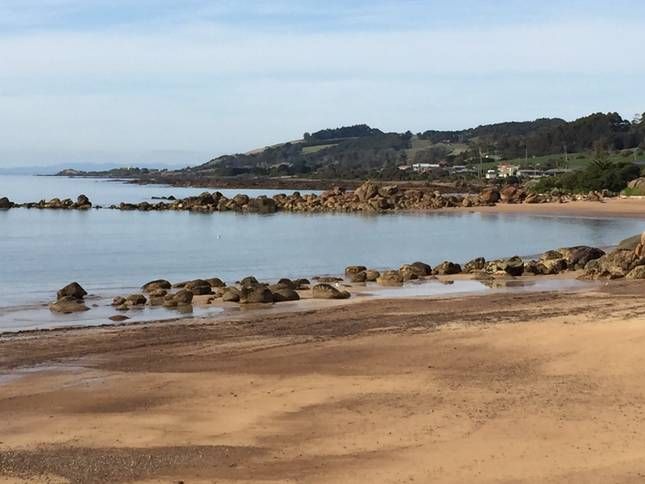
View of Penguin Beach across the street from the new house we booked in northern Tasmania. Today’s photos were copied from the owner’s listing on VRBO.

Choosing a location to fill a gap from December 3, 2016, to March 1, 2017, was challenging. In the Southern Hemisphere, where we’ll still be at the time, that period is during the high season, summer holiday, when kids are out of school and families from Australia travel to relatively nearby locations.

Should any of our readers be interested in renting this lovely property or learning more about it, please click here for details and pricing.

Many Australians stay in the South Pacific when they go on holiday to save both time and money and to get to warmer climates readily available on many choice islands during the cooler seasons.

This is comparable to travelers with families in North America who tend to stay on the continent and in the Caribbean when they travel as a family during school breaks whether winter during the Christmas season or summer.

Ah, a spacious living room with views.

As we perused many locations in the South Pacific during this time frame, we were stymied, having the most difficulty we’ve had in the past. Prices topped the charts, far exceeding our budget, which in extreme cases, we’re willing to adjust if absolutely necessary.

However, this gap didn’t represent a scenario that drove us to be willing to stretch the budget when we have bigger fish to fry in the future when we travel to a new continent in 2017, after leaving the US for a visit.

Another issue impeding our success in finding new locations has been the realities of a slow Internet signal we faced in Australia and now again here in Fiji, as it jumps back and forth from online to “limited” many times per day.

Fully equipped kitchen with an average-sized refrigerator (yeah!), an oven and a microwave, and a dishwasher! 

In the past week, Mario has worked hard to resolve these issues and it has improved considerably although still presenting problems in the afternoons the perfect time for us to do research after I’ve completed the daily post.

After thoroughly scouring HomeAway with no luck, using the link on our site, we clicked another link on HomeAway’s page (at the bottom), VRBO, a popular site owned by Homeaway as well.  

We’ve found it easiest to peruse one site at a time rather than jump back and forth trying to figure where we left off when there are often 1000’s of options listed in a single area.

We always keep the table set for the next meal, inviting the preparation of good homemade food.  However, there are many restaurants in the area some we may actually try.

We chose to spend three months in Tasmania after hearing such glowing reports on our last cruise and on publications online as to its beauty, its people, and its wildlife. As an Australian island, with manageable visa requirements, wifi, and the ability to shop for foods at various local farms, this is an ideal location for us.

The challenge was totally predicated on finding a property with water views, wifi, and a fully equipped kitchen.  A few days ago, Tom expressed a great idea. Why not take this gap, dividing it in half into two six week segments and stay on two distinctly different areas of the island? 

I loved this idea. It would give us an opportunity to casually explore the island from two entirely different home-based locations. We could travel the north portion of the island at our leisure and then, be close to the capital city of Hobart, the most popular tourist location on the island.

The private house has three bedrooms. Note the flat-screen TV on the wall. What a treat!

We’d been turned down by several property owners who didn’t want to “tie-down” their property with one renter over the entire summer holiday making it unavailable for possible “regulars” who’d yet to book at this distant future, willing to pay premium prices for the short term rentals during peak season.

The task was challenging, breaking it up into two options, Group 1 and Group 2, the north and close to Hobart, respectively. After days of research with the WiFi on and off, we both vigorously spent the past few days on a mission. We narrowed it down to eight options at the VRBO site. 

I sent Tom an email with each listing and together, albeit slowly, we reviewed all the pluses and minuses of each property, finally narrowing it down to a mere three properties, one in Group 1 and two in Group 2. 

The sunrise over Penguin Beach. Can’t wait to see this in person! Then again, we’re not wishing for time to pass quickly. We’re very content where we are now in Savusavu, Fiji even on the seemingly endless rainy days, still continuing yet today.

Contacting each listing owner separately with basically the same verbiage, except for the variances in dates between the groups, we heard back from one last night, after which we booked it paying the deposit at the Australian version for vacation rentals, Stayz, a secure site. 

Later in the evening, we heard back from a second but decided to wait overnight for a possible proposal from the third owner. Alas, early this morning an email had arrived with the third proposal. After once again reviewing each of the remaining two options, we decided on the third, accepting by email and shortly later, paying the reasonable deposit once again at Stayz.

Both properties are confirmed and we couldn’t be more thrilled. Today, we’ll share the first location with a few photos, a single-family house, located in Penguin, Tasmania.

We couldn’t be more excited knowing that penguins actually wander about the beach. Here’s a quote about Penguin from a site describing areas of Tasmania:

“Penguin

Penguin is a picturesque seaside town with a pretty esplanade, scenic walking trails, great coastal drives, and a quirky collection of penguins on the street.

Sitting on the edge of mighty Bass Strait, Penguin takes its name from a nearby penguin rookery and it’s obvious this town dearly loves its little feathered friends. There’s a 10-foot penguin that makes a quirky photo opportunity, while the real thing can be seen each night at Penguin Point.

On Sundays, Penguin hosts Tasmania’s largest undercover market with more than 200 stalls selling food and wine, woodcraft, and second-hand goods.  The coastal road between Ulverstone and Wynyard is a beautiful scenic drive with sweeping ocean views, great picnics spots, and clean beaches for seaside walks and fun.

Look out for the expansive wild garden that blooms year-round between the road and railway line and explore one of the many walking tracks across the Dial Range, with stunning views over Penguin and the north-west coast. There are plenty of eateries and places to stay.

Penguin is a 15-min drive (17 km) east of Burnie.”

Those who have followed us these past years know how this location is suitable for us and how much we’ll love our time spent in Penguin.

We’ll be back tomorrow with Part 2 and the second booking in Tasmania, where we’ll be closer to the capital city of Hobart. At least while we’re still housebound in rainy weather, we’ll be busy logging the new locations in our spreadsheet and updating the itinerary. Stay tuned.

Photo from one year ago today, September 24, 2014:

One of the last photos of Vancouver as we began to make our way toward Hawaii on a cruise on the Celebrity Solstice. For more details and the final Vancouver post, please click here.