Day 28…Today is the beginning of seven sea days as we make our way to Singapore…Meeting many of our readers…

Today, I wandered through the Coach (handbags) store for a few photos, as shown.

Today marks the beginning of seven uninterrupted sea days as we make our way across the Indian Ocean toward Singapore, a stretch of time many passengers groan about, but for us, it feels like a gift. There’s a rhythm to sea days that always suits us, a gentle lull between ports that offers space to breathe, reflect, and settle into whatever pace our bodies and minds can manage. And right now, with my knee still healing from that unfortunate fall almost two weeks ago, these slower, quieter days feel perfectly timed.

When I woke up this morning, the ship was already swaying ever so slightly, that familiar cradle-like motion that reminds me we’re suspended between continents, travelers in transit with nowhere we need to be. I felt that tiny twinge in my knee when I stood, the kind that has become my daily reminder to take things slowly. But I also noticed something else, just a bit less stiffness, a bit more confidence in each step. It’s funny how healing rarely announces itself with fanfare. Instead, it arrives in small increments, almost shyly, as if checking whether we’re paying attention. And believe me, I am.

As expected, the products offered are expensive.

These sea days will give me the chance to keep easing along, letting my knee recover without the pressure of rushing off the ship or navigating uneven walkways in a bustling port. We’ve learned over the years that part of long-term travel is honoring our bodies exactly as they are. Some days, they can carry us off to explore wild landscapes and historic cities. Other days, they insist on rest, on tenderness, on adjusting the pace to something more forgiving. And that’s okay. After all, the journey isn’t only about where we go. It’s also about how we move through it.

We’ll likely spend our mornings in our usual spot in the Promenade Café, sipping the ship’s complimentary coffee while we tap away on our laptops. There’s a kind of simple comfort in that routine, the way familiar spaces become little anchors in a lifestyle filled with constant motion. I can already picture the steady hum of passengers passing by, the soft clatter of cups being gathered, and the low background music playing something easy and familiar. And even if I have to sit a little longer than usual or shift in my seat on the banquet against the wall to give my knee a break, it’s still one of my favorite parts of ship life.

I rarely purchase anything in the ship’s shops, unless we have unused cabin credit.

The afternoons will probably drift by the way they often do, with perhaps a trivia game in the Schooner Bar or other area, or a quiet hour resting with ice on my knee in the cabin. I’ve learned to let go of any guilt about “missing” activities or not doing as much as others might on a sea day. There’s something freeing about accepting that enjoyment doesn’t have to be measured by movement or activity. Sometimes the greatest pleasure is simply watching the ocean glide by like a sheet of blue silk, its surface catching the light in ways that shift with every passing hour.

I keep imagining what it will feel like to finally step off the ship in Singapore, hopefully with a knee that’s vastly improved by then. That small hope of steadier footing, of walking through the bustling port without wincing, keeps me encouraged. But I’m also content with these seven days stretched out before us like a soft landing. They’re a reminder that healing, whether physical or emotional, often happens in the quiet spaces, the unhurried moments when life permits us to slow down.

I already have two handbags and don’t have room in my luggage for another.

So we’ll take these sea days as they come, one sunrise, one gentle swell, one careful step at a time, trusting that by the time we reach Singapore, both my knee and my spirit will feel a little lighter. From there, the third leg of our 47-night sea journey will begin as we make our way to Brisbane, Australia.

Meeting passengers on the ship who tell us they’ve been reading our posts over the years is both surprising and undeniably uplifting. Even after all this time of sharing our daily musings, it still catches us off guard when someone approaches with a warm smile and says they feel as if they already know us. There’s an endearing sweetness in those moments, a gentle reminder that our words don’t just drift into the void but somehow land softly in the lives of others.

The displays in the shops are beautifully arranged and enticing.

Often, these encounters happen in the most unexpected places—waiting for an elevator, sipping coffee in the café, or shuffling into a trivia session. A casual hello quickly turns into a heartfelt exchange, where they share how they’ve followed our journey through ports, storms, triumphs, and mishaps. We listen, humbled, realizing that our little window into this nomadic life has quietly woven itself into someone else’s routine.

What touches us most is the genuine kindness behind their words. They aren’t praising or critiquing—they’re simply connecting, human to human, reminding us that even in this transient world of ever-changing passengers and ports, and tourists and towns, there are threads of familiarity. And in those unexpected threads, we feel appreciated and incredibly grateful.

Be well.

Photo from ten years ago today, November 23, 2015:

It appears that breadfruit trees continue to produce fruit all year long. For more photos, please click here.

Day 14, Sea days continue…Tomorrow, Walvis Bay, Namibia…

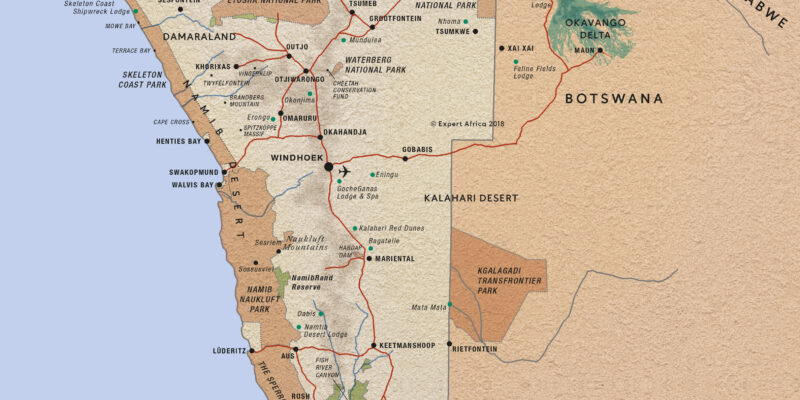
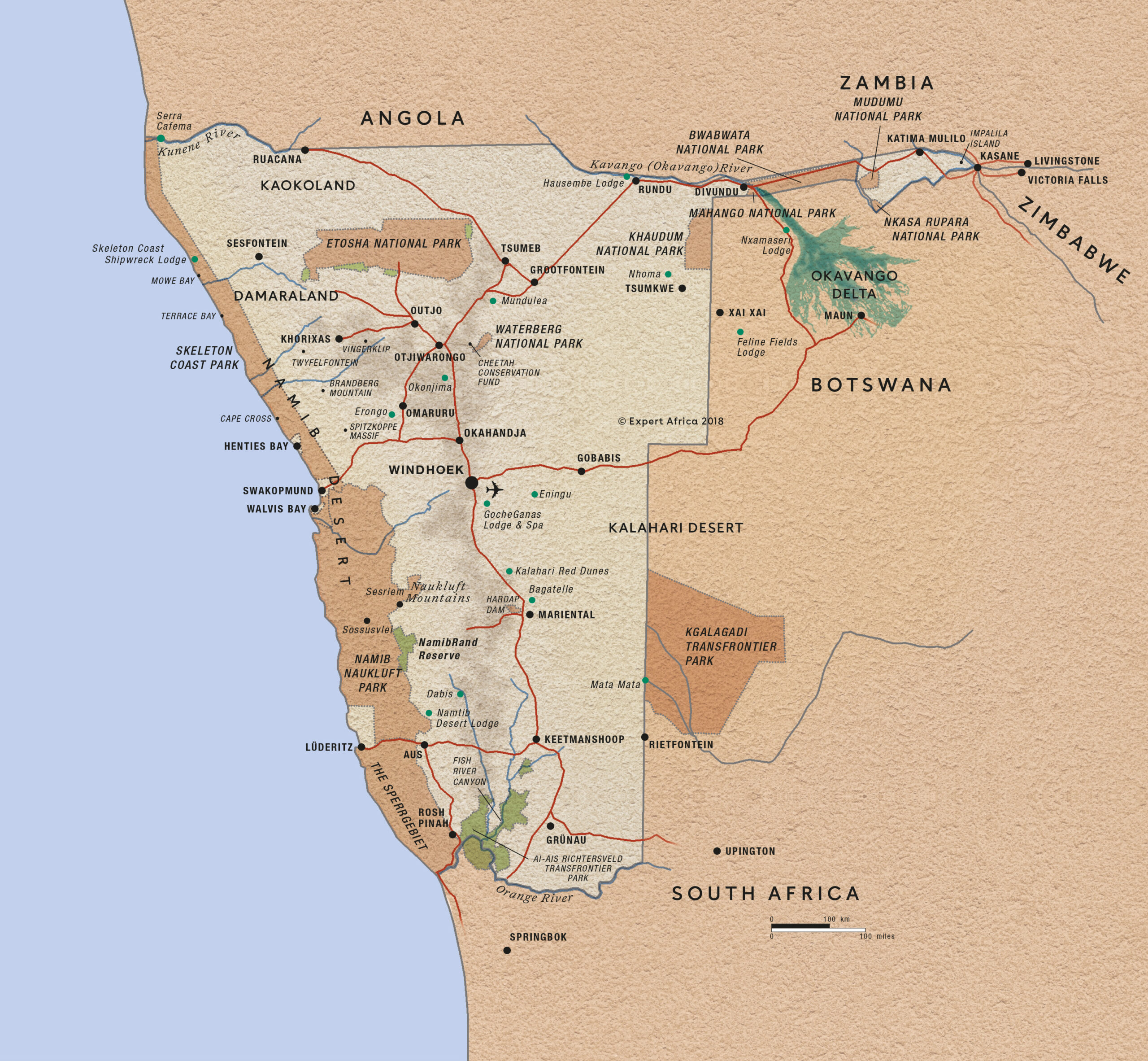
Today marks the last of our nine consecutive days at sea. It’s almost hard to believe how quickly this stretch of ocean life has passed. When we first realized we’d have over a week without a single port stop, it sounded like a long time, days merging into one another, the horizon stretching endlessly in every direction. But here we are, on the eve of reaching Walvis Bay, Namibia, feeling as though the rhythm of the sea has become part of our internal clock. Each sunrise has painted its own story across the water, and each evening, as the ship gently rocked beneath us, we’ve watched the sun sink into the vast Atlantic with the same sense of awe as the day before.

Tomorrow, when the ship finally docks, we’ll step ashore and breathe in the dry desert air of Namibia. The plan is simple: no tours, no rush, just a taxi ride into town to see a few of the sights. After so many days surrounded only by water, the thought of solid ground beneath our feet feels strangely foreign and yet welcome. Walvis Bay, with its sand dunes meeting the sea, flamingos wading through the shallow lagoons, and quiet stretches of coastline, will be a lovely change of scenery. We’ve talked often about spending an extended period in Namibia someday, and this visit will give us a taste of what that might feel like.

Namibia has always intrigued us. There’s a quiet wildness about it, a sense of solitude that feels both vast and comforting. It’s the kind of place that seems to understand travelers like us, those who move slowly, staying long enough to absorb the rhythm of a place before heading on to the next. When we do eventually stay there, we can remain for a few months before returning to South Africa, since Namibia’s proximity on the northwest border doesn’t interfere with our visa timing. It’s a convenient and appealing option, especially since we can make our way back to Marloth Park afterward, a place that always feels like a second home to us.

However, the intricacies of South African visa regulations make planning a bit like solving a puzzle. It’s not as simple as crossing a nearby border and re-entering to get a fresh visa stamp. South Africa has strict rules to prevent what it calls “border hopping,” where visitors leave the country briefly to return for another 90-day stay. Bordering countries such as Namibia, Mozambique, Zimbabwe, and Botswana don’t qualify for new visa entries. To re-enter South Africa after our permitted time, we must either return to our home country or visit a non-bordering African nation or another country outside of Africa.

That’s one of the reasons we’ve traveled to Zambia so often in the past. Zambia doesn’t share a border with South Africa, making it a viable destination when we need to step away briefly before re-entering. Each time we’ve visited, we’ve discovered something new, lush landscapes, friendly people, and the spectacular Victoria Falls, which never loses its power to amaze. It’s fascinating how our travel patterns have been shaped not just by wanderlust but by the practicalities of visas and regulations. Over time, it’s become second nature to plan our route around these rules, blending bureaucracy with adventure in a way that feels almost seamless now.

Still, when we stand on the deck tonight, watching the final sunset of this long stretch at sea, none of that feels complicated. The horizon glows in shades of gold and rose, and there’s a quiet peace in knowing that tomorrow we’ll set foot on African soil again. We’ve learned to take these transitions in stride, the slow days at sea, the anticipation of arrival, and the steady hum of plans forming for the months ahead. Life as perpetual travelers requires flexibility, but it also rewards us with a deeper understanding of how connected everything is: the people, the landscapes, even the bureaucracies that nudge us from one place to another.

So tonight, as the ship glides through calm waters and we prepare for our arrival in Walvis Bay, I feel both grateful and grounded. These days at sea have reminded me how content we are living this way, moving forward, adapting, finding joy in both the journey and the waiting. Tomorrow, a new chapter begins, if only for a day, as we step off the ship and into the sandy beauty of Namibia, carrying with us the gentle rhythm of the ocean and the quiet excitement of what lies ahead.

Be well.

Photo from ten years ago today, November 9, 2015:

Tom checked in at the dental office reception desk on the Savusavu hospital grounds, providing only his name when he had an abscessed tooth. The dental bill was US $2.63. See the post here.

Part 2…Suggestions from readers…Four days and counting…

There is a massive field of wildflowers on the grounds of Highclere Castle. We can only imagine how beautiful this would be in full bloom in spring. See the front view of the castle in the “ten years ago photo”  below.

As a continuation of yesterday’s posts, our dear readers and long-time cruise friends, Judy and Gary, sent some suggestions on topics for future posts. Yesterday, we covered the first item, “favorite cruise lines.” See that post here.

Here are a few topics to consider;
Favorite cruise lines
Favorite ports
Best and worst cruise ship excursion you’ve taken
Best and worst meal you’ve cooked
Favorite and least favorite country you’ve visited
Favorite and least favorite city you’ve visited

Today, we’ll discuss the second point on Judy and Gary’s suggested list, “favorite cruise ports.

Regarding the top cruise ports in the world, several destinations come to mind for their unique charm, cultural significance, and breathtaking landscapes. Here’s a list of some of the best cruise ports globally that are worth visiting:

  1. Barcelona, Spain – Known for its stunning architecture, vibrant nightlife, and rich history, Barcelona is a key Mediterranean cruise port. Visitors can explore Gaudí’s masterpieces like the Sagrada Familia and stroll through the Gothic Quarter.
  2. Sydney, Australia – This iconic port offers a dramatic backdrop with the Sydney Opera House and Harbour Bridge. Beyond the city, you can explore the Blue Mountains or relax at Bondi Beach. This is our favorite port.
  3. Santorini, Greece – Famed for its whitewashed buildings and stunning sunsets, Santorini is a favorite stop on cruises through the Greek Isles. The island’s volcanic history and crystal-clear waters make it a must-visit.
  4. Alaska, USA – Cruising through Alaska is like stepping into a nature documentary, with its towering glaciers, majestic mountains, and abundant wildlife. Popular ports include Juneau, Ketchikan, and Skagway, all of which we found fascinating.
  5. New Zealand – With ports like Auckland and Wellington, New Zealand offers diverse landscapes ranging from geothermal wonders to serene fjords. It’s a paradise for adventure seekers and nature lovers alike. We loved this port!
  6. Cozumel, Mexico – This port is a gateway to the rich history of the Mayan civilization, with ruins like Chichén Itzá nearby. It’s also a haven for diving and snorkeling in its crystal-clear waters. We were there in the early part of our travels.
  7. Bimini, Bahamas – Bimini is a tropical paradise perfect for beach lovers. Known for its luxury beach clubs and vibrant marine life, it offers a laid-back yet luxurious experience.
  8. Piraeus (Athens), Greece – As the gateway to Athens, this port is steeped in ancient history. Visitors can explore the Acropolis and other historical sites, making it a top destination for history enthusiasts.
  9. Malaga, Spain – This port in southern Spain offers access to the Andalusian region, with its beautiful beaches, historic sites like the Alhambra, and vibrant culture.
  10. Portsmouth, UK – Less famous than London but rich in maritime history, Portsmouth offers a charming mix of old and new, with historical docks and modern attractions. We also found Harwich, UK, to be a lovely port.

These ports offer a mix of natural beauty, cultural experiences, and historical significance, making them some of the top cruise destinations in the world. Whether you’re looking for adventure, relaxation, or cultural immersion, each has something unique

Be well.

Photo from ten years ago today, August 21, 2014:

We held our breath as we approached Highclere Castle, home of the famed BBC Downton Abbey TV series. No interior photos were allowed. For more photos, please click here.

Off the ship today….The Azores…Photos of a quaint town…

A colorful display at Ponta Delgada, the Azores.

More than halfway across the Atlantic Ocean today, we had a port-of-call experience when the ship docked at Ponta Delgada. For details about this island of nine in the archipelago, see below from this site:

“Ponta Delgada (Portuguese pronunciation: [ˈpõtɐ ðɛlˈɣaðɐ] (audio speaker iconlisten)lit. '”Thin Cape”‘) is the largest municipality (concelho) and economic capital of the Autonomous Region of the Azores in Portugal. It is located on São Miguel Island, the largest and most populous in the archipelago. As of 2021, it has 67,287 inhabitants in 

232.99 square kilometers (89.96 square miles). There are 17,629 residents in the three central civil parishes that comprise the historical city: São PedroSão Sebastião, and São José. Ponta Delgada became the region’s administrative capital under the revised constitution of 1976; the judiciary and Catholic See remained in the historical capital of Angra do Heroísmo, while the Legislative Assembly of the Azores was established Horta.

The origin of the placename Ponta Delgada (Portuguese for delicate or thin point) was elaborated by the famous Portuguese chronicler, Father Gaspar Frutuoso, who wrote: This city of Ponta Delgada is named for its situation located along with volcanic lands, thin and not too considerable like on other islands, that lead to the sea, and where later, was constructed the chapel of Santa Clara (Saint Clare of Assisi), which was named the Santa Clara point …

Cloudy mountain view.

In 1450, Pêro de Teive established a small fishing village that eventually grew into an urban agglomeration in Santa Clara.

Populated in 1444, the island of São Miguel was a vast territory, with small settlements scattered about, except for Vila Franca do Campo on the central-southern coast and the smaller community of Ponta Delgada. Villa Franca had for many years been the center of the island economically and socially and the seat of the local government, but many nobles and landed gentry despised its subordinate status to the government in that town (originating many conflicts between these inhabitants and administrators in the southern coast). The nobles in Ponta Delgada sent a secret contingent, headed by Fernão Jorge Velho, to meet with King Manuel in Lisbon to petition that the community be emancipated. In Abrantes, King Manuel conferred a foral on 29 May 1507, elevating the settlement to the status of a village (Portuguese: vila).

Celebrity Silhouette docked in Ponta Delgada, Azores.

Then, in 1522 an earthquake and landslide devastated the provincial capital, destroying many of the buildings and killing several people. Ponta Delgada became the only center with an infrastructure to support the Azorean bureaucracy and supplant its important economic links. Quickly, its role changed, and eventually, it was elevated to the status of a city during the reign of King D. João III by decree dated 2 April 1546.

The naval Battle of Ponta Delgada (also known as the Battle of São Miguel) took place on 26 July 1582, off the coast, as part of the 1580 Portuguese succession crisis. An Anglo-French corsair expedition sailed against Spain to preserve Portuguese control of the Azores, which had aligned itself with the pretender António, Prior of Crato, thereby preventing Spanish control (it was the largest French force sent overseas before the age of Louis XIV).

During the 19th century, the municipality experienced its greatest boost of economic activity, with the funneling of citrus exports to the United Kingdom and the growth of foreign-owned businesses in the historic center, many of them Jewish merchants after 1818.[6] As with other centers across the archipelago, the town of Ponta Delgada experienced many of the trends common for the period, including the “greening” of the communities (with the construction of the gardens of António Borges, José do Canto, Jácome Correia, and the Viscount of Porto Formoso, which would become part of the University of the Azores), the construction of many of the ornate homes/estates, the clearing of animals from urban spaces, the opening of newer, larger roadways, the moving of cemeteries to the periphery, and relocation of markets for fish, meat and fruits. Due to these changes, and the growth of the mercantile class, Ponta Delgada became the third largest town in Portugal in economic riches and the number of residents. The poet Bulhão Pato, writing of Ponta Delgada, was surprised by the extraordinary riches of the plantation owners, the “gentlemen farmers” that lived within the urbanized core: exporters of oranges and corn, bankers, investors, industrialists, and shippers, all contributing to a privileged class of economic and social thinkers and philanthropists.

Kayakers in the bay.

At the beginning of the 20th century, Ponta Delgada’s position was relatively high (eighth largest), although the changing importance of rural economies steadily chipped away at its growth. But it remained the central place in the economy and hierarchy of the Azorean archipelago. Consequently, it was at the forefront of political change following the Carnation Revolution. In one such event, property owners and right-leaning farmers challenged the Civil Governor António Borges Coutinho, who was responsible, under the direction of the MFA government, to implement land reforms. The Micalense Farmers’ Protest forced his resignation and inspired a series of terrorist acts that plunged the Azores into political turmoil.[7][8] After a clandestine round-up of arrests and detentions by the Military Governor, the Autonomous District of Ponta Delgada was extinguished, along with the other districts (Horta and Angra do Heroísmo) on 22 August 1975, with the establishment of the Junta Regional dos Açores (Regional Junta of the Azores), the provisional government that assumed the competencies of the administration during the region’s transition to constitutional autonomy.”

We’d considered taking a taxi for the city tour, but we decided to walk when we discovered the village was easily accessible. The air was crisp with a cool breeze, but I was comfortable in a tee-shirt, jeans, and a hooded sweatshirt. Tom brought along a lightweight jacket but never had to put it on.

A play area for kids.

Although not outstanding, the scenery was pleasant, as shown in today’s photos, and we enjoyed the pleasant walk through the quaint village. Although it was a pretty town, it wasn’t an island we’d care to visit in the future. When we compare Madiera, another Autonomous Region of Portugal, we assumed that Madiera, where we stayed for 2½ months in 2014, was much more appealing to our tastes, and we had a fantastic time.

After over a week of sailing across the Atlantic Ocean, it was fun to get off the ship. But, as often is the case, it’s worthwhile to check out various ports of call while we’re cruising to “expand our horizons,” as they say. We’ll reach Southampton on Thursday, five days from today. As mentioned, we’ll spend three nights in a lovely hotel, and then on April 24, we’ll board the Queen Mary 2 to return to the USA.

So far, this has been a fantastic cruise. Before it started, we wondered if being unable to sit at “shared dining tables” would hinder our ability to meet new people. This rule went into place when cruising started up again after the pandemic. But, with the placement of tables for two, we’ve met many wonderful people and made many new friends with whom we hope to stay in touch.

As it turned out, several other passengers on this cruise will also be sailing on the Queen Mary 2 back to the US, some of whom we’ve met. That ship will also have a reduced number of passengers, as has been the case here with only 1288 out of a possible 2888. The Queen Mary 2 has a capacity of 2691, so we shall see how many they actually allow during times of Covid.

Tonight, like last night, will surely be another pleasant evening, during dinner and afterward socializing with a wide array of passengers we’ve met in the past eight days. We certainly enjoy cruising. More new photos will follow tomorrow.

Have a fantastic day!

Photo from one year ago today, April 16, 2021:

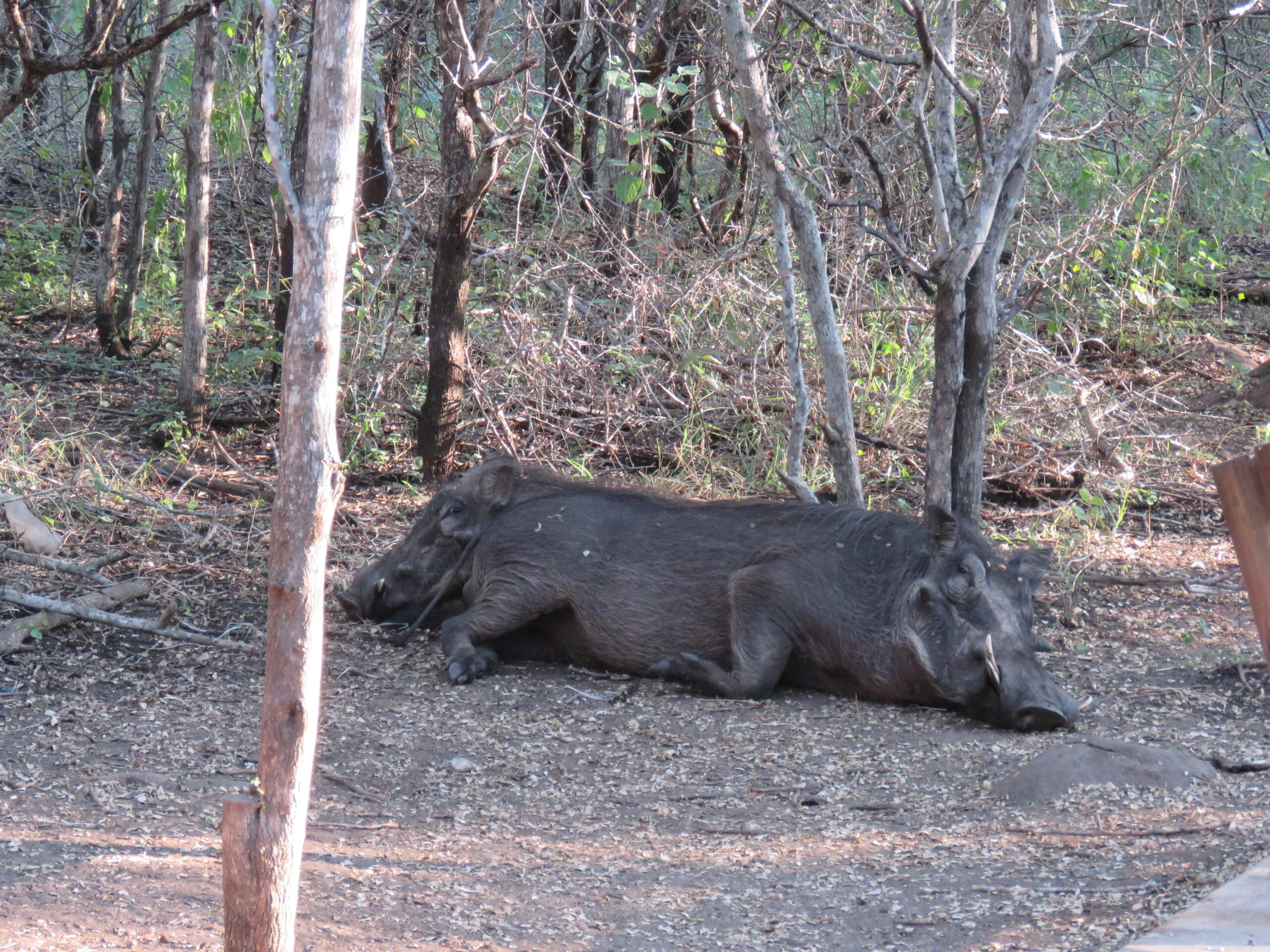
Narrow and The Imposter lying close together, appearing to be a two-headed warthog, one head at each end. For more photos, please click here.

Limited number of ports of call on this cruise…Long way yet to sail…9368 km, 5817 miles (5055 nautical miles)…

Isle of Pines coral reef is stunning.

The ship docked at the Port of Suva, Fiji, early this morning for an overnight stay. Why they chose this port for the extended stay baffled us until yesterday when the captain explained in a seminar held midday in the Palace Theatre.

Passengers seemed to enjoy the white sand beach and crystal clear sea.

The ship needed to refuel and gather provisions for the upcoming journey consisting of 9368 km, 5817 miles, 5055 nautical miles to sail to Seattle by May 15. We boarded the ship one week ago today, and the time is flying by more quickly than we’d expected.

These types of garments are not for me, but it’s fun to check them out.

The ease of life aboard a ship, along with a pleasant routine we tend to embrace within the first few days, days almost pass in a blur. We probably don’t spend more than nine hours a day in our cabin, sleeping, showering, dressing for the day, and then for the evening.

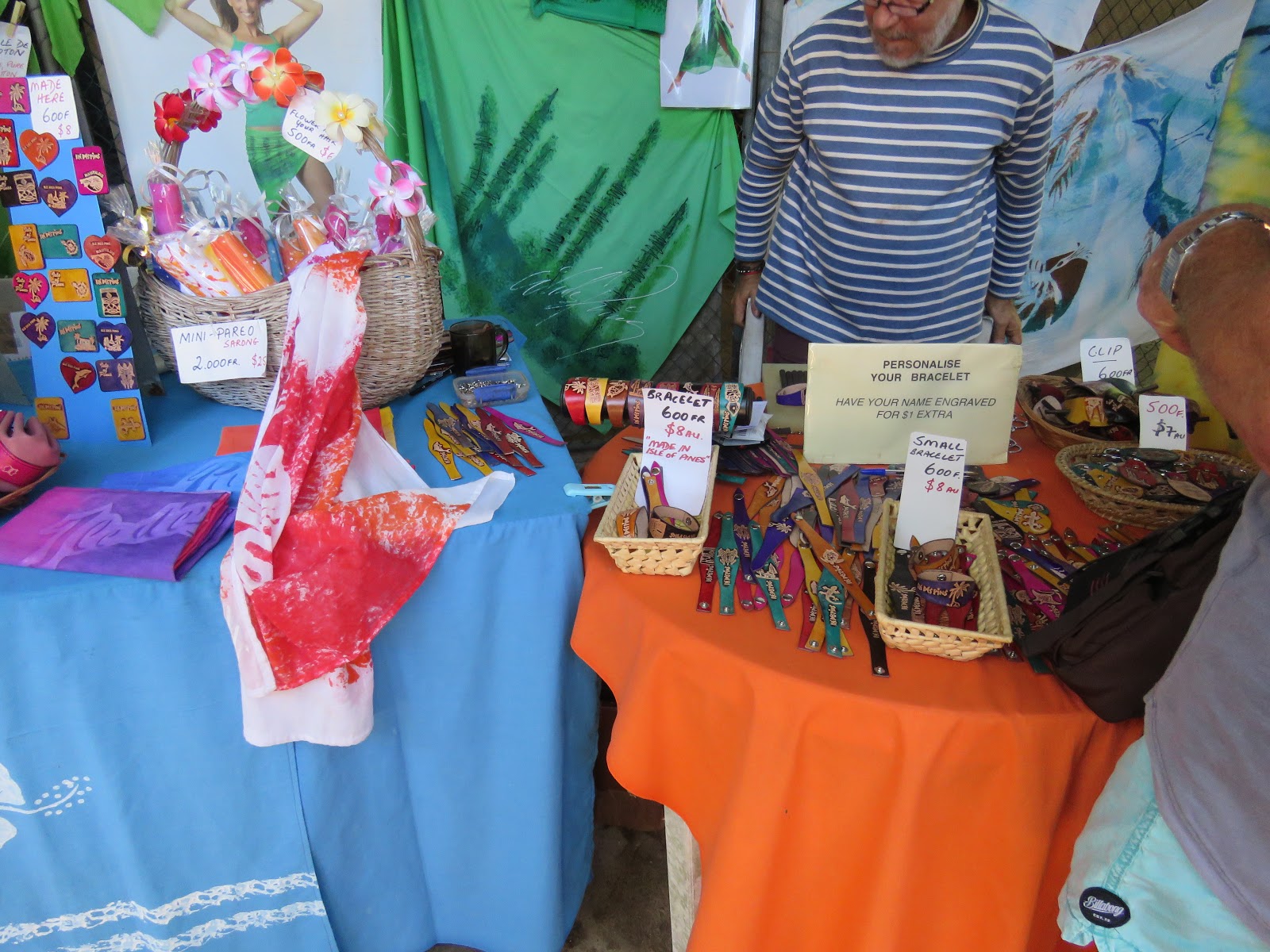
There were lots of trinkets for sale in New Caledonia.

Tom and I have managed the small space in the cabin of 164 square feet down to a science. We maneuver around one another with a flow comparable to a well-practiced dance where we seldom bump into one another.

After 18 cruises in similarly sized cabins (this is the smallest to date), we’ve managed to make the most of it in keeping the space tidy, organized, and free of clutter. In addition, we have a phenomenal cabin steward on this particular cruise whose efforts include consistency and organizational skills similar to our own. 

Green-themed sarongs.

Each morning as soon as we depart for breakfast, she cleans our cabin to perfection. Then, when we return to get our laptops to head to the Diamond Lounge to prepare the day’s post, every last item is completed with nary a wrinkle or item out of order.

Tourists typically purchase tee-shirts and beach towels.

Today, we arrived a little later than usual when we lingered at the breakfast table chatting with other passengers, all of whom were about to explore Suva for the day. We didn’t arrive in the Diamond Lounge until 10 am, when in most cases, we’ll be done preparing the post by 11. This accounts for today’s slightly later posting.

A tiny rowboat at the ready.

As we’ve recounted the details of our four-month stay in Fiji on two islands, from September 8, 2015, to January 4, 2016, we giggled over our varied experiences during that period.

Ship passengers peruse the many shops in Isle of Pines, New Caledonia.

Whether it was the ants that filled the mattress and pillows on the bed on our first night in Savusavu; buying Kava for the chief when we visited the Vuodomo waterfall; the nightly visits by our neighbor Sewak’s adorable dog Badal who happened to arrive while we were dining, hoping for morsels of meat which we always provided; or the trips to the outdoor markets for food and supplies, we continue to relish the experiences, good and not-so-good yet today.

Two sleeping dogs seemed unfazed about the stream of visitors.

Unfortunately, on the second island in Fiji, I contracted this lingering intestinal bacteria I’m continuing to purge from my system with carefully selected foods, supplements, and portion control. 

A rusted outboard motor fashioned into a work of art?

Regardless of the ups and downs, we continue to feel a powerful sense of joy wash over us every day.  From the couples with who we’ve become friends aboard this ship; to the many email messages we continue to receive from readers and friends we’ve made along the way; to the anticipation of the upcoming Alaskan cruise and, of course, seeing family and friends in less than a month.

Clouds above the pretty beach in the Isle of Pines.

Today, at 1:30 pm, the newer movie, Lion, filmed in Tasmania, is playing at the Palace Theatre. We’re certainly looking forward to this movie when our recent stay in Tasmania left us with an appreciation and gratefulness for the three months we spent on the exquisite island.

I haven’t owned a muumuu since I was pregnant in 1966.  (That certainly “dates” me!)

Every day as time marches on, we’re reminded of our growing past experiences in one way or another. And yet, there’s so much we’ve yet to see. The future looks bright and filled with wonder.  May good health keep us on track for that which is yet to come.

We offer the same wishes for all of you; good health and well-being.

Photo from one year ago today, April 29, 2016:

Sunset on the last night of our cruise to Singapore one year ago today. For more details, please click here.

Ship docked in Tasmania today…Great comment from a loyal reader…

 Due to a poor signal aboard ship, we’re unable to post many photos each day. 
Last night at the show, Jane, Tom and Rob, our new Aussie friends.

Today, our ship has docked at the port in Hobart, Tasmania. With our upcoming three months on the island beginning in less than 11 months, we decided we’ll save touring this interesting location for that time.

We’ll have a rental car for the full period and can travel at our own pace as we choose. Besides, I’m still nursing a cold/virus I picked up on the flight to Sydney when the man sitting next to me sneezed and coughed during the entire flight. With the use of Tylenol and a nasal spray I’m nursing it, hoping to return to total health in a few days.
As much as we’d prefer not to whine about being ill, we feel it’s only fair to our readers to tell-it-like-it-is including the less than ideal periods we experience from time to time.  
On occasion, most of us get colds, flu, viruses, infections or injuries which regardless of our aggressive preventive measures we can’t seem to avoid. It’s life. Ups and downs. How foolish and unrealistic our site would be if we only shared the “up” times and not the “down” periods.
The thought of doing more today than lounging with a cup of hot tea was beyond me. Thank goodness I’m not sneezing and coughing during the day or I’d quarantine myself to the cabin. Now, as day four since the onset of these symptoms, I’m hoping I’m not contagious.
No flash photography was allowed during the performance, making these photos a bit dark.
Luckily, over the past five days, I haven’t felt so badly that we weren’t able to go to breakfast and dinner. Last night, we dined with new friends, Jane and Rob from Australia. After dinner, at 9:00 pm we all attended the Andy Joy show in the Solstice Theatre, who’s a talented and versatile musician and singer. 
When the show ended, we said good night (no handshakes, no hugs) and headed to our cabin where again I had a good night’s sleep, vital during periods of feeling less than ideal.
Now, with 80% of the passengers off the ship for one of many Tasmanian tours, we’re again quietly content to be lounging in the Café al Bacio coffee bar. We’re contemplating spending a little time at the pool once we’re done posting. 
Today is a mild, not humid, sunny day, a rarity in our lives over these past many months of living in outrageously hot and humid weather. As we move along on this cruise, we’re expecting cooler weather which we’ll fully embrace.

As our posts have continued over the years, we’ve had countless heartwarming experiences of hearing feedback from our readers. Often, they prefer to email rather than post a comment at the end of any day’s post. Some prefer anonymity while others find it quicker and easier to email rather than post a comment.  Either way is fine for us.

However, we suspect that many of our readers enjoy reading the comments of other readers, although they may not be comfortable posting their own comments. I can easily be a “lurker” never saying “boo” on another blog or website I may peruse regularly or on occasion.

Getting into the theatre at the last minute we had no choice but to take seats on the side, not center section.

Our reader, Amit, who stumbled upon us accidentally only a short time ago, has sent email and also posted a few comments. An email he sent a few days ago lingered in my mind that it may be of interest to our other readers. Here’s Amit’s email message sent on January 5, 2016:

“Hi, Jess,
 I have continued reading your blog with great interest and have gotten to the part where you visit the Namale resort to celebrate the third anniversary of your adventure with Tom. Belated congratulations on your new to me occasion. 
    
One of my Facebook friends from my only adventure in the last 25 years, a trip to Central Europe, posted about her upcoming trip to Australia and Fiji and asked for advice. I eagerly recommended your blog and have showed it to other friends, especially the 8 visitors in 1 day post from Marloth Park. 
It’s exciting to realize that I am only 2 months of posts away from your real-time adventures, on a new Pacific Cruise if I remember correctly. In the post I’m reading now you talk about the world map of your travels which I always open in another window when I read your blog. 
You talk about updating and correcting the map and I’d just like to make one minor observation. The map has a link to Borabora in New Guinea rather than Bora Bora in French Polynesia. It would be so exciting if you did get to New Guinea on a cruise. Maybe later. 
Thank you so much for all happiness you have given me with this blog. It makes me excited for my own travels in the future. I really would like to go to Morocco now, although just for a short trip. And I never even knew about your favorite place, Marloth Park.”
His message immediately inspired Tom to correct the map on our homepage. Tom, who handles the map, got to work to make the corrections. In our ongoing efforts to always present a realistic and accurate representation of every aspect of our lives of travel, we can’t express how much we appreciate Amit alerting us to the error. 
The performer was versatile, playing multiple instruments including the piano.
In the past, other readers have offered correction suggestions all of which we’ve taken seriously which we’ve immediately implement when applicable. We welcome suggestions provided they aren’t of a “bashing” or bullying nature. We’ve certainly had a few such comments we soon deleted to which we’ve seldom responded.
This is a positive and “happy” place for us to share our experiences. Yes, some days things go wrong or we’re “under the weather” but that doesn’t diminish the overall depth of the quality of our journey. It all a part of life which for all of us is rarely a constant stream of perfection and ease.
We wrote back to Amit, thanking him for sharing his thoughts with us, explaining that he started at the beginning to read from our first post in March 15, 2012 to the present, which he’s almost reached.  Perhaps, by the time he reads about himself here, he’ll be caught up.
Today’s post is #1257. Amit, that’s quite a commitment and we thank and commend you for tackling it and, for sharing it with your friends and for writing to us. 
As we strive to continue to grow our worldwide readership, sharing our web address with family and friends is so appreciated and meaningful to us. All you need to do is send them an email including this link:  www.worldwidewaftage.com
It will direct your friends to today’s newest post which changes daily as we continue to post 365 days a year…366 this year, a leap year.
That’s it for today, folks. We hope you have a wonderful day. We’ll be back tomorrow with more new photos as we continue to revel in our “boatload” of new friends and experiences!
Photo from one year ago today, January 9, 2015:
A map illustrating how the city of Hilo near the bay was wiped out from tsunamis over the years.  Notice the Lyman Museum name at the top of this page, which we’d also visited in December 2015 with the family. Click here for details.